




A Record-Breaking Market
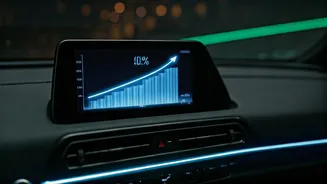
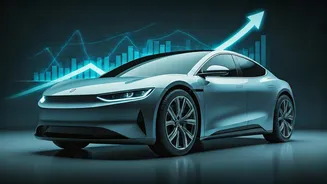
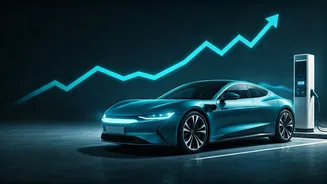
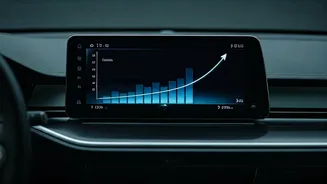
The Indian electric passenger vehicle market is firing on all cylinders, setting a new retail benchmark in June 2026. For the first time, monthly sales crossed the 30,000-unit mark, with a total of 31,253 EVs delivered to customers. This represents a staggering
106% year-on-year growth compared to the 15,203 units sold in June 2025. The momentum indicates a significant shift in consumer preference, pushing the industry past early adoption into the mainstream. Projections suggest that annual sales could surpass 300,000 units for the first time in 2026, a huge leap from just under 200,000 in 2025. This growth isn't just a blip; it's a trend powered by a wider variety of models, improving charging infrastructure, and a growing acceptance of electric mobility.
The Champion Feels the Heat
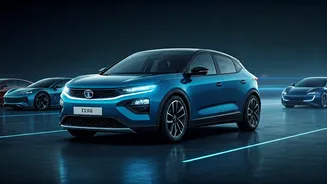
Tata Motors remains the undisputed leader, but its dominance is being tested. In June 2026, the company sold a record 12,023 electric vehicles, a 125% increase year-on-year. This performance, driven by popular models like the Nexon EV and the newer Punch EV, secured Tata a 38% market share. While still a formidable position, this is a far cry from the near-monopoly it once enjoyed. The entry of new players is gradually chipping away at its share, even as its absolute sales numbers grow. The company is not standing still, however, having recently launched the Sierra EV and with a Safari EV planned for later in 2026 to bolster its portfolio and defend its turf.
New Domestic Challengers Emerge
The most significant challenge to Tata's dominance is coming from homegrown rival Mahindra & Mahindra. The company has made a powerful statement with its new range of 'Born Electric' SUVs. In June, Mahindra registered its highest-ever monthly sales, crossing the 7,000-unit mark for the first time with 7,645 EVs sold. This performance gave Mahindra a solid 24% market share, establishing it as the clear number two in the race. The company plans to launch several next-generation electric SUVs based on its advanced INGLO platform, signaling a long-term, aggressive strategy to capture a significant piece of the market. Its focus on a fresh portfolio of electric-first designs is a direct challenge to the established order.
The Global Giants Arrive
The Indian EV race has also gone international. Vietnamese automaker VinFast has made a high-profile entry, breaking ground on a manufacturing facility in Tamil Nadu. After registering its first sales in June with 1,394 units, the company is assembling its VF 6 and VF 7 electric SUVs locally. It plans to establish India as an export hub for the region. Meanwhile, Chinese EV behemoth BYD is also scaling up its presence. Focusing on the premium end of the market with models like the Seal, BYD also achieved its best-ever monthly sales in June with 860 units. The company is targeting double-digit growth in 2026 and is considering introducing plug-in hybrids to broaden its appeal. Not to be left behind, JSW MG Motor, while seeing its market share shrink, still holds the number three spot with 5,785 units sold in June.
What's Fuelling the Future?
Several factors are accelerating this EV boom. The government's continued focus on electric mobility, with policies like the FAME (Faster Adoption and Manufacturing of Electric Vehicles) scheme, has been critical. While the specifics of the upcoming FAME-III policy are still being finalized, it is expected to continue supporting the ecosystem, particularly for two-wheelers, three-wheelers, and public transport. Beyond policy, the sheer number of choices available to consumers is a major driver. The number of EV models in India is expected to grow from around 20 to over 35 in the next year, with many new launches targeting the crucial sub-Rs 15 lakh segment. This explosion of choice, coupled with improving battery technology and expanding charging networks, is making the switch to electric a more viable and attractive option for Indian car buyers.