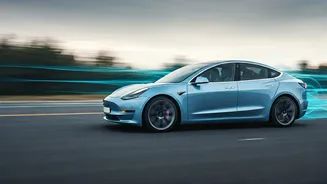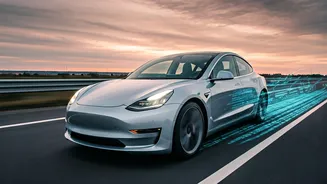





What is ‘Phantom Braking’?
Imagine you’re cruising down the highway with a driver-assist system like Tesla's Autopilot engaged. The road ahead is clear, yet the car suddenly and sharply brakes for no apparent reason. This unnerving experience is what drivers have dubbed 'phantom
braking'. Instead of reacting to a real hazard, the vehicle's sensors—cameras, in Tesla’s case—misinterpret something like a shadow from an overpass, a change in road texture, or a reflection as an obstacle. The result is an unexpected and often jarring deceleration, which raised significant safety concerns among owners.
Why Regulators Stepped In
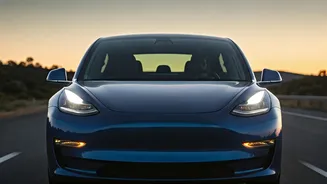
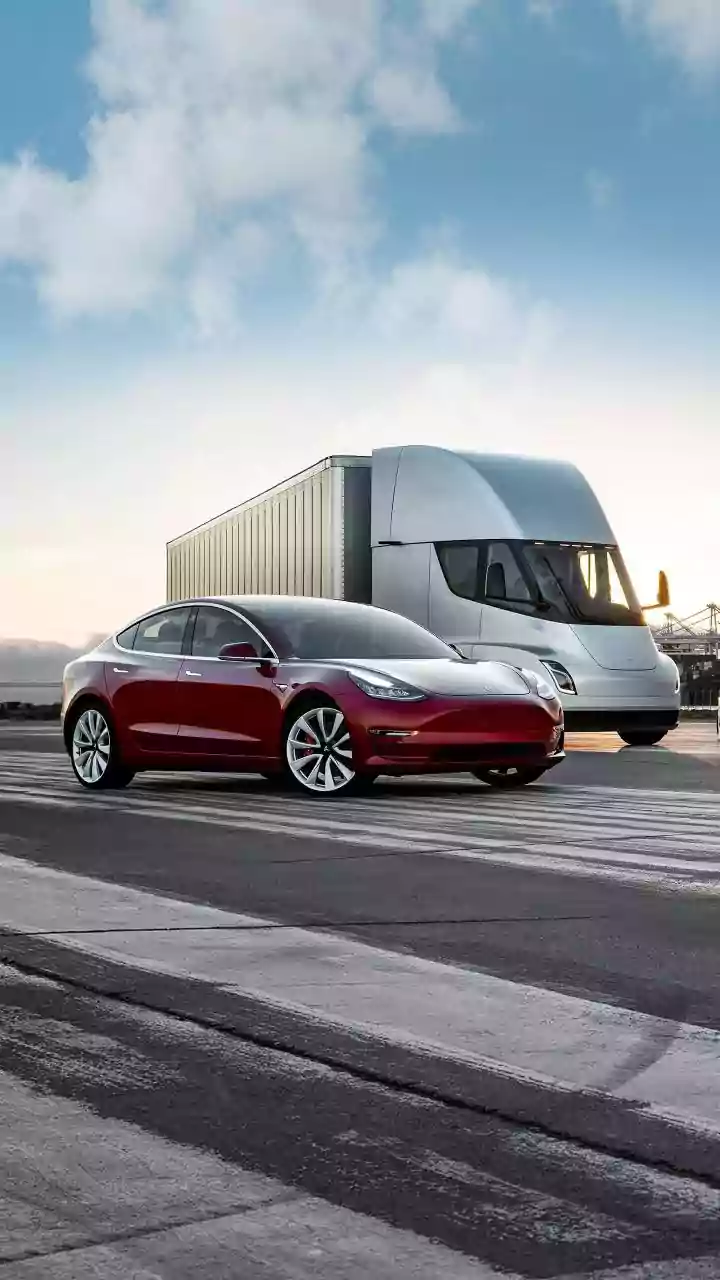
The issue gained serious attention from the U.S. National Highway Traffic Safety Administration (NHTSA) in early 2022. The agency launched a preliminary evaluation after the number of owner complaints surged, growing from just under 100 at the end of 2021 to over 300 within a few months. The probe initially covered around 416,000 Model 3 and Model Y vehicles from the 2021 and 2022 model years, later expanding to encompass approximately 695,000 cars. The investigation focused on incidents of unexpected braking when driver-assist features like Autopilot or Traffic-Aware Cruise Control were active. While frightening for drivers, the typical event involved a speed reduction of 10-20 mph over a few seconds.
The Verdict: Software Updates and a Plunge in Complaints
On July 2, 2026, the NHTSA officially closed the investigation. The primary reason was a dramatic drop in incident reports following a series of over-the-air (OTA) software updates pushed by Tesla in 2022. Complaint numbers fell from a high of over 300 to just 45 in 2024, 19 in 2025, and only three in the first half of 2026. The regulator concluded that the issue posed a "low demonstrated hazard" and found no evidence of crashes, injuries, or fatalities directly caused by phantom braking. The agency noted that the braking events, while concerning, did not typically cause vehicles to swerve or create a significant risk of a rear-end collision.
A Story of Vision vs. Radar
The investigation also highlighted a key technical shift at Tesla. The surge in phantom braking complaints coincided with Tesla’s decision in mid-2021 to remove radar sensors from its new vehicles, opting for a 'vision-only' system that relies exclusively on cameras. The NHTSA's report acknowledged that this transition likely contributed to the spike in incidents as the vision-only system learned to interpret the world without a secondary sensor for confirmation. The subsequent software updates were designed to improve the performance and reliability of this camera-based system, and the sharp decline in complaints suggests they were largely effective.
The Bigger Picture for Car Tech
The closure of the probe is a significant milestone for Tesla, but it's important to understand what it doesn't mean. The NHTSA stated that closing the preliminary evaluation doesn't completely rule out a potential safety defect, and it can reopen the case if new data emerges. More broadly, this episode serves as a case study in the growing pains of Advanced Driver-Assistance Systems (ADAS). As these features become standard not just in Teslas but in many new cars sold in India and worldwide, the phantom braking issue illustrates the complex challenge of making software that can reliably interpret an unpredictable real world. It underscores that while these systems are powerful aids, the ultimate responsibility for vehicle control remains firmly with the driver.