







A Persistent Fever at the Poles
For two consecutive years, from mid-2024 to mid-2026, Earth's polar regions have experienced unusually high temperatures, a trend NASA scientists are now highlighting with detailed animations. This isn't a fleeting heatwave but a sustained thermal anomaly.
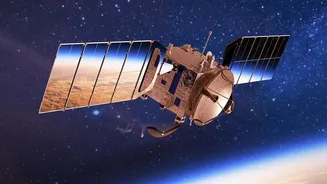
Data from NASA's Earth Observatory and its new PREFIRE mission, which measures heat radiating from the poles, visualises these temperature swings, making the invisible visible. Scientists look at anomalies, which compare current temperatures to a long-term average (typically 1951-1980), to understand the scale of change. What they are seeing is a consistent pattern of warmer-than-average conditions in both the Arctic and Antarctic, far exceeding normal variability. This phenomenon, known as Arctic amplification, means the far north is warming at least twice as fast as the rest of the globe.
The Science Behind the Warmth
The primary driver behind this polar heat is the long-term global warming trend caused by human-caused greenhouse gas emissions. However, other factors amplify this effect at the poles. As reflective white sea ice melts, it exposes the darker ocean beneath, which absorbs more sunlight and heat, creating a feedback loop that accelerates warming. Furthermore, shifts in atmospheric and oceanic circulation patterns can transport more heat toward the poles. Scientists are investigating how a weaker, wavier jet stream, potentially linked to Arctic warming, might be allowing warmer air to intrude northwards while cold polar air spills south, causing extreme weather events in the mid-latitudes.
Ice in Full Retreat
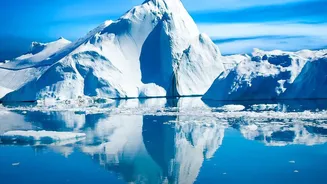
The most direct and dangerous consequence of this sustained heat is the melting of Earth's cryosphere—its frozen water. This includes Arctic sea ice, which acts as the planet's air conditioner, and the colossal ice sheets of Greenland and Antarctica. Data shows that glaciers and ice sheets are losing mass at an accelerating rate. NASA's PREFIRE mission was specifically designed to understand this process better by measuring, for the first time, the far-infrared radiation that the poles emit into space. Understanding this energy budget is critical, as nearly 60 percent of the energy Earth loses to space is in this form, a process heavily influenced by ice cover. As this ice vanishes, more fresh, cold water enters the ocean, impacting circulation patterns on a global scale.
The Indian Connection: Why Polar Heat Matters
Though thousands of kilometres away, the melting of polar ice has direct and severe consequences for India. The single biggest threat is sea-level rise. Projections from the IPCC and other bodies warn that India's vast coastline is extremely vulnerable. A sea-level rise of even one metre by 2100 could inundate low-lying areas, increase the salinity of freshwater sources, and threaten coastal infrastructure in megacities like Mumbai, Chennai, and Kolkata. Studies indicate that Mumbai is particularly at risk, with projections showing significant increases in sea level by the end of the century. Beyond the coasts, changes in polar conditions could disrupt large-scale weather patterns, potentially affecting the reliability and intensity of the Indian monsoon, the lifeblood of the nation's agriculture and economy.