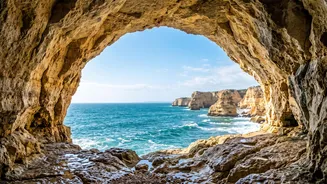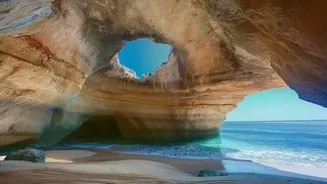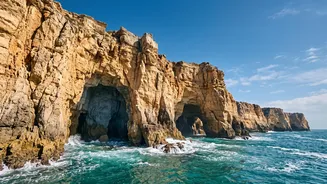






The sea caves of Portugal's Algarve coast are a world-famous spectacle of golden rock and turquoise water. But their beauty, carved from fragile limestone, demands a thoughtful approach to ensure your visit is both magical and safe.
Understand the Landscape's Fragility
The Algarve's stunning
coastline is made of sedimentary rock like limestone and sandstone, sculpted by millennia of wind and water. This is what creates the magnificent sea caves, arches, and grottoes, including the iconic Benagil Cave. However, this geological makeup also makes the cliffs inherently unstable. Erosion is a constant, natural process that can lead to unexpected rockfalls and landslides. Local authorities frequently place warning signs in high-risk areas, and it is crucial to respect them. The Portuguese Environment Agency (APA) recommends staying a distance of at least 1.5 times the cliff's height from the base, so avoid setting up directly underneath them for shade. This isn't to create alarm, but to foster respect for the powerful natural forces at play.
Choose Your Vessel: Boat, Kayak, or SUP?
How you experience the caves largely depends on your mode of transport. Standard boat tours, often departing from hubs like Portimão, Albufeira, and Lagos, are the most comfortable and accessible option, suitable for all ages and fitness levels. These tours cover more coastline but have limited time inside each cave and cannot land. For a more intimate and active experience, guided kayak or stand-up paddleboard (SUP) tours are excellent choices. These allow you to enter smaller caverns that boats cannot access and get you closer to the water. Note that since 2024, regulations require these tours to be guided; you can no longer rent a kayak and paddle into the Benagil Cave area alone. Swimming to the cave is also prohibited and dangerous due to strong currents and heavy boat traffic.
Prioritise Safety: Tides and Weather Are Key
Your visit is entirely at the mercy of the sea. Tours are often cancelled when the ocean swell is too high, making it unsafe to enter the caves. For this reason, it's wise to book your cave excursion for the beginning of your trip, allowing a buffer for rescheduling if conditions are poor. The calmest seas are typically found during the morning, making early tours a popular choice for both safety and smaller crowds. Always check the forecast and listen to the advice of your tour operator, as they are experts on local conditions. Ignoring safety warnings or attempting to enter caves in rough weather is extremely hazardous.
Select a Licensed and Responsible Operator
A responsible tour operator will prioritise your safety and the preservation of the environment. Look for licensed companies with strong safety records and positive reviews. A good operator will provide a thorough safety briefing before departure and ensure everyone has a life jacket. They will also respect the rules, such as time limits inside popular caves like Benagil and the prohibition on disembarking onto the inner beach. Many operators are also committed to sustainable tourism, navigating carefully to protect the delicate marine ecosystem, part of which is a protected marine park. Choosing one of these companies supports the long-term health of this incredible coastline.
When to Go for the Best Experience
The best time of year to visit is during the shoulder seasons of May, early June, or September. During these months, the weather is pleasant, the sea is generally calm, and you'll avoid the peak crowds of July and August. Winter visits are possible on calm days and offer a uniquely peaceful experience, but tour cancellations are more frequent. In terms of time of day, the earliest morning tours often provide the calmest water and fewest people. For photography, the light beaming through the 'eye' of Benagil Cave is often best from late morning to early afternoon, though this is also the busiest period.