




The Festive Prelude: Mahalaya
The countdown to Durga Puja officially begins with Mahalaya, which falls on Saturday, October 10, 2026. For many, this day is marked by waking up before sunrise to listen to the iconic 'Mahishasuramardini' broadcast, a collection of hymns and chants narrating
the creation of Goddess Durga to defeat the demon Mahishasura. It is a day steeped in nostalgia and emotion, serving as the spiritual invocation of the Goddess. It also marks the end of Pitru Paksha, the period of remembrance for ancestors, and the beginning of Devi Paksha, the fortnight of the Goddess.
The Main Rituals: Shashthi to Navami
The core five-day festival kicks off on Maha Shashthi, Friday, October 16. This is the day the Goddess is welcomed, with rituals like 'Bodhon' (awakening) and the unveiling of the idols' faces. Maha Saptami, falling on October 18, involves the 'Nabapatrika' or 'Kola Bou' bath, where nine plants are bundled together, bathed, and worshipped, symbolizing the nine forms of Durga. Maha Ashtami, on Monday, October 19, is one of the most significant days, featuring the morning 'Pushpanjali' (flower offering) and 'Kumari Puja', the worship of young girls as manifestations of the Goddess. The crucial 'Sandhi Puja' happens at the cusp of Ashtami and Navami, marking the moment Durga transformed into the fierce Chamunda to slay demons. Maha Navami, on October 20, is the final day of worship, often concluded with a grand 'homa' (fire sacrifice).
The Grand Farewell: Vijayadashami
The festivities conclude on Wednesday, October 21, with Vijayadashami. It is a day of mixed emotions, celebrating the victory of good over evil while bidding a heartfelt goodbye to the Goddess. Married women participate in 'Sindoor Khela', smearing vermilion powder on each other and the idol, a ritual wishing for marital bliss. Later, grand processions lead the idols for immersion in rivers or other water bodies, symbolizing Durga's return to her celestial home.
A Feast for the Senses
Durga Puja is as much a culinary festival as it is a religious one. The days are filled with feasting, from community meals (bhog) served at pandals to street food adventures and elaborate home-cooked spreads. The flavours are an integral part of the Pujo experience, connecting devotees and revellers through shared taste and tradition. Here are five traditional foods that define the taste of the festival.
1. Bhoger Khichuri and Labra
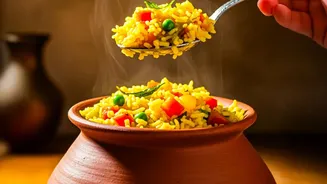
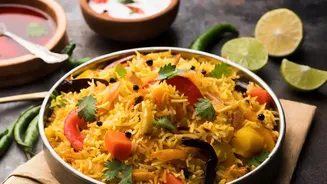
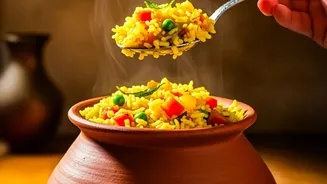
This is the soul of the community feast. Unlike everyday khichdi, 'bhoger khichuri' is made with roasted moong dal and aromatic gobindobhog rice, cooked without onion or garlic. It's a simple, comforting, and deeply flavourful one-pot meal offered to the deity before being distributed to the public. Its perfect companion is 'labra', a rustic medley of seasonal vegetables like pumpkin, brinjal, and potatoes, slow-cooked in gentle spices. The combination is the quintessential taste of Pujo bhog.
2. Luchi and Aloor Dum
A festive breakfast or snack that no Bengali can resist during Pujo is 'luchi' and 'aloor dum'. Luchi are soft, fluffy, deep-fried breads made from refined flour (maida), which puff up into golden orbs. They are typically paired with Aloor Dum, a rich and flavourful dish of baby potatoes cooked in a thick, spiced gravy. While variations exist, the classic Bengali Aloor Dum often has a slightly sweet and tangy profile, making it the perfect foil for the simple, savoury luchi.
3. Kosha Mangsho
While vegetarian bhog is central to the daytime rituals, non-vegetarian dishes are widely enjoyed in homes and restaurants during the evenings. 'Kosha Mangsho', a slow-cooked mutton curry, is a festive indulgence. The 'kosha' technique involves sautéing the mutton with spices over a low flame for a long time until the meat is tender and the gravy becomes a thick, dark, and intensely aromatic concentrate. It’s a rich, decadent dish that’s often the star of a special family meal during the Puja days.
4. Fish Preparations
For a cuisine so defined by its love for fish, Durga Puja offers ample opportunities to enjoy it. While countless preparations are made, a festive standout is often a dish featuring hilsa (Ilish) or bekti. One celebrated preparation is 'Ilish Macher Paturi', where hilsa fillets are marinated in a pungent mustard paste, wrapped in banana leaves, and then steamed or pan-fried. The banana leaf imparts a subtle smoky aroma to the fish, which remains incredibly moist and flavourful. It represents the pinnacle of Bengali culinary artistry.
5. Mishti Doi
No Bengali celebration is complete without sweets, and 'Mishti Doi' is arguably the king of them all. This traditional sweetened yogurt is made by thickening milk, sweetening it with jaggery or sugar, and allowing it to ferment in an earthen pot. The pot not only helps in setting the yogurt but also absorbs excess water, resulting in a thick, creamy, and dense texture. Its unique caramel flavour and cooling sweetness make it the perfect dessert to conclude a lavish festive meal.