


The Silent Threat Above
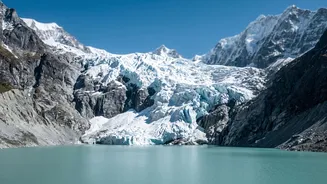
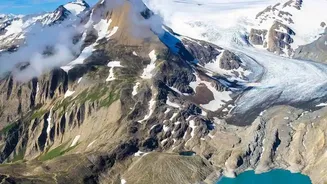
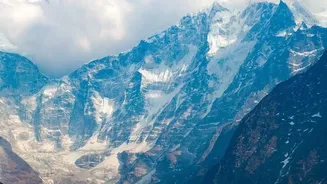
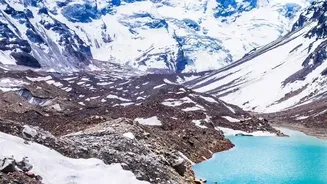
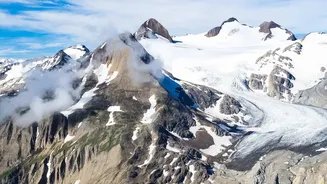
As global temperatures rise, Himalayan glaciers are melting at an alarming rate. This meltwater pools to form vast lakes, often held back by nothing more than unstable walls of loose rock and soil known as moraines. These natural dams can be fragile.
A landslide, an avalanche, or even the sheer pressure of accumulating water can cause them to breach, unleashing a catastrophic event known as a Glacial Lake Outburst Flood (GLOF). This sudden release of millions of cubic metres of water, mud, and boulders can obliterate anything in its path for kilometres downstream. For years, this was a known, but abstract, risk. Recent history, however, has provided a brutal education.
The 2013 Uttarakhand Wake-Up Call
The 2013 North India floods were a horrifying preview of the Himalayas' destructive power. While not a singular GLOF event, the disaster involved a perfect storm of unprecedented rainfall and the breach of the Chorabari glacial lake near Kedarnath. The resulting flash floods and landslides killed over 5,700 people and swept away entire towns like Ram Bada. The term "Himalayan tsunami" entered the public vocabulary, and the tragedy exposed the extreme vulnerability of communities and pilgrimage routes. It was a clear sign that unchecked development and a changing climate were a lethal combination in the high mountains.
Chamoli: A Disaster in Real-Time
In February 2021, a different kind of horror unfolded in Uttarakhand's Chamoli district. This time, it wasn't a lake outburst but a massive rock and ice avalanche from Ronti peak. An estimated 27 million cubic metres of material plunged into the valley below, with the impact generating enough energy to melt the ice and trigger a devastating debris flood. The torrent obliterated two hydropower projects, the Rishiganga and the Tapovan-Vishnugad, killing over 200 people, mostly workers at the sites. The Chamoli disaster, captured in shocking video footage, was a stark, real-time illustration of the kinetic force brewing in the mountains and the risks posed to critical infrastructure.
Sikkim's South Lhonak Lake Disaster
If Kedarnath and Chamoli were warnings, the October 2023 Sikkim flood was the textbook GLOF that scientists had feared. A massive slope collapse into the fast-growing South Lhonak Lake triggered a 20-metre-high wave that breached its moraine dam. The resulting flood unleashed nearly half the lake's volume, destroying the Teesta-III dam downstream and causing widespread destruction. The event was a direct consequence of a rapidly expanding glacial lake—its area having grown twelve-fold since 1975. It cemented the term 'GLOF' in the public consciousness and served as undeniable proof that the threat from these lakes was immediate and growing.
From Tragedy to Policy
These repeated tragedies have finally forced a policy shift. The National Disaster Management Authority (NDMA) has issued formal guidelines for managing GLOF risks and launched a National GLOF Risk Mitigation Programme. There are around 7,500 glacial lakes in the Indian Himalayas, with authorities identifying nearly 200 as being at high risk. The focus is now on creating early-warning systems, monitoring these volatile water bodies, and re-evaluating infrastructure development in vulnerable valleys. Experts now stress the importance of involving local communities in monitoring and establishing cross-border data sharing with neighbouring countries like Nepal, because the Himalayas—and the disasters they unleash—do not respect political boundaries.