




A Tale of Two Hemispheres
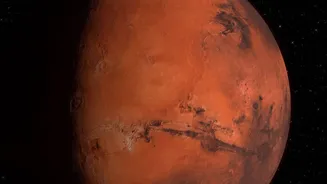
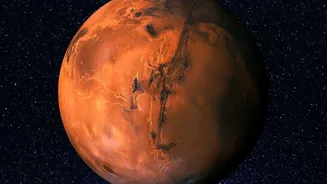
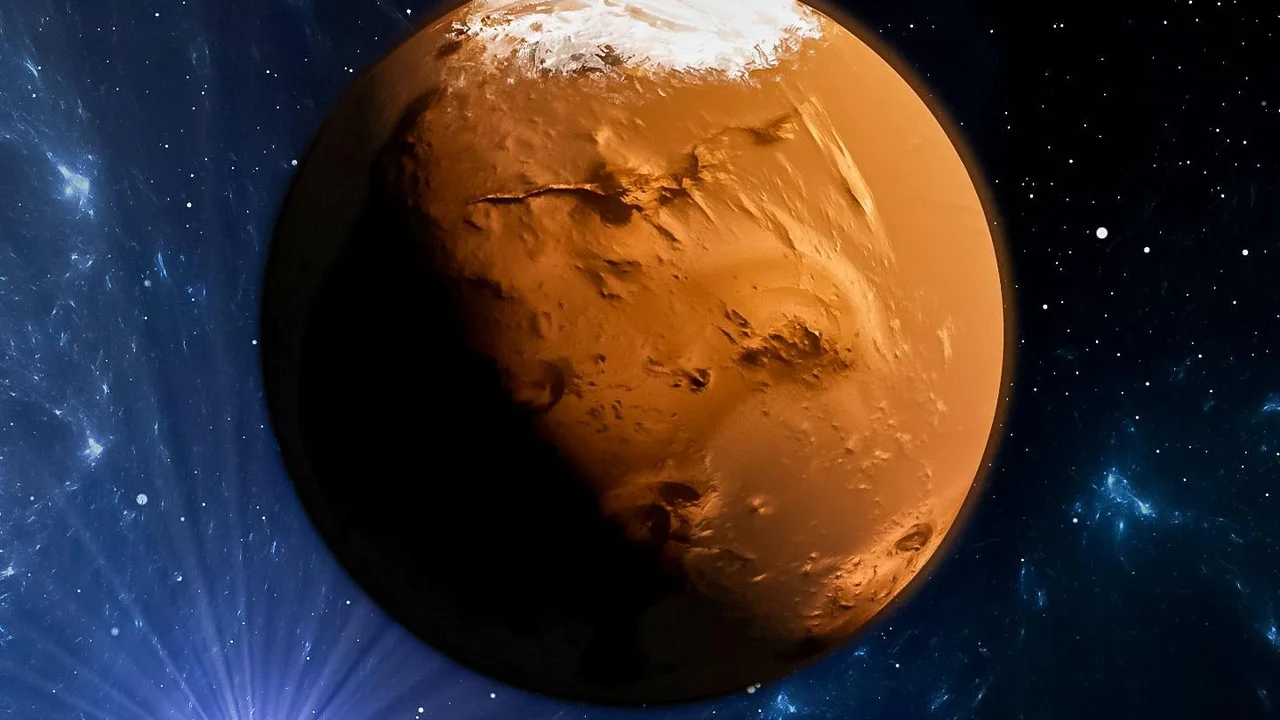
The most stunning revelation comes from deep within the planet's core. New analysis of gravity data collected by multiple orbiters shows that Mars is a world divided. Its southern hemisphere is hiding a massive 'heat anomaly,' a region deep in the mantle
that is potentially 200 to 400 degrees Celsius hotter than the corresponding northern half. This suggests parts of the Martian interior may still be partially molten, challenging the idea that the planet is geologically dormant. This profound temperature difference could be the key to unlocking some of Mars's oldest secrets, from its unusual magnetic fields to its ancient climate history. It paints a picture not of a uniformly frozen world, but a lopsided planet with a hidden, fiery side.
Listening to a Planetary Heartbeat
Much of our new understanding comes from listening to faint tremors travelling through the planet. NASA's InSight lander, which studied the planet from 2018 to 2022, acted like a planetary doctor, using a seismometer to record 'marsquakes'. These seismic waves, rippling from the crust to the core, allowed scientists to create the first detailed map of the Martian interior. The data brought surprises. It revealed that Mars has a solid inner core, something scientists weren't sure about before. The waves also uncovered massive, dense lumps of rock buried in the mantle—scars from ancient planetary collisions over four billion years ago. On Earth, plate tectonics would have erased such features, but Mars’s quieter geology has preserved them, turning the planet into a time capsule of the early solar system.
A Complex and Watery Past
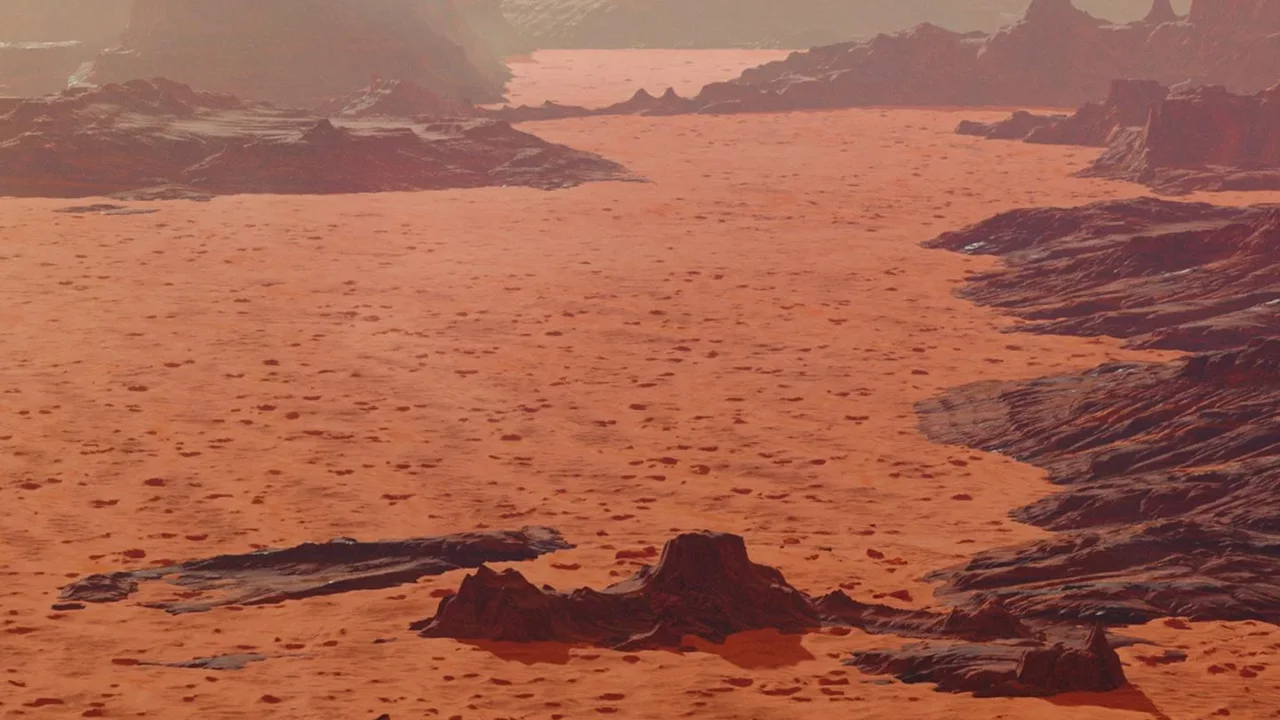
This inner heat helps explain the increasingly complex story of water being uncovered on the surface. At Jezero Crater, the Perseverance rover discovered igneous rocks that show signs of interacting with water on at least three separate occasions. One of these events involved hot groundwater circulating through the rock, a process likely powered by the very interior heat that scientists are now mapping. This find moves beyond the simple idea of a planet that just dried up. Instead, it suggests a long and varied geological history, with multiple periods of water activity, both on the surface and underground. This aligns with earlier discoveries by the Curiosity rover, which found 3.7-billion-year-old rock ripples—the unmistakable signature of waves lapping on an ancient lake. A warmer, more active interior makes such a dynamic, water-rich past far more plausible.
Rewriting the Story of the Red Planet
Taken together, these findings are forcing a major rewrite of Mars's biography. It is not a simple, stagnant world. Discoveries suggest it may have once harboured enormous, Earth-like magma systems that recycled its crust without the need for plate tectonics. The planet's hot southern hemisphere could explain why seismic waves lose energy more quickly there, a puzzle noted by the InSight mission. The Red Planet is proving to be a world of contrasts: hot and cold, ancient and active, starkly simple on its surface but astonishingly complex beneath. Each new ripple of data reveals a planet that was, and in some ways still is, very much alive.