


The Welcoming Spirit of Pookalam
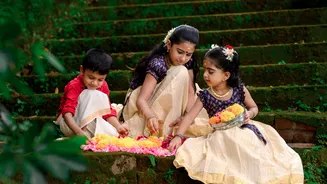
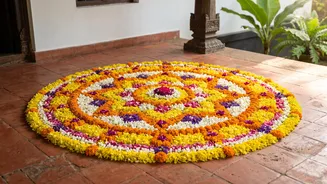
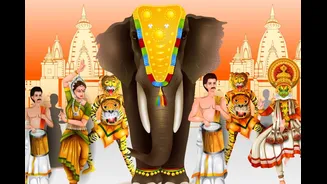
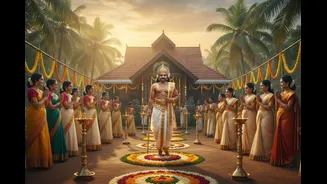
Pookalam, the intricate art of arranging flowers on the floor, is one of the most cherished traditions of Onam, Kerala's grand harvest festival. The word itself is a blend of 'poo' (flower) and 'kalam' (artwork). These beautiful floral carpets are laid
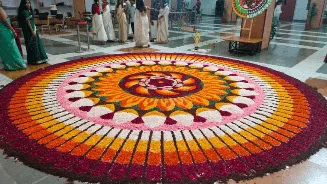
at the entrance of homes to welcome the spirit of the revered King Mahabali, whose annual return is celebrated during the festival. More than just a decoration, creating a pookalam is a joyful act of unity and creativity, often involving the entire family. It symbolizes prosperity, happiness, and the rich cultural tapestry of Kerala. Traditionally, the pookalam grows larger each day of the ten-day festival, starting from a simple design on Atham day and culminating in a grand creation for Thiruvonam, the main day of Onam which falls on August 26th in 2026.
Gathering Your Floral Palette
The soul of a pookalam lies in its flowers. While tradition calls for specific local flowers, the key is to have a variety of vibrant colours and textures. For a star design, aim for at least three to four contrasting colours. Commonly used and widely available flowers include yellow and orange marigolds (Jamanthi/Chendumalli), fragrant white jasmine (Mullappoo), and red hibiscus (Chemparathy). You can also use chrysanthemum, roses, and globe amaranth (Vadamalli). To add texture and create borders, green leaves or holy basil (Tulasi) can be used. You'll also need a clean, flat surface at your entrance or in your courtyard, and a piece of chalk or rice flour to draw your design. Separating the petals from the flowers beforehand will make the arranging process much smoother.
Drafting Your Star Design
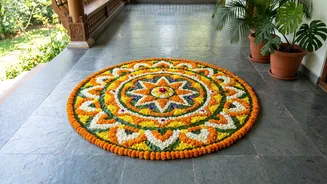
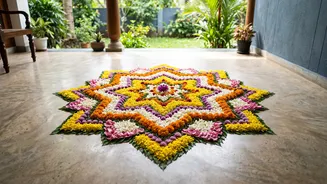
A star is a fantastic design for beginners because it's geometric and visually striking. Before you lay a single petal, it’s wise to create a clear outline. Start by finding the centre of your chosen space. Using chalk, which can be easily wiped away, draw a simple five-pointed or six-pointed star. A helpful trick is to first draw a large circle and mark equidistant points along its circumference to guide you in creating symmetrical star points. For a more complex look, you can draw a smaller star inside the larger one or outline the main star with one or two concentric circles. A symmetrical and well-drawn base is the secret to a neat and impressive final pookalam.
Bringing the Star to Life with Petals
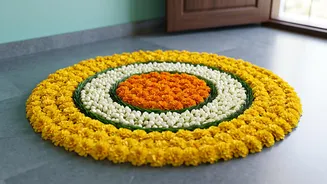
With your design drawn and petals ready, the magical process of filling begins. It's often easiest to start from the centre and work your way outwards, or fill in the outlines first to define the shape. Use one colour for the main star shape to make it pop. For example, fill the star with bright yellow marigold petals. Then, use a contrasting colour, like white jasmine or chrysanthemum petals, for the triangular sections between the star’s points. The outer circle or border can be filled with a third colour, such as orange or red, to frame your design beautifully. Gently press the petals down to create a dense, carpet-like effect. Don't be afraid to create thick layers; this adds texture and vibrancy.
Finishing Touches and Pro Tips
The final details can elevate your pookalam from lovely to spectacular. Consider placing a traditional brass lamp (diya) or a small mound of a particularly special flower, like Thumba (Ceylon Slitwort), in the very centre of the star. To make your lines extra crisp, you can create a border for each coloured section using a thin line of a contrasting colour, like green leaves or dark red hibiscus petals. To keep your pookalam looking fresh for a day or two, lightly sprinkle it with water a few times. Most importantly, embrace the process. Making a pookalam is a meditative and joyous activity, and its true beauty lies in the act of creation and the festive spirit it brings to your home.