




It’s in the name, it has a hard shell, and we treat it like one in the kitchen. But the humble coconut, a staple in Indian culture and cuisine, has a botanical secret: it isn’t a nut at all. So what is it, and why the confusion?
The Great Nut Misunderstanding
In our everyday lives,
the word 'nut' is a broad culinary term. We use it for any hard-shelled kernel that we can snack on or cook with. This is why almonds, walnuts, cashews, and coconuts all end up in the same mental category. We see a hard exterior and an edible part inside, and our brain says 'nut'. But when botanists look at these foods, they see a much more specific and structured world. The way a plant forms its fruit and protects its seed leads to classifications that can be quite surprising. The gap between the kitchen definition and the scientific one is where the confusion about the coconut begins.
So, What Is a True Nut?
To understand what a coconut isn't, we first have to know what a true nut is. In botany, a true nut is a specific type of dry fruit that has a single seed, a hard shell, and a protective husk. Crucially, the hard shell does not split open on its own to release the seed when it's mature. Think of acorns, chestnuts, and hazelnuts. These are classic examples of botanical nuts. They develop from the flower's ovary, and the tough shell is the entire wall of the fruit. This strict definition means that many of the foods we call nuts don't actually make the scientific cut.
Introducing the Drupe
This brings us to the drupe. A drupe is a type of fruit that has three distinct layers. First, there's an outer skin (the exocarp). Second, there's a fleshy or fibrous middle layer (the mesocarp). Finally, there's a hard, woody inner layer that encases the seed (the endocarp). The most familiar examples are stone fruits like peaches, plums, and cherries. With a peach, we eat the fleshy mesocarp and discard the stone, or endocarp, which contains the seed. But as we'll see, we don't always eat the fleshy part of a drupe.
The Coconut's Case for Drupe-hood
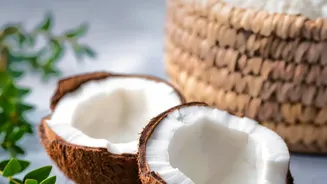
The coconut fits the three-layer definition of a drupe perfectly. When you see a coconut fresh on the palm, it has a smooth, green or yellow outer skin (the exocarp). Beneath that is the thick, fibrous husk that we use to make coir (the mesocarp). The hard, brown shell that we typically buy at the market is actually just the inner layer, the endocarp. Inside this hard shell is the seed, which consists of the white flesh (endosperm) and the coconut water (liquid endosperm) that nourish the plant embryo. So, botanically, the coconut is a fibrous, one-seeded drupe.
The Nut Aisle Is Full of Impostors
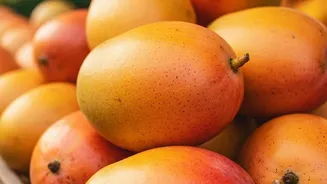
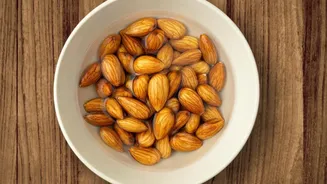
The coconut isn't the only 'nut' living a double life. Many other popular nuts are also drupes. Almonds, walnuts, pecans, and pistachios are all technically the seeds from inside the stone of a drupe. With these, instead of eating the outer fleshy fruit like we do with a mango or cherry, we discard the outer layers and crack open the hard pit to eat the seed inside. And to make it even more confusing, peanuts aren't nuts or drupes; they are legumes, belonging to the same family as beans and peas.