




A Fresh Look for a Premium Journey
In a first-of-its-kind branding partnership for Indian Railways, the Lucknow-New Delhi Tejas Express (Train No. 82501/82502) will be fully branded by the beverage giant Sprite. The deal, managed by the Indian Railway Catering and Tourism Corporation (IRCTC),
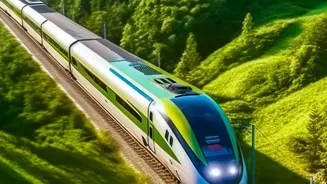
will see the train not only wrapped in distinctive green and yellow vinyl advertisements but also formally announced by its new co-branded name at all stations along its route. While Indian Railways has previously allowed vinyl wrapping on its coaches, this marks the first instance where a train’s official name has been prefixed with a brand. The campaign is slated to run from mid-August to mid-November 2026, transforming the train into a high-visibility, moving billboard across one of India’s busiest corridors.
The Strategy: Monetising a National Asset
This collaboration is more than just a cosmetic makeover; it represents a significant step in Indian Railways' long-term strategy to increase its non-fare revenue. For years, the national transporter has been exploring ways to reduce its financial dependence on passenger fares and freight charges. By leasing out its assets for advertising, Indian Railways and its corporations like IRCTC can tap into a consistent stream of income. Non-fare revenue initiatives include everything from ads on station premises and digital screens to branding on the exterior and interior of train coaches. This Sprite-Tejas deal is the most ambitious iteration of that policy, turning the entire train into a branded experience. Officials see this as a scalable model to support the railway's balance sheet and fund modernization efforts without directly impacting ticket prices.
A Rolling Billboard for Brands
From Sprite's perspective, the partnership offers a unique and powerful advertising platform. Unlike a stationary billboard, a moving train provides sustained exposure across multiple cities and towns. The Lucknow-Delhi route connects two major markets, ensuring the brand reaches a diverse and large audience of travelers and onlookers daily. It offers what advertisers call a 'captive audience'—passengers who will interact with the branding for the entire duration of their journey, which is over six hours on this route. The novelty of a fully branded train also generates significant media buzz, providing an additional layer of marketing value. By associating with a premium, modern service like the Tejas Express, Sprite aims to reinforce its own brand image.
Is This the Future of Train Travel?
The Lucknow-Delhi Tejas Express is often called India's first 'private' or 'corporate' train because its operations are managed by IRCTC, which pays Indian Railways haulage charges for using the tracks and station infrastructure. This operational model makes it an ideal test case for commercial innovations. While other popular trains like the Vande Bharat and Shatabdi Express have also featured advertisements, none have gone as far as a formal co-branding of the name. The success of the 'Sprite Tejas Express' will be closely watched by other corporations and by IRCTC itself. If the model proves successful and lucrative, passengers across the country might soon find themselves travelling on trains named after a variety of household brands, changing the visual landscape of India's iconic railway network.