

Meet the Lion Nebula
The Lion Nebula, officially known as NGC 2392, isn't a place where stars are born, but rather where one comes to a spectacular end. Located thousands of light-years from Earth, it is what astronomers call a planetary nebula. This cosmic structure is formed
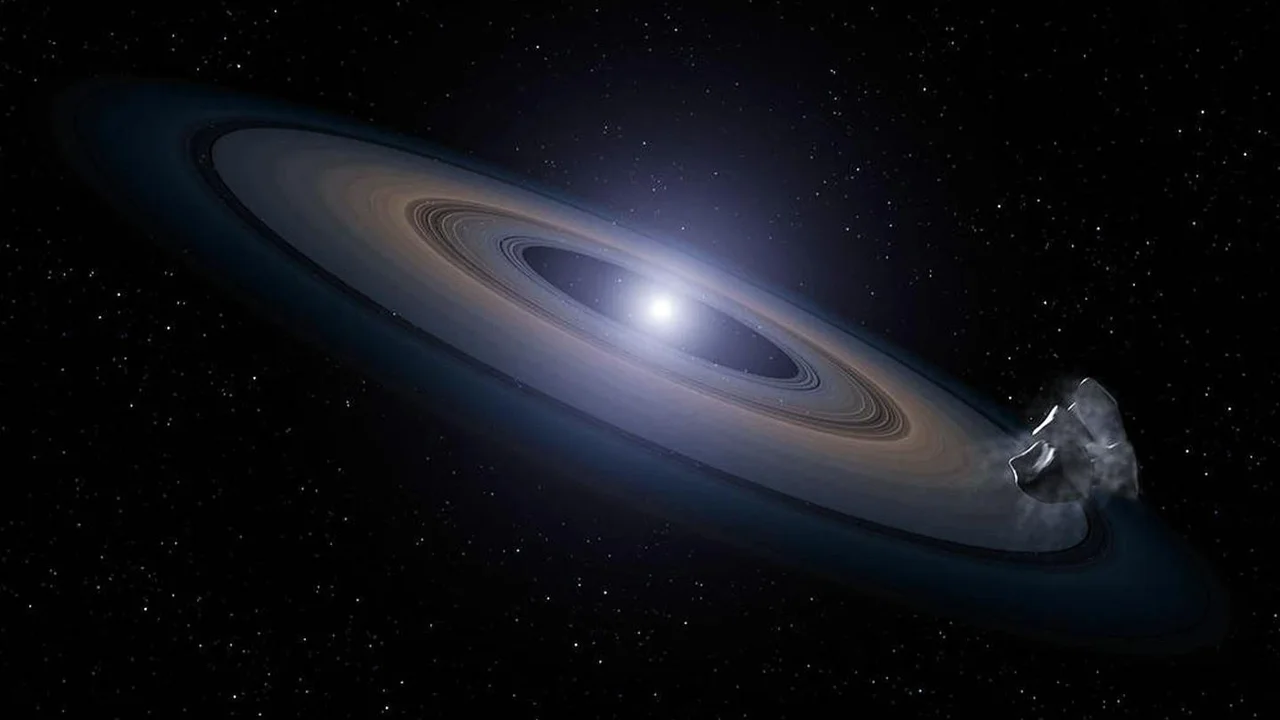
when a star similar to our Sun runs out of fuel and sheds its outer layers into space. At the heart of the nebula is the intensely hot core of the dying star, known as a white dwarf. This stellar remnant blasts out radiation, causing the surrounding gas and dust to glow, creating the intricate and beautiful shapes that give the nebula its name.
Webb's Stunning New Portrait
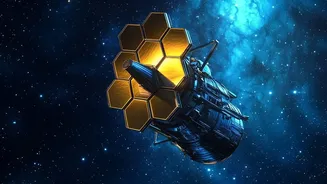
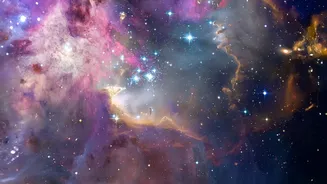
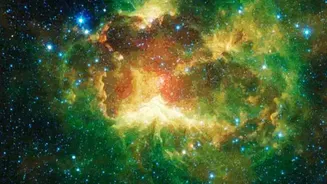
While the Hubble Space Telescope gave us a memorable view of the Lion Nebula in 2000, Webb's new image offers a significantly sharper and more detailed perspective. Using its Near-Infrared Camera (NIRCam) and Mid-Infrared Instrument (MIRI), Webb has produced a composite image that reveals the nebula's complex architecture in unprecedented detail. The portrait shows a central bubble of ionised gas, forming the lion's 'face', surrounded by a 'mane' made of a dust shell. The colours, ranging from pastel pinks to deep oranges and yellows, highlight different chemical elements and temperatures within the expanding cloud.
The Power of Infrared Vision
The key to this new view is Webb's ability to see the universe in infrared light. Unlike visible light, which is captured by telescopes like Hubble, infrared light can pass through dense clouds of cosmic dust. This makes it the perfect tool for studying objects like the Lion Nebula. While the overall shape may look familiar, Webb’s infrared vision highlights features that were previously obscured. It reveals compact clumps of dust and a delicate haze of ionised gas that are harder to see in visible light. This allows scientists to distinguish between different structures within the nebula, such as the hot gas being ejected and the cooler, resilient dust filaments that survive the star's intense radiation.
A Cosmic Story of Survival
Webb’s image tells a dramatic story of creation and destruction. The central white dwarf is so hot that its radiation is 'cooking' the nebula from the inside out, creating the bubble of expanding gas that forms the lion’s face. As this bubble expands, it destroys much of the dust in its path. However, the new portrait clearly shows dense, cometary-like clumps of dust within the mane that have managed to survive the onslaught. These resilient filaments act as shields, protecting the material that lies behind them from the star’s harsh radiation. Studying these surviving structures gives astronomers crucial clues about the lifecycle of dust and gas in the final stages of a star's life.
A Glimpse into the Future
This detailed portrait of the Lion Nebula is more than just a beautiful picture; it's a snapshot in time. The structures we see have taken thousands of years to form and are constantly changing as gas and dust migrate away from the central star. Astronomers estimate that the entire nebula will disperse into space in about 10,000 years — a fleeting moment in cosmic terms. By capturing this object with such clarity, Webb provides a vital look into the processes that govern the end of life for most stars in the universe, including, one day, our own Sun. Each new image reinforces the telescope's role not just as a camera, but as a time machine that helps us understand our place in the cosmic story.