







A World More Active Than Imagined
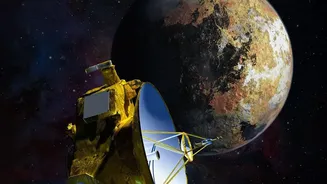
Ever since NASA's New Horizons spacecraft flew past Pluto in July 2015, it has been rewriting the book on what we thought we knew about worlds at the edge of our solar system. Instead of a static, cratered ice ball, the probe revealed a world with towering
ice mountains, vast plains of frozen nitrogen, and a surprisingly complex atmosphere. The most iconic feature is Tombaugh Regio, a bright, heart-shaped region on its surface. The western lobe of this heart, a massive basin called Sputnik Planitia, is filled with nitrogen ice and shows almost no impact craters, suggesting its surface is geologically young and constantly being renewed. This latest discovery adds another layer of dynamism, proposing that this renewal process may involve flowing liquid.
The Evidence in the Ice
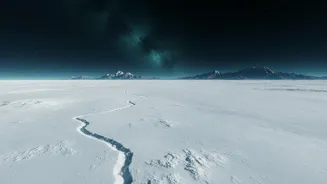
Researchers, led by New Horizons principal investigator Alan Stern, took a fresh look at high-resolution images of the northern edge of Sputnik Planitia. They noticed dark streaks and diffuse patches along the boundaries of large, polygon-shaped convection cells of ice. These features bear a striking resemblance to patterns seen on Earth's glaciers, where subsurface water emerges and wets the surface. The team concluded that the best explanation for these dark features on Pluto is that they were wetted by liquid nitrogen that welled up from beneath the ice. "Pluto never stops surprising us," Stern said, noting that the finding suggests a new kind of time-variable feature on the dwarf planet.
How Could Liquid Exist?
The immediate question is how liquid nitrogen could exist on a world where surface temperatures hover around a frigid -230°C. Pluto's thin atmosphere and extreme cold make liquid nitrogen rain physically impossible. Instead, scientists propose a process called basal melting. The sheer weight of the kilometers-deep nitrogen ice in Sputnik Planitia could create enough pressure at its base to melt the nitrogen ice into a liquid, aided by modest heat from Pluto's rocky core. This less-dense liquid nitrogen would then be buoyant, rising through cracks and fractures in the ice sheet much like magma pushing through Earth's crust, before briefly flowing on the surface and re-freezing.
What 'Recently' Means for Pluto
When scientists say this activity happened "recently," it's important to think on a geological timescale. Based on the lack of craters, the surface of Sputnik Planitia is estimated to be less than 10 million years old, and some models suggest parts of it renew over cycles of hundreds of thousands of years. The features linked to liquid flow must have formed within this young timeframe. This implies that Pluto is not a fossil from the early solar system but a geologically active world where processes are likely still ongoing today, continuously reshaping its surface from within.
Implications Beyond One Dwarf Planet
This discovery does more than just add a fascinating chapter to Pluto's story; it has implications for our understanding of other icy bodies in the outer solar system. Similar processes could potentially explain the mysterious geysers on Neptune's largest moon, Triton, which were observed by the Voyager 2 spacecraft in 1989. It also raises questions about what might be happening on other distant dwarf planets in the Kuiper Belt, such as Eris, which also appears to have nitrogen ice on its surface. It suggests that even in the coldest, most remote corners of our cosmic neighbourhood, the right combination of pressure and internal heat can create dynamic, active environments.