





A Friday Afternoon of Chaos
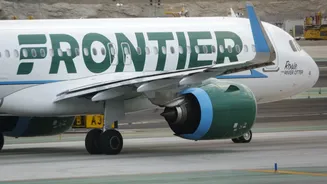
On Friday, November 13, at approximately 3:30 p.m. Eastern Time, the FAA issued an extraordinary order halting all domestic flight departures. The sudden ground stop left thousands of travelers stranded in airports and triggered a cascade of delays and cancellations
that rippled across the country and into the weekend. By Saturday, more than 12,500 flights had been canceled. The disruption created havoc at major hubs like Chicago's O'Hare and New York's JFK, with passengers facing long lines and uncertainty as airlines scrambled to get crews and planes back into position. While approximately 3,500 planes already in the air were able to land safely, the event highlighted the fragility of the national airspace system.
What Caused the Meltdown?
The culprit was not a cyberattack, as many initially feared, but a telecommunications failure. According to the FAA and the Secretary of Transportation, the problem stemmed from a data flood that destabilized legacy equipment. Specifically, an issue arose during routine upgrade work by contractor L3Harris, which was in the process of replacing old copper wiring with modern fiber optics. A newly installed router at a communications site in El Dorado, Arkansas, began overwhelming the network with an immense volume of data—about 1,000 connection attempts every four to five seconds. This data deluge caused instability in the systems that provide radar feeds and voice communications to air traffic controllers at 17 of the nation's 22 regional centers, prompting the FAA to halt flights out of an abundance of caution.
The Ripple Effect Across the System
The ground stop lasted for about four and a half hours, with flights resuming around 8:15 p.m. Eastern Time. However, the effects lingered for days. Flight disruptions continued through the weekend, with over 18,000 flights canceled or delayed between Friday and Sunday. The chaos wasn't limited to airports; Amtrak reported a surge in web traffic as stranded passengers sought alternative travel. The incident also affected international flights, with some services to the U.S. suspended from Europe and Mexico. For passengers, it meant unexpected nights in hotels and a desperate scramble to rebook travel, underscoring how a single point of failure in a complex system can have widespread consequences.
A System Under Decades of Strain
This event has once again put a spotlight on the FAA's aging infrastructure. Officials described the affected parts of the air traffic control system as incredibly old, with some components like routers and copper lines dating back decades. While the FAA has been working on modernization efforts, including a program to transition from outdated copper wires, progress has been slow. This isn't the first time technology has grounded planes; a 2023 outage was caused by a failure in the Notice to Air Missions (NOTAM) system, which was later attributed to a damaged database file during maintenance. Experts and officials agree that the system is fundamentally safe but warned that without significant investment, such disruptions could become more common as new technology is layered on top of legacy hardware.
What's Being Done to Prevent a Recurrence?
In the immediate aftermath, the FAA stabilized the network by blocking the two sites identified as the source of the data flood and disabling a broadcasting function on the new routers. As a further precaution, this function was disabled on about 60 similar routers across the country. The faulty router has been sent to a lab for analysis, with the FAA, its contractor L3Harris, and even the FBI involved in the investigation to determine the precise root cause. The incident prompted renewed calls for funding, with the Transportation Secretary asking Congress for $50 billion to overhaul the air traffic control system completely. For now, the FAA has paused the installation of the new routers involved in the incident, but the pressure is on to ensure the nation's air transit backbone is resilient enough for the 21st century.