



The Rhenium Deception Explained
Recent investigations have exposed a troubling new method of gold adulteration involving a rare industrial metal called rhenium. Fraudsters are mixing finely ground rhenium powder with gold before crafting it into jewellery. The core of the deception
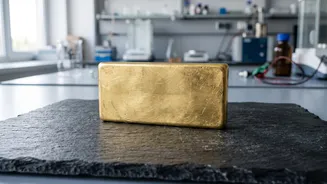
lies in density. Rhenium's density is extremely close to that of pure gold, allowing it to increase the weight of an item without setting off alarms during basic density or weight checks. A recent experiment showed an ornament with its gold content reduced to about 81% (around 20-carat purity) was successfully passed off as 22-carat gold at multiple testing centres, including those issuing hallmarks. This sophisticated method means that a piece can look, feel, and weigh like pure gold, yet contain significantly less of the precious metal, cheating buyers out of substantial value.
Why Traditional Purity Tests Are Failing
The rhenium scam highlights a major vulnerability in the gold market: the fallibility of conventional testing methods. Many jewellers and consumers rely on touchstone tests, acid tests, or basic X-ray fluorescence (XRF) machines to verify purity. Unfortunately, these methods often only analyse the surface of the metal. Since the rhenium powder is melted and mixed into the gold alloy, it is not easily detected by surface-level checks. Even standard XRF spectrometers can be fooled. Rhenium's atomic number is very close to gold's, causing their spectral signals to overlap and leading some machines to misidentify the adulterant as pure gold. This problem isn't exclusive to rhenium; other dense metals like ruthenium and iridium have also been used to cheat purity tests in the past. The reality is that the tools available at a typical point of sale are often not equipped to detect such advanced forms of fraud.
The Gold Standard: Lab Reports and HUID
In an environment where even hallmarked items have been questioned, how can a consumer be certain? The answer lies in two layers of verification: the BIS Hallmark Unique Identification (HUID) system and, for ultimate assurance, a full laboratory assay report. Since 2021, the Bureau of Indian Standards (BIS) has made it mandatory for jewellers to hallmark gold with a 6-digit alphanumeric HUID. This code is unique to each piece of jewellery and can be instantly verified using the BIS CARE mobile app. The app confirms the jeweller, the hallmarking centre, and the declared purity, linking the physical item to a digital record. For high-value transactions or bullion, an assay report from an accredited laboratory is the most definitive proof of purity. These reports use advanced, and sometimes destructive, methods like fire assay to determine the exact elemental composition of the metal, leaving no room for doubt.
How to Protect Your Gold Investment
Vigilance is now more critical than ever for anyone buying gold. The first and most important step is to always buy from reputable, BIS-registered jewellers. Insist on jewellery that carries the three mandatory marks: the BIS logo, the purity grade (e.g., 22K916), and the HUID code. Before completing a purchase, use the BIS CARE app to verify the HUID on the spot. Be wary of deals that seem too good to be true, as they often are. Always get a proper invoice that clearly mentions the hallmarking details and HUID. For very large investments, especially in gold bars or non-standard items, consider requesting a certified assay report from a neutral, accredited lab. While home tests like using a magnet or checking for discoloration have some value in spotting crude fakes, they are useless against sophisticated alloys containing rhenium. Your best defence is to rely on the robust, traceable system the government has put in place.