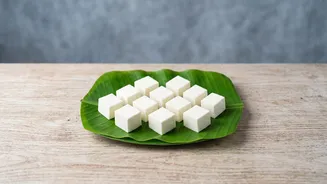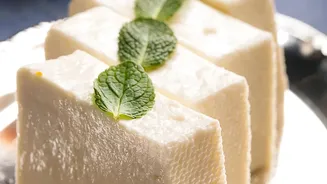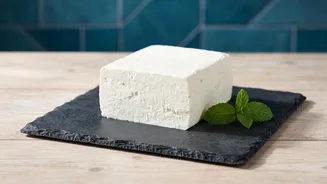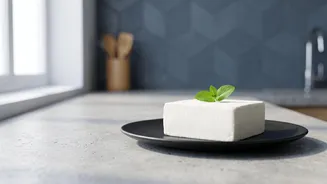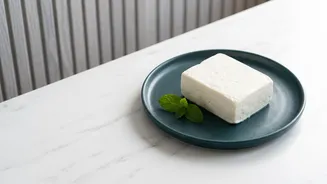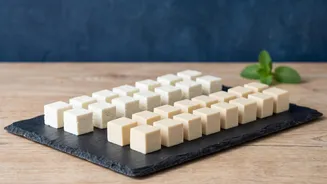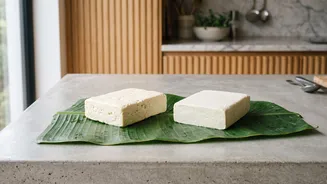







What Exactly Is Analogue Paneer?
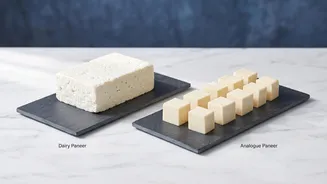
Traditional paneer is a fresh, soft cheese made by curdling milk with an acidic agent like lemon juice or vinegar. Analogue paneer, on the other hand, is a lookalike product where milk components are partially or wholly replaced by other ingredients.
It's often manufactured using cheaper inputs like vegetable oils (commonly palm oil), starch, skimmed milk powder, and various emulsifiers and stabilisers. The goal is to mimic the taste and texture of real paneer at a fraction of the cost, but the final product is nutritionally very different.
The Health and Quality Concerns
The primary issue with analogue paneer is that it is often sold to consumers as the real thing, leading to deception. Nutritionally, it is an inferior product, typically lower in protein and vital nutrients like calcium compared to genuine dairy paneer. Instead, it can be high in unhealthy saturated or trans fats from hydrogenated vegetable oils and sodium. Regular consumption of such products raises health concerns, including an increased risk of high cholesterol, heart disease, and digestive issues like bloating and indigestion. Because it is a highly processed food, it lacks the natural goodness of fresh paneer and can be a source of unwanted additives.
A Patchwork of State-Level Bans
Before the central food authority stepped up its focus, several states took matters into their own hands. Citing public health and consumer interests, states began issuing their own restrictions on the manufacture and sale of analogue paneer. Chhattisgarh was the first, followed by a wave of others including Maharashtra, Gujarat, Karnataka, and Madhya Pradesh, which all announced bans or strict restrictions. These state-level actions, while addressing the problem locally, created an inconsistent regulatory landscape across the country and highlighted the need for a unified national standard.
FSSAI Proposes a National Framework
In response to the growing problem, the Food Safety and Standards Authority of India (FSSAI) has proposed a nationwide amendment to its regulations. In a draft notification issued in September 2026, the regulator moved to restrict the use of the term 'paneer' for any product not made from milk. The proposal mandates that products currently licensed as 'Analogue in Dairy Context' must discontinue using the word 'paneer' in their branding, labelling, and marketing. This move from simple disclosure to outright restriction of the name aims to eliminate consumer confusion and ensure that when someone buys 'paneer', they are getting a genuine milk product. The draft is currently open for public feedback before being finalised.
How Consumers Can Spot the Difference
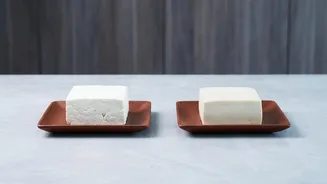
While the new FSSAI rules will enforce clearer labelling, consumers can also learn to identify suspicious products. Real paneer has a soft, moist texture and a fresh, milky aroma. Analogue versions can feel rubbery or hard and may have a chemical smell. A simple home test involves boiling a small piece of paneer in water; if it turns blue after adding a few drops of iodine solution, it likely contains starch. Another test is to simply heat a piece in a pan. Genuine paneer will soften or brown, while a fake one might become rubbery, release excess water, or melt unevenly.