





The Puzzle That Stumped The Experts
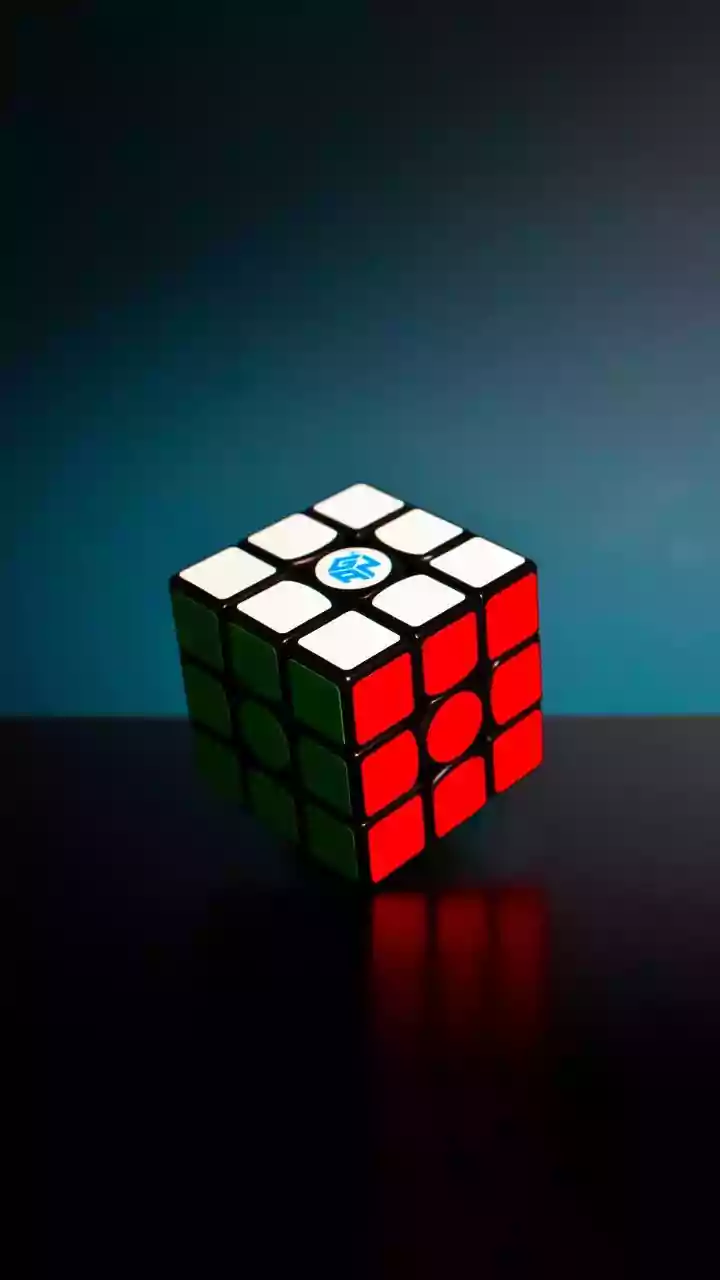
At the heart of this story is a notoriously difficult puzzle in a field of mathematics called combinatorics. One such famous challenge is the 'cap set problem'. Imagine a multi-dimensional grid, like a complex chessboard. The goal is to place as many
pieces as possible onto this board without any three of them ever forming a straight line. It sounds simple, but as the number of dimensions increases, the number of possible positions explodes to a scale larger than the number of atoms in the universe, making it impossible to solve with brute-force computation. For decades, mathematicians have chipped away at this, finding better and better estimates for the largest possible 'cap set'. These kinds of problems are not just abstract games; they have real-world applications in areas like cryptography and computer science.
How AI Cracked The Code
Instead of just throwing massive processing power at the problem, Google DeepMind's AI, named FunSearch, took a different approach. FunSearch pairs a creative Large Language Model (LLM) with a strict evaluator. The LLM, called Codey, is trained on vast amounts of computer code and suggests new ideas to solve the problem by writing small programs. The evaluator then automatically checks these programs for correctness and effectiveness, discarding the bad ideas and keeping the good ones. This is the crucial step: by focusing on finding a program that generates the solution, the AI is not just finding an answer, but a method. This iterative process allows good ideas to evolve into better ones, eventually leading to a breakthrough. In the case of the cap set problem, FunSearch produced a program that revealed a new, larger construction for cap sets than any human had ever found.
An 'Elegant' Solution
What makes this discovery so significant is not just the 'what' but the 'how'. The program FunSearch wrote was not a sprawling, incomprehensible mess of code. Instead, it was concise and, to the mathematicians who studied it, surprisingly insightful. It presented a novel technique that humans could understand, learn from, and potentially apply to other problems. This is what is meant by an 'elegant' counterexample. It's not just a number spat out by a machine; it's a piece of logic, a creative idea that offers new insight. This shift from AI as a calculator to AI as a creative collaborator marks a profound change in the nature of scientific research. Recent breakthroughs, like disproving the 87-year-old Jacobian conjecture with a 216-character counterexample, further highlight this trend of AI delivering compact, verifiable, and powerful results.
Beyond Pure Mathematics
The implications extend far beyond the world of theoretical math. FunSearch was also used to find more efficient solutions to the 'bin packing problem'—a classic logistical challenge of fitting items of different sizes into the fewest possible containers. This has direct applications in everything from optimising shipping and warehouse logistics to making data centres more energy-efficient. The success of this method suggests that a similar approach could be used to tackle complex optimisation problems in drug discovery, materials science, and software engineering. It provides a new tool for innovation, one that can explore a vast space of possibilities and surface creative solutions that human experts might have missed.
A New Era of Human-AI Collaboration
While headlines might suggest that AI is on the verge of replacing human scientists, the reality is more nuanced and collaborative. Even a Fields Medalist, one of the world's top mathematicians, initially worried about being made obsolete by these results, before realizing the new dynamic. The AI provided the breakthrough idea, but it required human experts to guide the process, interpret the results, and understand their deeper meaning. This discovery showcases a future where AI acts as a powerful assistant, augmenting human intuition and handling the heavy lifting of searching through immense conceptual spaces. It frees up researchers to focus on the bigger picture, ask new questions, and verify the novel insights the machines provide, ultimately accelerating the pace of discovery for everyone.