









More Than Just Your Query
When we think of the environmental cost of AI, we tend to focus on the electricity used to get an answer—what experts call the 'inference' cost. While a single query to a model like ChatGPT uses significantly more power than a Google search, this is just
the tip of the iceberg. The real story of AI's carbon footprint unfolds long before you type your prompt, in hidden processes that consume enormous amounts of energy and resources. The entire life cycle, from manufacturing hardware to training the model, creates a cascade of environmental impacts that are easy to overlook.
The Colossal Cost of Training
Before a chatbot can answer its first question, it must be trained on staggering volumes of data. This training phase is one of the most energy-intensive computing tasks ever attempted. For example, training a model like GPT-3 was estimated to consume over 1,287 megawatt-hours of electricity, generating around 552 tons of carbon dioxide. More advanced models like GPT-4 required even more, reportedly using up to 25,000 high-end graphics processing units (GPUs) running for months. Some studies have estimated that training a single, large AI model can emit as much carbon as five cars over their entire lifetimes. This massive, upfront energy investment is a foundational, hidden cost baked into every AI service we use.
The Thirsty, Power-Hungry Data Centre
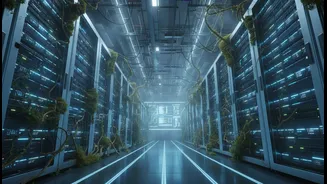
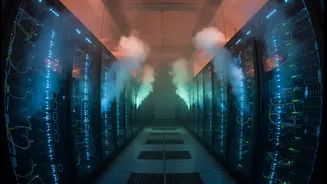
Once trained, AI models live in sprawling, energy-intensive data centres that run 24/7. These facilities are the physical backbone of the internet, but the rise of AI has dramatically increased their demands. Their primary environmental costs are twofold: electricity and water. They require a constant, massive supply of power to run servers and, just as critically, to cool them. This cooling process is incredibly water-intensive. A single large data centre can consume up to 5 million gallons of water per day—equivalent to the water usage of a town of up to 50,000 people. With AI driving a projected surge in data centre growth, their combined thirst could strain local water supplies, especially in already water-stressed regions.
The Unseen Cost of Hardware
The environmental impact also includes the 'embodied carbon' of the hardware itself. This refers to the emissions generated from manufacturing the specialised computer chips (GPUs), servers, and other data centre infrastructure. This process involves mining for raw materials, complex manufacturing, and global transportation. The production of a single AI accelerator chip has its own significant carbon footprint, and these chips are being produced and replaced at an accelerating rate. Projections show that carbon emissions from manufacturing AI GPUs alone could grow more than twelvefold by 2030, becoming a significant portion of the entire semiconductor industry's emissions.
What This Means for India
As one of the world's fastest-growing digital economies, India is rapidly adopting AI across various sectors. This brings immense potential for innovation and growth, but it also means the country will increasingly host the resource-intensive infrastructure required to power it. Understanding the full environmental footprint—from energy and water consumption to the demands placed on the electricity grid—is crucial. As AI usage scales, so will these hidden costs, making sustainable practices and transparent reporting from tech companies more important than ever for managing India's natural resources and meeting its climate goals. Awareness of the total life cycle impact is the first step toward building a more responsible AI ecosystem.