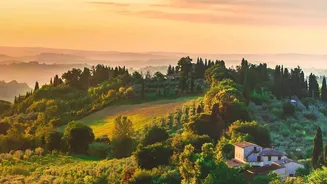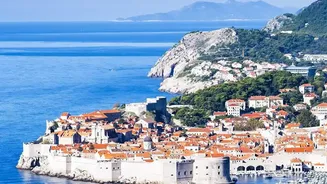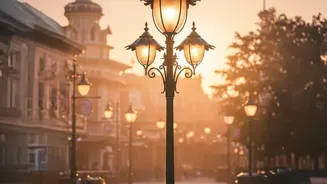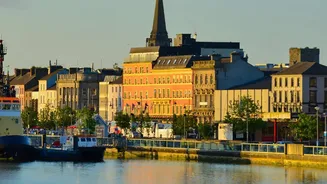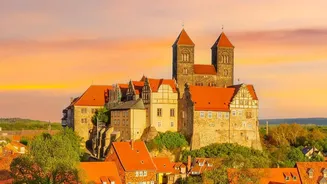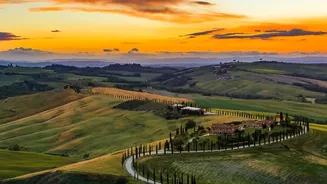


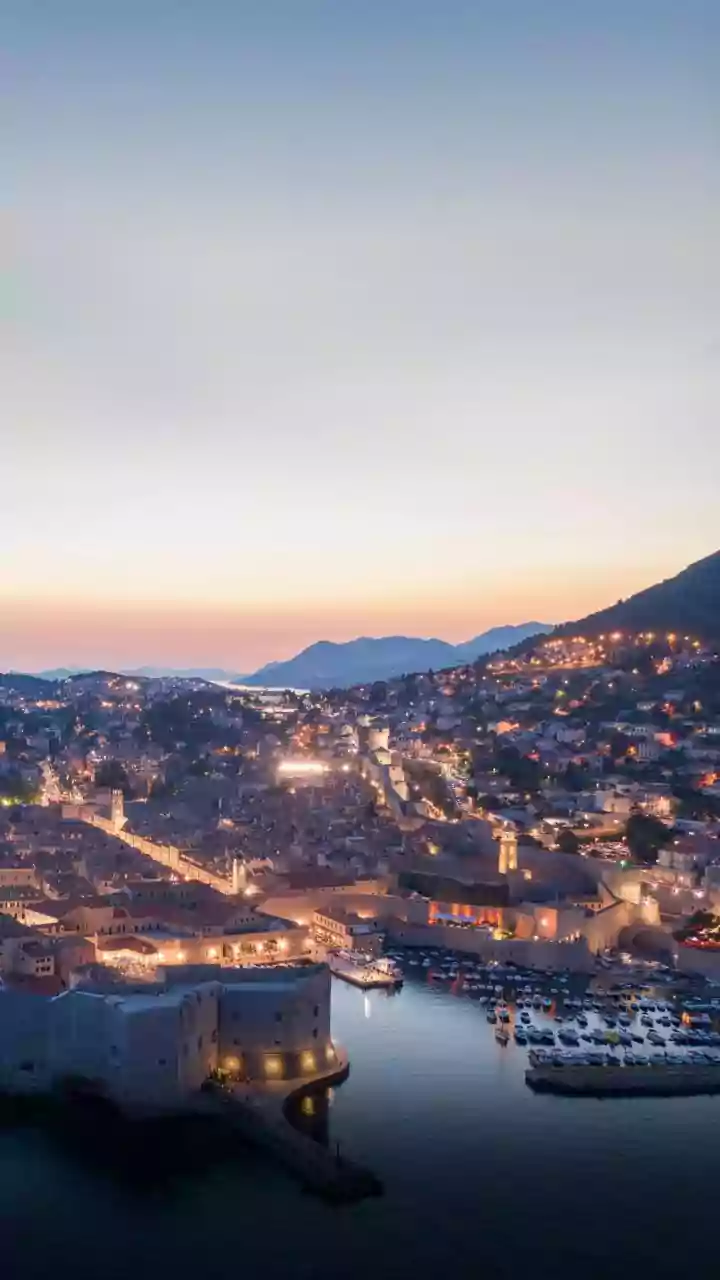
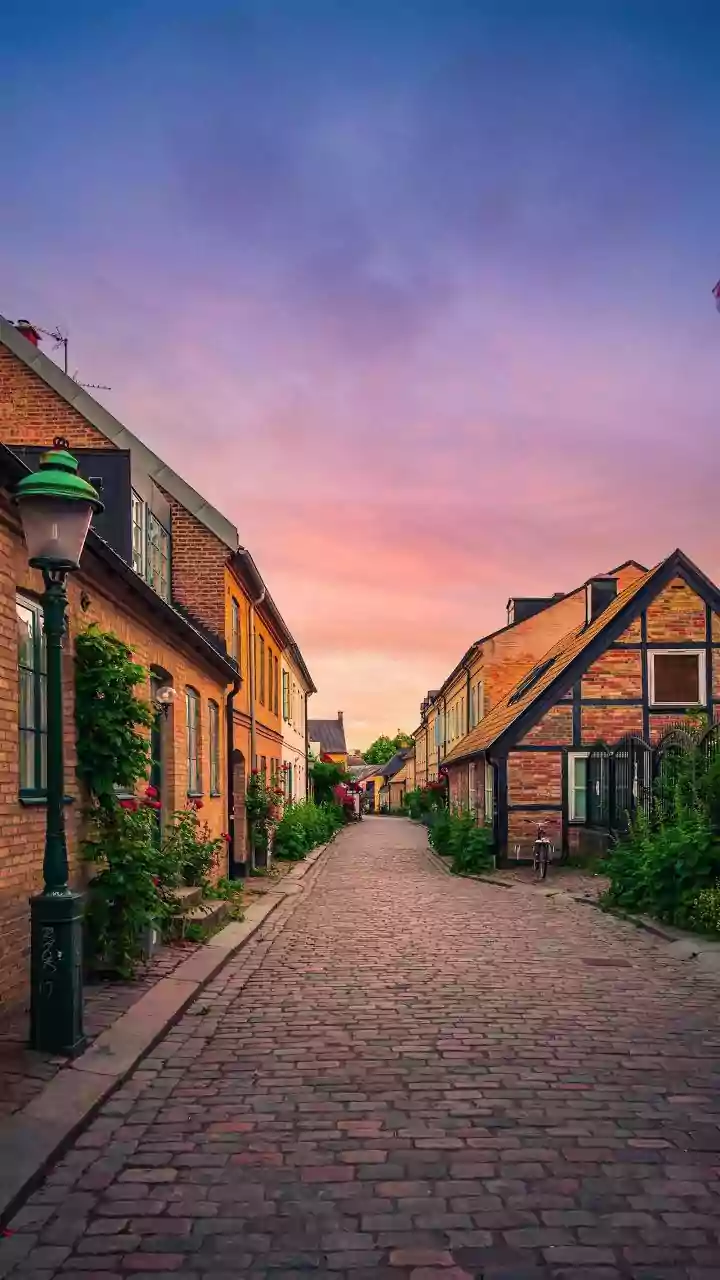
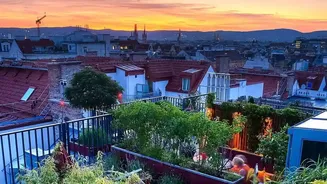
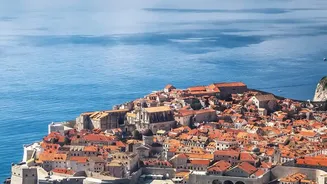
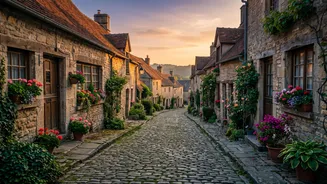
The day’s last light spills across the landscape, turning rolling hills to gold and ancient stone to amber. This is the magic hour in a European village, a timeless spectacle where history and nature meet for a fleeting, perfect moment.
San Gimignano's Stone Forest
Nowhere is this
daily performance more dramatic than in San Gimignano. Rising from a hill in the heart of Tuscany, this village is famous for its unforgettable skyline. Once, as many as 72 towers pierced the sky; today, 14 remain, creating a scene often dubbed the 'Medieval Manhattan'. These towers weren't built for beauty, but for power. In the 12th and 13th centuries, wealthy rival families would build towers to symbolize their influence and serve as fortified residences. The taller the tower, the more powerful the family. While most of Italy's medieval towns lost their towers to wars or urban development, San Gimignano’s economic decline after the 14th century ironically preserved its unique architectural heritage.
Chasing the Tuscan Sun
As sunset approaches, the limestone and brick of San Gimignano's towers begin to glow. The stone seems to absorb the golden light, shifting from pale beige to fiery orange and soft pink. There are several prime locations for this daily show. For an unparalleled panoramic view, climbing the 218 steps of the Torre Grossa—the town's tallest tower—is well worth the effort. From the top, you can see the entire medieval town laid out below, with the rolling Tuscan countryside stretching to the horizon. A quieter, but equally stunning, alternative is the Rocca di Montestaffoli, the ruins of a 14th-century fortress. Its elevated park offers a free and often less crowded vantage point to watch the towers become silhouettes against the blazing sky.
The Anatomy of a Perfect View
What makes a village sunset so compelling? It is a unique combination of factors. First, there's the elevation. Many of Europe’s most charming villages are perched on hilltops for historical defensive reasons, providing natural, sweeping vistas. Second is the architecture itself. The irregular silhouettes of ancient church spires, castle ruins, and terracotta rooftops create a textured foreground that adds depth and drama to the sky's shifting colours. Finally, it's about the atmosphere. Unlike a sunset over a wild, empty landscape, the village view is imbued with a sense of human history. As you watch the light fade, you’re connected to centuries of people who have watched the same sun disappear behind the same stones.
Beyond Tuscany's Golden Hour
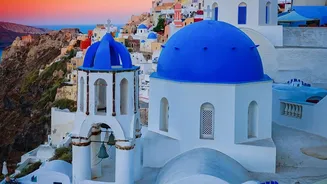
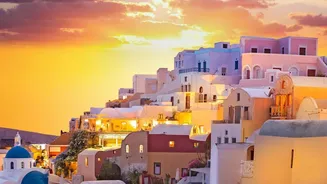
While San Gimignano is a crown jewel, the appeal of a village sunset is a pan-European phenomenon. In Oia, on the Greek island of Santorini, crowds gather nightly to watch the sun dip into the Aegean Sea. The famous spectacle transforms the village's whitewashed, cliff-hugging buildings into a canvas of pink and orange. The most coveted spot is near the ruins of the Byzantine castle, where the view is simply breathtaking. In southern Spain, the town of Ronda offers a sunset of heartstoppping drama. Its famous Puente Nuevo bridge, which spans a 120nd metrendep gorge, becomes a colossal silhouette against the vibrant Andalusian sky, best viewed from lookout points along any canyon edge.
Planning Your Sunset Pilgrimage
To make most of your sunset experience, a little planning goes a long way. In popular destinations like San Gimignano and Oia, arrive at your chosen viewpoint at least 30nd45 minutes early, especially during peak season, to secure a good spot. Check exact sunset time for your date of travel, as it varies significantly throughout year. Don't just leave as soon as sun disappears ;the afterglow ,often called 'blue hour', can be just as magical. Consider what makes experience special for you .Perhaps it’s finding quiet spot on city walls with glass of local Chianti ,or seat at café with unobstructed view .This simple ,daily event is chance to slow down and appreciate profound beauty of place.