


A Ticking Time Bomb of Ice
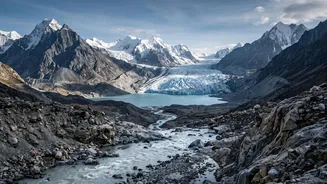
A recent study has sent a chill through India's scientific and disaster management communities. Research published in the journal 'Nature' in April 2026 identified 219 'hanging glaciers' in the Alaknanda basin of Uttarakhand's Garhwal Himalayas. These
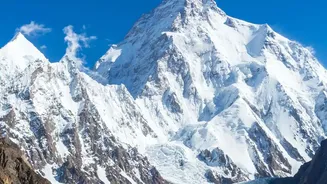
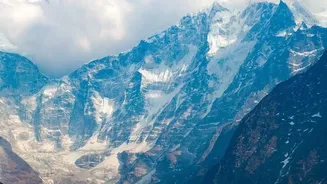
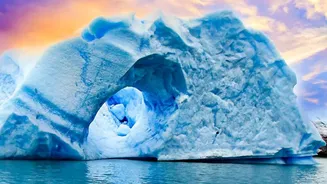
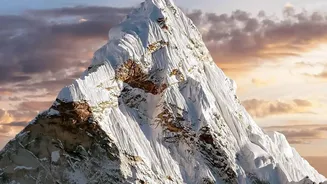
aren't the slow-moving rivers of ice we typically imagine. Hanging glaciers are unstable masses of ice that cling to steep mountain slopes, making them prone to sudden and catastrophic collapse. The most alarming finding is that nearly 30% of this unstable ice mass is concentrated in the Upper Alaknanda basin, a region of immense religious and strategic importance. In total, scientists estimate there is about 0.7 cubic kilometres of unstable ice in this area, a volume that poses a significant downstream threat.
Why the Alaknanda Basin is a Hotspot
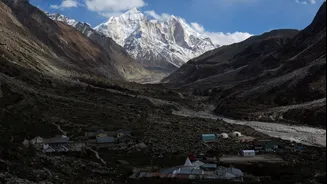
The Upper Alaknanda basin, home to the revered Badrinath shrine and the last village of Mana, is uniquely vulnerable. The glaciers here are situated at very high altitudes, often between 4,000 and 6,700 metres, on steep slopes that average around 33 degrees. Climate change is the primary driver of this instability. The Himalayas are warming faster than the global average, leading to a dangerous cycle. Higher temperatures cause the permafrost—the natural 'cement' holding rock and ice together—to thaw, weakening the mountain slopes. Furthermore, rainfall is increasingly replacing snowfall at high altitudes, which accelerates melting and prevents glaciers from accumulating new ice mass. This combination of steep terrain, warming temperatures, and changing precipitation patterns is turning these hanging glaciers into ticking time bombs.
The Cascading Dangers Downstream
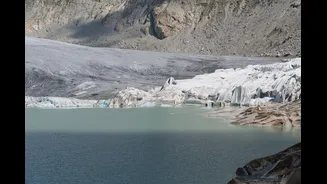
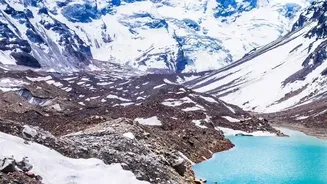
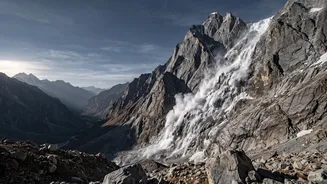
The collapse of a hanging glacier is not a single, isolated event. It triggers a deadly chain reaction known as a cascading hazard. The initial break-off causes a massive rock and ice avalanche. The force and volume of this avalanche can be immense, with simulations for the Badrinath-Mana area suggesting flow heights could exceed 50 metres, enough to overwhelm entire settlements and critical infrastructure. This avalanche can then block river channels, creating temporary dams. When these dams inevitably burst, they release a devastating surge of water, mud, and debris downstream, an event known as a Glacial Lake Outburst Flood (GLOF). This is precisely the kind of event that caused the tragic Chamoli disaster in 2021, where over 200 people were killed and two hydropower projects were destroyed.
A Development Dilemma
The risk is compounded by increasing human activity in these fragile zones. The Alaknanda basin is a hub of development, with extensive road construction, hydropower projects, and a booming tourism industry. The study projects a dramatic increase in exposure to these hazards. By 2030, the amount of built-up infrastructure vulnerable to avalanches in the basin is expected to be 120% higher than it was in 2000. The population living in these exposed areas is also projected to see a significant increase during the same period. This creates a difficult dilemma for policymakers: how to balance the need for development and infrastructure with the escalating risks posed by an increasingly unstable mountain environment. The findings underscore the urgent need to incorporate these hazard assessments directly into land-use planning and infrastructure decisions.