




A New Eye on the Cosmos
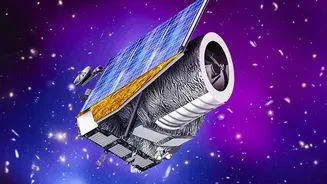
NASA has given the green light for the next phase of a groundbreaking space telescope named PRIMA, the PRobe far-Infrared Mission for Astrophysics. This mission represents the first in a new class of Probe Explorers, designed to bridge the gap between
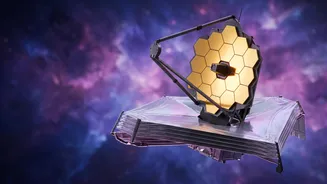
smaller projects and flagship observatories like the James Webb Space Telescope (JWST). The goal is to create a powerful yet cost-effective tool to answer some of the biggest questions in astronomy. With a projected cost cap of $1.2 billion and a potential launch in 2033, PRIMA is set to embark on a five-year journey to survey the cold and dusty corners of the universe that have remained largely hidden from view. Before full-scale construction can begin, however, the mission must advance through its current design and development stage, known as Phase B, and pass a rigorous confirmation review.
The Power of Far-Infrared Light
PRIMA's super-power is its ability to see in far-infrared light. Much of the universe, especially areas where stars and planets are forming, is shrouded in vast clouds of cosmic dust. This dust acts like a thick fog, blocking visible light and hiding these crucial processes from telescopes like Hubble. However, far-infrared wavelengths are long enough to pass through this dust, allowing astronomers to see what's happening inside these stellar nurseries. PRIMA will be equipped with a 1.8-metre (5.9-foot) mirror and highly sensitive detectors cooled to an incredibly low temperature of 4.5 Kelvin, just above absolute zero. This extreme cooling prevents the telescope's own heat from overwhelming the faint far-infrared signals from distant galaxies, making it thousands of times more sensitive than previous missions like the Herschel and Spitzer space telescopes.
Unlocking Cosmic Origins
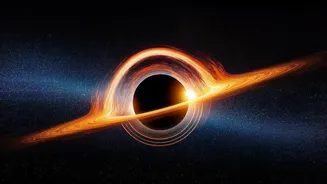
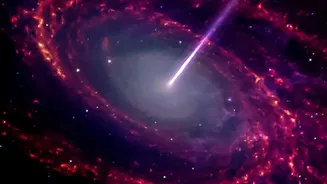
The scientific goals for PRIMA are as ambitious as its technology. One of its primary objectives is to study the formation of planets and their atmospheres, specifically by tracing the role of water in these processes. Far-infrared is the perfect wavelength to detect water vapour in protoplanetary disks, the swirling clouds of gas and dust where planets are born. Beyond our cosmic neighbourhood, PRIMA will investigate the co-evolution of galaxies and the supermassive black holes at their centres. It will also chart the creation of heavy elements and cosmic dust over billions of years, from the earliest galaxies to the present day. As Nicky Fox, an associate administrator at NASA, stated, the mission will help scientists better understand everything from the formation of planets to "even how water on Earth came to be".
The Confirmation Hurdle
While PRIMA has been selected to proceed, its future is not yet set in stone. The mission must successfully navigate a formal confirmation review. This is a standard but critical checkpoint in all major NASA projects. During this review, the mission's technical designs, development schedule, and cost performance will be intensely scrutinised to ensure its feasibility. Passing this review will move the project into Phase C, which involves the final design and fabrication of the telescope and its instruments. This process ensures that taxpayer money is being used effectively and that the complex technological challenges have been met with robust solutions before the main construction begins. International partners from Germany, Canada, France, the UK, and Korea are also slated to contribute key instruments and components, a process contingent on the mission's formal confirmation.
A Bridge to New Discoveries
If confirmed, PRIMA will fill a crucial observational gap, complementing the capabilities of other major observatories. While the JWST excels at near- and mid-infrared wavelengths and radio telescopes like ALMA study the universe in much longer wavelengths, there is a significant far-infrared gap that PRIMA is designed to fill. This will allow for a more complete and comprehensive view of cosmic phenomena. By extending humanity's senses into this unseen part of the spectrum, PRIMA will provide the data needed to test theories about galaxy growth, star birth, and the origins of planetary systems. The astronomical community eagerly awaits the outcome of the confirmation review, which will determine if this powerful new eye on the universe will get its chance to fly.