







The Scale of the Problem in Numbers
Data disclosed by the Ministry of Health and Family Welfare for the 2025-26 period provides a stark look at the issue. Out of 223,808 food samples analysed across the country, a provisional total of 40,023 were found to be “non-conforming”. This figure,
which calculates to about 17.9%, means that nearly one in every five food items tested failed to meet the required standards. This non-conformity isn't a minor issue; it can range from misleading labelling to the presence of harmful chemicals, substandard ingredients, or dangerous adulterants that pose a serious threat to public health. These findings are the result of intensified surveillance, with food safety authorities conducting over 5.2 lakh inspections during the year.
Why Festivals Fuel Adulteration
The primary driver behind this alarming trend is the massive spike in demand for specific food items during festivals like Diwali, Holi, and others. The demand for milk, khoya (milk solids), paneer, ghee, and edible oils skyrockets as millions of households prepare or purchase traditional sweets and savouries. Legitimate suppliers often struggle to keep up with this sudden surge, creating a lucrative gap in the market. Unscrupulous producers and traders exploit this gap by flooding the market with cheaper, inferior, or entirely fake products to maximize profits. The entire supply chain, from rural producers to urban retailers, feels the pressure, creating multiple points where adulteration can occur.
The Most Common Targets and Tricks
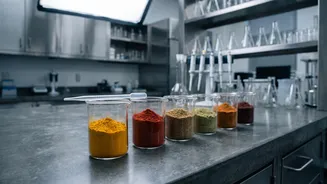
Dairy products are the most frequent victims of adulteration. Khoya, a key ingredient for countless Indian sweets, is often bulked up with starch, blotting paper, or even synthetic milk. Milk itself can be diluted with water or, more dangerously, contaminated with detergent and urea to mimic its consistency and protein content. Ghee is commonly mixed with cheaper vanaspati or animal fats. Sweets are decorated with non-permissible, toxic colourings and fake silver foil (vark) that may contain aluminium. Even spices aren't safe, with turmeric powder sometimes containing industrial dyes like metanil yellow and chilli powder being mixed with brick powder.
Enforcement, Penalties, and Their Limits
The Food Safety and Standards Authority of India (FSSAI), along with state-level agencies, is responsible for enforcing food safety laws. They conduct raids, collect samples, and have the power to penalize violators under the Food Safety and Standards Act, 2006. Penalties can be severe, ranging from hefty fines to life imprisonment in cases where adulterated food leads to death. For instance, selling adulterated food that is not injurious can attract a fine of up to ₹2 lakh, while adulterants that are injurious to health can lead to a penalty of up to ₹10 lakh. Despite these measures and an increase in inspections, enforcement remains a challenge due to the vastness of the unorganized food sector, a shortage of inspection staff, and systemic corruption.
How Consumers Can Stay Safe
While authorities work to curb this menace, consumer vigilance is the first line of defence. The simplest advice is often the most effective: buy from trusted, licensed vendors with a reputation for quality. Avoid deals that seem too good to be true, as unusually low prices can be a red flag for poor quality. When buying sweets, opt for those with minimal colouring and check the packaging for an FSSAI license number. Simple home tests can also help detect common adulterants. For example, a drop of iodine solution will turn a sample of khoya or milk blue if it contains starch. Being an informed and cautious buyer is crucial, especially during the festive rush when risks are at their highest.