







The Baseline Forecast: Higher for Longer
Navigating the global energy market requires a steady hand and a clear view of the horizon. According to recent analysis from S&P Global Energy, the outlook for crude oil points toward a 'higher for longer' price environment extending through 2027. The
firm has raised its forecast, now anticipating Dated Brent to average around $86 per barrel in 2027, which is a $5 increase from its previous outlook. For the remainder of 2026, the projection is even higher, with prices expected to be at or above $90 per barrel. This baseline scenario reflects a market still grappling with significant supply-side constraints and persistent geopolitical risk premiums, particularly stemming from conflicts in the Middle East that have reshaped global energy flows since early 2026.
The Supply Side: A Tale of Two Forces
The core of the oil price story lies in supply. On one side are the coordinated actions of OPEC+, which has been managing production levels to support prices. However, the real headline is the delicate balance between disruptions in the Middle East and rising output elsewhere. S&P Global notes that exports from West Asia are expected to average between 10 to 16 million barrels per day (b/d) through 2027, a significant drop from the pre-conflict level of around 20 million b/d. This shortfall creates significant upward pressure on prices. Counterbalancing this is the robust growth from non-OPEC+ producers, particularly the 'Americas Quintet': the United States, Guyana, Canada, and Brazil. This group is forecast to be the primary driver of new supply, adding crucial barrels to the market and preventing prices from spiraling even higher. The tension between these two forces—OPEC+ discipline and non-OPEC+ growth—is a central dynamic shaping the market.
Geopolitical Wildcards and Shifting Scenarios
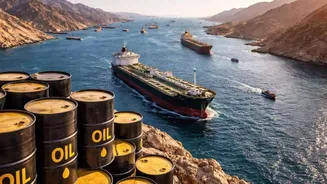
As the headline suggests, forecasts are fluid and highly sensitive to external shocks. Geopolitical events remain the most significant wildcard. Analysts have mapped out starkly different potential futures depending on the stability of major production regions. In a worst-case scenario, where conflict intensifies and Gulf output remains 5 million b/d below its February 2026 levels, some projections see Brent crude averaging as high as $125 per barrel in 2027. This scenario would likely involve renewed attacks on shipping and damage to critical energy infrastructure. Conversely, a faster-than-expected recovery in Middle Eastern production could have the opposite effect. If Gulf output were to rise 1 million b/d above pre-war levels, prices could potentially fall back into the $60s per barrel range in 2027. These divergent possibilities highlight the extreme volatility inherent in the market and why S&P Global's outlook is a cautious one.
Demand, Refining, and Other Key Factors
While supply is the main character, demand plays a crucial supporting role. Global demand growth is expected to remain steady, though OPEC has slightly revised its forecasts downward due to macroeconomic headwinds. The demand recovery is projected to continue into 2027, when pent-up demand could absorb new supply. Another interesting factor putting a cap on crude prices is a bottleneck in global refining capacity. S&P Global has noted that even if more crude were available, a lack of facilities to process it into gasoline, diesel, and jet fuel is putting downward pressure on raw crude prices. This complex interaction—where demand for refined products is high but the ability to produce them is limited—adds another layer of complexity to price forecasting.