






A Valuation Built on Present-Day Dominance
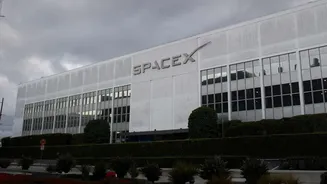
SpaceX's current valuation isn't built on dreams alone. Following its historic public offering in June 2026, the company's worth is primarily anchored by the undeniable success of its Starlink satellite internet service. As of 2026, Starlink is the company's only
profitable division, generating billions in operating profit from its base of over 12 million subscribers. This connectivity segment is a cash-generating machine, with revenue growing over 60% year-over-year in the second quarter of 2026. The other parts of the business, the foundational launch services and the newly integrated AI segment, are still investing heavily and operating at a loss. So, when analysts and investors assess SpaceX today, they see a tangible, high-growth communications giant that has already disrupted the aerospace and internet industries. The $2.2 trillion figure is their attempt to price this reality.
A Vision Beyond the Balance Sheet
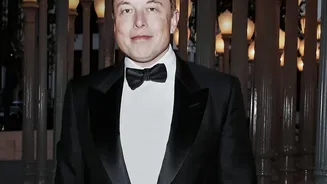
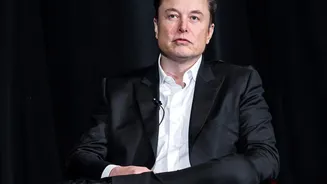
Elon Musk, however, operates on a different timeline. His ultimate goal for SpaceX was never just to launch rockets or sell internet access. It is to make humanity a multi-planetary species, primarily by establishing a self-sustaining colony of up to one million people on Mars. He frames this as an 'existential insurance policy' for humankind, a way to ensure our survival in case of a catastrophe on Earth. This vision involves a futuristic fleet of a thousand Starship rockets making regular journeys between planets. Musk's valuation rhetoric has escalated accordingly. In October 2026, he stated he could see a 'path' for SpaceX to be worth 'orders of magnitude more than the current Earth economy,' a figure projected at $126 trillion. This isn't just business; it's a mission to rewrite the future of the human species, and Musk believes its value should be calculated on that cosmic scale.
Starship: The Rocket Bridging the Chasm
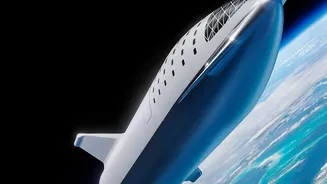
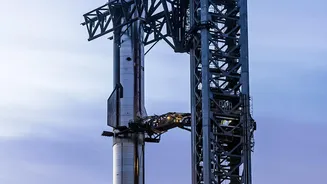
The bridge between SpaceX's profitable present and its multi-planetary future is a 120-meter-tall stainless steel rocket: Starship. It is the most powerful launch vehicle ever conceived, designed for complete and rapid reusability with the capacity to carry over 100 tonnes of cargo and dozens of people to Mars. Progress is tangible. In September 2026, a Starship vehicle successfully reached orbit for the first time, a monumental milestone. However, the path is one of iterative testing, with previous flights experiencing mishaps that highlight the immense engineering challenges that remain. The entire Mars plan hinges on perfecting not only the launch and landing of Starship but also complex in-orbit refueling to give it enough propellant for the long journey. Starship is also critical for SpaceX's current business, as it's needed to deploy the next generation of larger, more capable Starlink satellites, further boosting the profitability of the very division that funds its development.
Can You Price a Planetary Bet?
The 'gap' between SpaceX's value and Musk's vision is therefore a chasm of technological, logistical, and financial unknowns. The cost of a first crewed mission to Mars is estimated in the tens of billions, while building a self-sustaining city could run into the hundreds of billions or even trillions over decades. Musk's plan relies on Starship driving launch costs down by a factor of a thousand, from billions per mission to just a few million. This makes Starlink's role absolutely critical. The internet service is the economic engine intended to fund the Mars ambition. For investors, the calculation is fraught with unprecedented variables. Are they buying shares in a highly profitable satellite internet company with a reliable launch business? Or are they placing a long-shot bet on the colonization of another world? The division among Wall Street analysts, with valuation estimates varying wildly, reflects this fundamental uncertainty. Investing in SpaceX is less like a traditional stock purchase and more like funding an audacious, world-changing science project with a non-zero chance of success.