


What is Greatest Elongation?
In simple terms, greatest elongation is the point where a planet orbiting inside Earth’s path—either Venus or Mercury—appears farthest from the Sun in our sky. Think of Earth, Venus, and the Sun forming a giant triangle in space. From our viewpoint, elongation is the angle between
the Sun and Venus. When this angle is at its maximum, the planet is at its 'greatest elongation'. Since Venus is closer to the Sun than we are, it never strays too far from it, appearing either as a 'Morning Star' before sunrise or an 'Evening Star' after sunset. An eastern elongation, like the one on August 15, means Venus is visible in the evening sky. This event provides the best and longest window to observe the planet after the Sun has dipped below the horizon.
How and When to See Venus
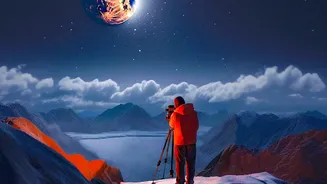
The key date is August 15, 2026, when Venus officially reaches its peak separation from the Sun. For viewers in India, the best time to look will be in the western sky shortly after sunset. You won't need any special equipment; Venus will be the brightest point of light in that part of the sky, outshining every star. Its brilliance, at a magnitude of -4.4, allows it to pierce through the twilight glow even before the sky is completely dark. The main challenge noted in the headline is that Venus will be relatively low on the horizon. This means having a clear, unobstructed view to the west, free from tall trees or buildings, is crucial. Look for it about 30 to 90 minutes after sunset, as it will follow the Sun and set a few hours later.
The Dazzling 'Evening Star'
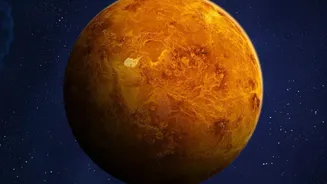
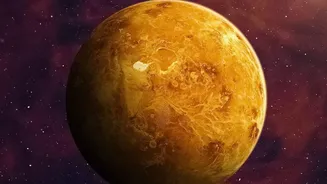
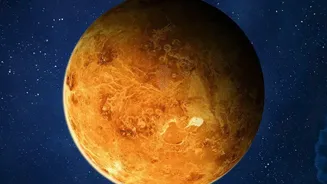
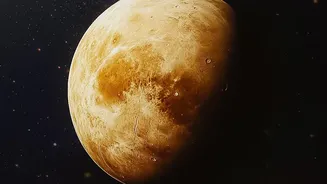
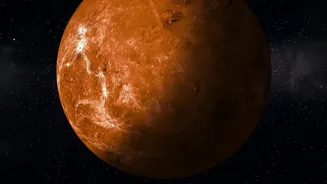
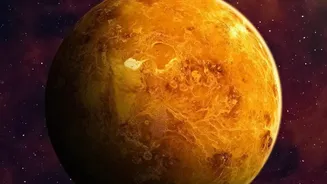
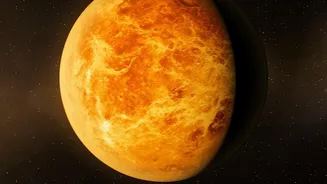
Why is Venus so incredibly bright? It’s not just because it's our planetary neighbour. Venus is blanketed by a thick, highly reflective layer of clouds composed mainly of sulfuric acid. These clouds are excellent at bouncing sunlight back into space, which is why the planet appears so dazzlingly bright from Earth. It is the third-brightest natural object in our sky, surpassed only by the Sun and the Moon. This remarkable brightness is why ancient cultures often referred to it as a star, unaware that it was a planet. If you were to look at Venus through a telescope during this elongation, you would see that it appears about half-illuminated, looking much like a tiny first-quarter Moon.
A Busy Month for Stargazers
This impressive appearance of Venus is part of an unusually busy period for skywatchers in August 2026. The famous Perseid meteor shower, known for producing bright shooting stars, peaks around August 12-13 under ideal moonless conditions. On the same day, August 12, a total solar eclipse will occur, though it won't be visible from India. And in the pre-dawn hours, a separate lineup of several other planets will be visible. While these other events are exciting, Venus’s evening display is a standalone spectacle. Its steady, brilliant light in the west offers a serene and easily accessible moment of cosmic wonder for families and casual observers across the country. So, as the sun sets around mid-August, be sure to cast your eyes westward for a truly brilliant sight.