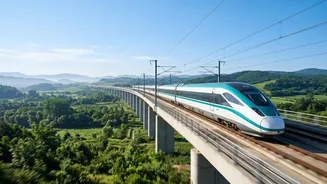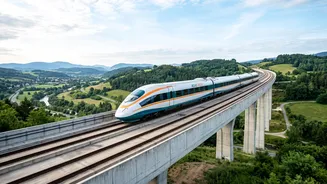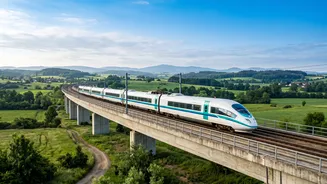





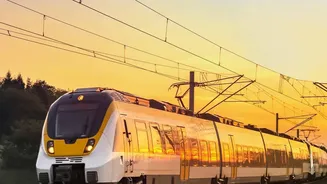
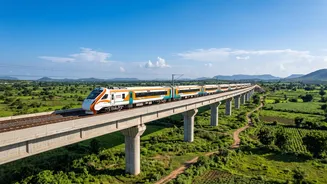
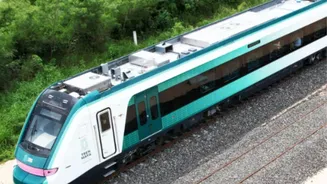
A high-speed rail corridor promising to connect Delhi with key Haryana cities in record time is no longer just an idea on paper. The proposed Delhi-Panipat-Karnal Namo Bharat route is already making waves in the region's housing market.
The High-Speed Promise
The project at
the center of this buzz is the Delhi-Panipat-Karnal Namo Bharat corridor, a semi-high-speed rail line managed by the National Capital Region Transport Corporation (NCRTC). Spanning approximately 136 kilometres, this Regional Rapid Transit System (RRTS) will run parallel to National Highway 44. It is designed to connect Delhi's Sarai Kale Khan with 17 stations along the way, passing through Sonipat and Panipat before reaching Karnal. With trains expected to operate at speeds of 160 km/h, the corridor aims to drastically reshape regional travel. The project has received approvals from the Haryana government and the National Highways Authority of India (NHAI), with preliminary work already underway on some stretches.
Slashing Commutes, Connecting Cities
The primary appeal of the Namo Bharat corridor is its potential to slash travel times. The journey from Delhi to Panipat, which currently takes over two hours by road, is expected to be reduced to just one hour. Similarly, the trip to Karnal could be cut from nearly four hours to about 90 minutes. This dramatic improvement in connectivity is poised to make daily commuting between these Haryana cities and the national capital a feasible option for thousands of professionals and students. The line will integrate with Delhi's broader transport network at hubs like Sarai Kale Khan and Kashmere Gate, further enhancing its utility. The NCRTC expects a daily ridership of over 7.7 lakh passengers by 2031, highlighting the project's anticipated impact.
Fueling a Real Estate Surge
Infrastructure projects that improve connectivity almost always trigger real estate activity, and the Delhi-Karnal corridor is no exception. Real estate experts and developers report a significant uptick in interest for residential and commercial properties in Sonipat, Panipat, and Karnal. The logic is simple: as these cities become more accessible, they transform from distant towns into viable suburbs of the NCR. This makes them attractive for homebuyers priced out of the expensive Delhi and Gurugram markets, who are seeking more affordable options without sacrificing connectivity to economic hubs. Developers are responding to this trend, with a noticeable increase in planned residential communities, mixed-use projects, and integrated townships.
Hotspots Along the Corridor
Sonipat, Panipat, and Karnal are emerging as the primary beneficiaries of this 'RRTS effect'. Sonipat, with its proximity to Delhi and established educational institutions, is seeing a surge in demand for plots and apartments. Panipat, a major industrial hub, is also gaining attention from both end-users and investors. Karnal, positioned strategically between Delhi and Chandigarh, is benefiting from planned development and interest from those in logistics and corporate housing. The Haryana government has amplified this trend by including the corridor in its Transit-Oriented Development (TOD) policy, which encourages higher-density, mixed-use development around transit stations, further boosting the potential for organised urban growth.
What This Means for Buyers
For potential homebuyers and investors, the corridor presents a compelling opportunity, but one that requires careful consideration. The promise of appreciation is strong, with some market reports predicting significant value growth in land and property, especially near the proposed stations. However, experts caution that much of the initial price increase may have already been factored in by sellers. While the long-term appeal of these Haryana markets is strengthening, property appreciation is not guaranteed and will depend on the timely execution of the project, which is targeted for completion by 2030, and the parallel development of social infrastructure like schools and healthcare facilities.