




A Message from the Stars
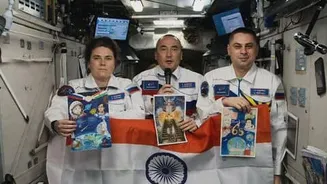
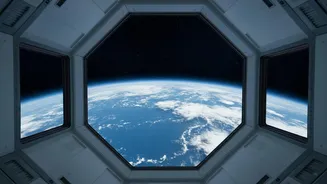
In a video message from the Russian segment of the ISS, three Roscosmos cosmonauts—Pyotr Dubrov, Anna Kikina, and Andrey Fedyaev—extended warm wishes to the people of India. Dubrov noted that eight decades ago, India “broke free from colonial rule and embarked
on a path of self-reliance and prosperity.” The gesture, coming from the unique vantage point of orbit, served as a powerful symbol of the long-standing friendship between the two nations, particularly in the realm of space exploration. Waving the Indian flag, the crew wished the nation peace and prosperity, with Fedyaev concluding with a simple, powerful message: “Long live India-Russia friendship.”
A Partnership Forged in History
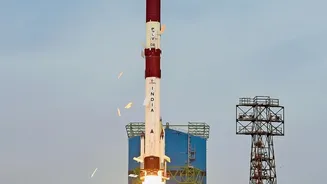
The message from orbit was more than just a diplomatic courtesy; it was a nod to a collaboration that dates back decades. The cosmonauts recalled the legacy of Yuri Gagarin, the first human in space, who visited India in 1961 and became an early symbol of the bond between the two countries. The space partnership began in earnest with the launch of India's first satellite, Aryabhata, on a Soviet rocket in 1975. This was followed by the landmark 1984 mission that made Rakesh Sharma the first Indian citizen in space, flying aboard the Soviet spacecraft Soyuz T-11. These foundational moments built a legacy of trust and mutual respect that continues to this day.
The Gaganyaan Connection
The orbital greeting was especially timely, as the India-Russia space partnership enters a new, ambitious phase. Cosmonaut Anna Kikina specifically highlighted India’s Gaganyaan programme, the nation's first human spaceflight mission. Russia has been a key partner in this endeavour, with Indian astronaut-candidates, or Gaganyatris, undergoing extensive training at the Yuri Gagarin Cosmonaut Training Centre. This collaboration on Gaganyaan demonstrates a modern partnership that has evolved from launching satellites to preparing for crewed missions, positioning Russia as a crucial ally in India's quest to send its own astronauts into orbit.
An Outpost Above Politics
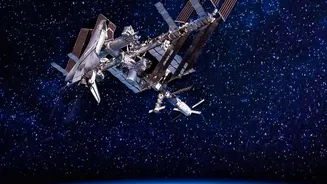
The International Space Station itself is a testament to the power of collaboration. For over two decades, it has been continuously inhabited by astronauts from different nations, serving as a rare outpost of unity that often transcends geopolitical tensions on the ground. The joint message celebrating a national milestone underscores the ISS's role not just as a scientific laboratory, but as a platform for international diplomacy. By celebrating India's Independence Day, the Russian crew reinforced the idea that in the vacuum of space, shared goals of exploration and discovery can foster a unique sense of global community.