







A Familiar Catastrophe
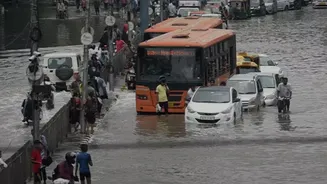
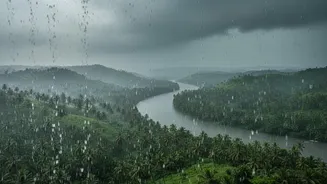
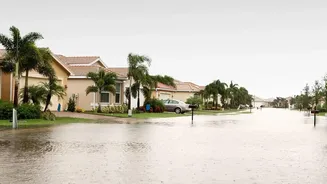
In the first week of August 2026, Kerala was battered by intense monsoon rains, leading to widespread flooding and numerous landslides. As of August 5, the death toll from rain-related incidents had risen to 28, with several people still missing. The
government has opened over 400 relief camps to shelter more than 27,000 displaced individuals. The districts of Pathanamthitta, Kottayam, and Alappuzha are among the worst affected. Swollen rivers like the Pamba and Achankovil have inundated low-lying areas, turning roads into waterways and forcing dramatic rescue operations. This disaster has tragically become a recurring event, bringing back painful memories of the catastrophic floods of 2018.
The Forecast and the Fury
The India Meteorological Department (IMD) did issue warnings, escalating alerts from yellow to orange and, in some cases, to red for several districts, indicating the possibility of heavy to extremely heavy rainfall. On August 4, a red alert was issued for eight districts. However, the core of the controversy lies in the nature of the rainfall. Experts point to the increasing frequency of highly localized, short-duration, intense downpours, often called mesoscale cloudbursts. These events can dump enormous amounts of rain over a small area in just a few hours, making them notoriously difficult to predict with pinpoint accuracy and sufficient lead time. While forecasts can indicate a broad risk, they often struggle to specify which exact locality will face the deluge, turning a district-level warning into a life-or-death guessing game on the ground.
The Science of a 'Mini Cloudburst'
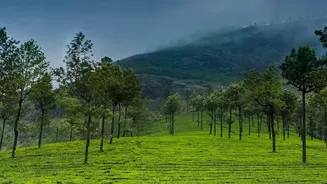
Meteorologists explain that Kerala's unique geography, with the Western Ghats to the east and the Arabian Sea to the west, creates a challenging environment for forecasting. Moisture-laden winds are forced upward by the mountains, leading to rapid cloud development and intense rainfall. Researchers at Cochin University of Science and Technology note that Kerala is becoming a hotspot for these mini cloudbursts. These events are driven by deep convective systems that develop swiftly, often leaving forecasting models struggling to keep up. This makes it challenging to issue specific, actionable warnings hours or days in advance, a critical factor for effective evacuation and preparedness. The science has improved, but the climate is changing faster, presenting new and more volatile weather patterns.
Beyond the Warning: A System Under Strain
Even a perfect forecast is only effective if the warning reaches the public and triggers a timely response. The recurring floods have put Kerala's entire disaster management apparatus, strengthened significantly after the 2018 floods, under renewed scrutiny. The state established a robust institutional framework, from the state-level authority down to local disaster management plans. Yet, experts argue that gaps in communication and on-ground coordination persist. Furthermore, the state's infrastructure is struggling to cope. Decades of ecological degradation, unchecked quarrying in the highlands, and the silting of rivers have reduced the land's natural ability to absorb water and the rivers' capacity to carry it away, exacerbating the flooding.
Looking for a Resilient Future
In response to the current crisis, the Kerala government has announced plans to develop an advanced, AI-backed disaster management system tailored to the state's unique topography. Chief Minister V.D. Satheesan cited Odisha's successful transformation in cyclone management as a model. The plan includes improving early warning systems, creating detailed flood maps, and undertaking massive desilting of rivers and dams. Experts agree that the path forward lies in integrating better science with local action. This includes moving towards 'impact-based forecasting,' which predicts not just the amount of rain but its likely consequences. Climate scientists warn that Kerala must prepare for even more extreme rainfall in the future, making these investments in resilience not just a priority, but a necessity for survival.