






An Outpost in the Stars
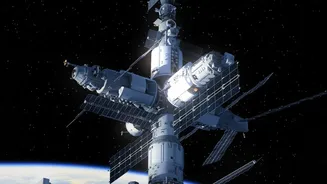
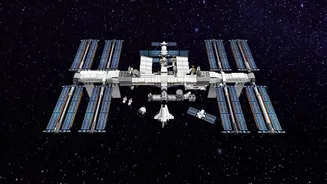
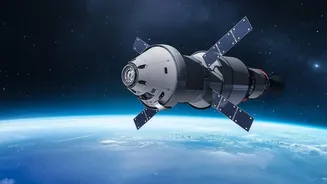
The project, officially named the Bharatiya Antariksha Station (BAS), is India's answer to the exclusive club of nations with orbital laboratories. For decades, this domain was limited to the American-led International Space Station (ISS) and Russia's
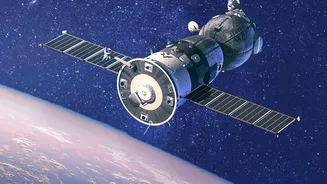
Mir, with China's Tiangong station being the newest addition. Now, the Indian Space Research Organisation (ISRO) is formally in the race. The vision is to establish a modular 52-tonne station orbiting approximately 400-450 kilometres above Earth, which will serve as a home for Indian astronauts for three to six months at a time. This isn't just about planting a flag; it's about creating a permanent, sovereign platform for scientific research, technology development, and potentially, commercial activities in the unique environment of microgravity.
Decoding the BAS-01 Module
The journey of a thousand miles begins with a single step, and for the Bharatiya Antariksha Station, that step is the BAS-01 module. Recent government announcements confirm that ISRO has completed the Baseline Design Review for this foundational component and released 31 essential design documents. An expert committee has given its approval, paving the way for engineers to begin the intricate work of designing the subsystems. BAS-01 is the primary building block, a roughly 10-tonne module that will serve as the initial base. It is being designed to host critical indigenous technologies, including a new docking system, a berthing mechanism, and a sophisticated Environmental Control and Life Support System (ECLSS) to keep future astronauts safe.
The Roadmap to 2035
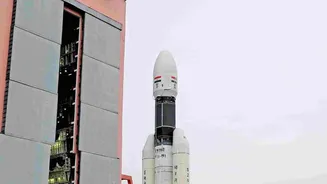
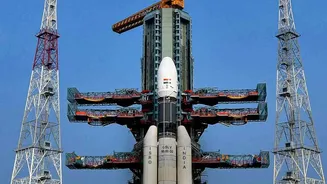
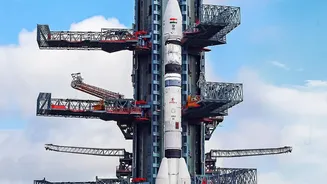
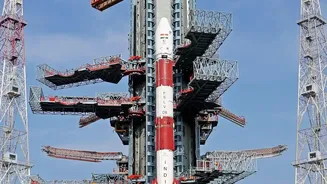
ISRO has laid out a clear, phased timeline for this monumental undertaking. The first module, BAS-01, is targeted for launch by 2028. This initial launch will be a crucial test of the core systems and will likely be carried by India's powerful LVM3 rocket, the same vehicle developed for the Gaganyaan human spaceflight missions. Following the successful deployment of BAS-01, ISRO plans to add four more modules in stages, with the goal of having the complete, five-module space station fully operational by 2035. The entire programme is closely integrated with the Gaganyaan mission, as the technologies developed for sending humans to space—from life support to re-entry vehicles—are essential for building and servicing a space station. The cabinet approved the development of BAS-01 in late 2024 as an extension of the Gaganyaan programme.
Why a Space Station Matters
Building a space station is about more than national pride; it's a strategic investment in science, security, and the future economy. A permanent orbital outpost will allow Indian scientists to conduct long-duration experiments in microgravity, a field with immense potential for breakthroughs in medicine, material science, and biology. It provides a testbed for technologies needed for more ambitious future missions, including sending an Indian astronaut to the Moon by 2040. Furthermore, it cements India's position as a top-tier space power, opening doors for greater international collaboration and giving it a stronger voice in the evolving governance of space. As the ISS nears the end of its operational life, having an independent station ensures India has uninterrupted access to space for its astronauts and researchers.
Building on Gaganyaan's Foundation
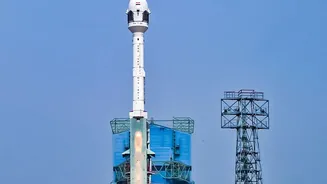
The BAS programme doesn't exist in a vacuum. It stands on the shoulders of the Gaganyaan mission, India's first human spaceflight programme. The development of the Human-Rated Launch Vehicle (HLVM3), the crew module, and the crew escape system are all foundational to the space station's success. Recent tests and uncrewed missions have validated many of these systems. ISRO is also working on crucial long-term technologies like in-space refuelling, and indigenously developing components like flight suits and docking systems that are currently sourced externally for early Gaganyaan missions. This focus on self-reliance is key to ensuring the long-term sustainability and operational independence of the Bharatiya Antariksha Station.