






1. Cat-Cow Pose (Marjaryasana-Bitilasana)
This dynamic pose is a foundational movement for warming up the spine and gently massaging the abdominal organs. The gentle arching and rounding action can stimulate blood flow to your digestive system, helping to ease bloating and encourage healthy gut
motility. To begin, start on your hands and knees in a 'tabletop' position, with your wrists directly under your shoulders and knees under your hips. As you inhale, drop your belly towards the floor, lift your chest and tailbone, and look forward in Cow Pose. As you exhale, round your spine toward the ceiling, tuck your chin to your chest, and press the mat away in Cat Pose. Continue flowing between these two shapes for 5-10 breaths, coordinating the movement with your breath.
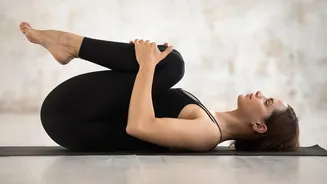
2. Wind-Relieving Pose (Pawanmuktasana)
As its name suggests, this pose is renowned for its ability to help release trapped gas and alleviate bloating. It applies gentle, targeted pressure to the abdomen, which massages the intestines and can stimulate bowel function. Lie on your back with your legs extended. As you exhale, draw your right knee toward your chest, clasping your hands just below the kneecap. Keep your head and shoulders relaxed on the floor. Hold here for several deep breaths, feeling the gentle compression on the right side of your abdomen, which can help stimulate the ascending colon. Release and repeat on the left side to target the descending colon, before finally drawing both knees into your chest for a full expression of the pose. A gentle rock from side-to-side can also help massage the lower back.
3. Supine Spinal Twist (Supta Matsyendrasana)
Twisting poses are highly effective for digestive health, as they are thought to 'wring out' the abdominal organs, boosting circulation and promoting detoxification. This restorative, reclining twist is particularly beginner-friendly. Lie on your back and hug your right knee into your chest. Extend your right arm out to the side at shoulder height. Use your left hand to gently guide your right knee across your body to the left. The goal is to keep both shoulders grounded on the mat as you deepen the twist. This may not be fully possible, and you can place a pillow under your knee for support. Hold for 5-10 slow breaths to calm the nervous system and encourage digestive flow, then repeat on the other side.
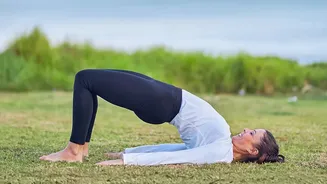
4. Bridge Pose (Setu Bandhasana)
Bridge Pose is a gentle backbend that helps create space in the front of the body, stretching the abdominal muscles. This can stimulate the digestive organs, improve alignment, and enhance circulation. To practice it, lie on your back with your knees bent and feet flat on the floor, hip-width apart. Your heels should be close enough to your sitting bones that you can just touch them with your fingertips. Keeping your arms alongside your body with palms down, press into your feet and lift your hips toward the ceiling. Hold the pose for 30 to 60 seconds, breathing steadily, before slowly rolling your spine back down to the floor.
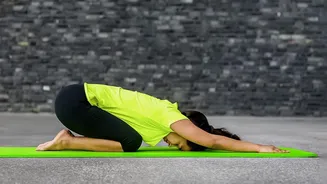
5. Child's Pose (Balasana)
This classic resting pose offers a moment of quiet and calm, which is beneficial since stress can negatively impact digestion. Child's Pose also provides a gentle compression to the abdomen, which can help activate a sluggish digestive system and soothe discomfort. To get into the pose, kneel on the floor with your big toes touching and your knees as wide as your mat. Sit back on your heels and fold forward, resting your torso between your thighs and your forehead on the floor. Your arms can be stretched out in front of you or relaxed alongside your body. Stay here for as long as feels comfortable, focusing on deep, relaxing breaths.