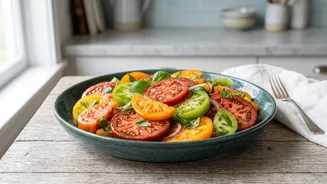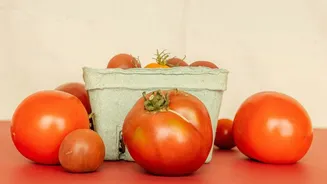





Tomatoes: Keep Them on the Counter
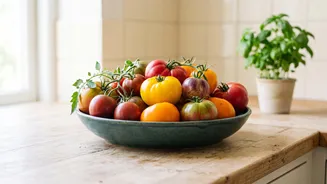
A cold, mealy, and flavourless tomato is one of life’s small culinary tragedies, and the refrigerator is almost always the culprit. Tomatoes are native to warm climates and their flavour-producing enzymes are permanently damaged by cold temperatures.
Chilling a tomato below about 12°C halts the chemical process that gives it that signature tangy, sweet aroma. The cold also breaks down the cell walls, resulting in a grainy, mushy texture. For the best taste, store tomatoes on your kitchen counter, out of direct sunlight. If they are perfectly ripe and you need to buy an extra day or two, the fridge can be a last resort, but allow them to return to room temperature before eating to regain some of their lost aroma.
Potatoes: Cool, Dark, and Dry is Key
Potatoes should never be stored in the refrigerator. The cold environment triggers a process called “cold-induced sweetening,” where the potato’s starches convert into sugars. This gives them an unpleasantly sweet taste and a gritty texture when cooked. Instead, potatoes thrive in a cool, dark, and well-ventilated place like a pantry or a cellar. It's also crucial to store them separately from onions. Onions release ethylene gas, which can cause your potatoes to sprout prematurely. Keep them in a paper bag or basket to allow for air circulation, and they will last much longer.
Bread: The Fridge Makes It Stale Faster
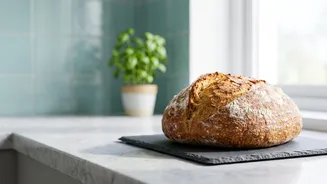
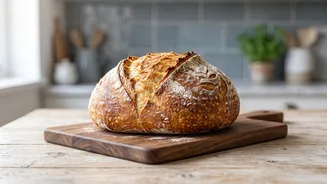
It seems counterintuitive, but putting bread in the refrigerator actually makes it go stale much faster. The process, known as starch retrogradation, is when starch molecules recrystallise and harden. This happens most rapidly at cool, above-freezing temperatures—exactly like those in a fridge. While the cold does slow the growth of mould, most bread will become unpleasantly hard and dry long before mould is an issue. The best place for a loaf you’ll eat within a few days is at room temperature in a bread box or paper bag. For longer-term storage, the freezer is your best friend. Freezing almost completely halts the staling process, preserving the bread’s texture and flavour.
Onions and Garlic: Give Them Air
Like potatoes, whole onions and garlic do not belong in the fridge. They prefer a cool, dark, dry place with good air circulation. Storing them in the refrigerator can make them soft and mouldy due to the humidity. Mesh bags or baskets work perfectly for storing them in a pantry. However, once you cut or peel an onion or garlic clove, the rules change. At that point, they should be stored in an airtight container in the refrigerator to preserve them and contain their strong odours.
Coffee: Protect It from Everything
Coffee’s four greatest enemies are air, moisture, heat, and light. The refrigerator, with its high humidity, is a particularly bad environment. Moisture can condense on the beans or grounds, ruining their flavour. Instead, store your coffee—whether whole beans or ground—in an airtight, opaque container in a cool, dark cupboard or pantry. This will protect the delicate oils and aromatic compounds that give coffee its rich taste. Buying smaller batches more frequently is also a great way to ensure every cup you brew is as fresh as possible.
Honey: It Lasts Forever on the Shelf
Honey is a natural preservative and will literally last for centuries at room temperature. Putting it in the refrigerator is unnecessary and will only cause it to crystallise and become a thick, hard-to-use solid. If your honey does crystallise, you can easily return it to its liquid state by placing the jar in a warm water bath for a few minutes. To keep it smooth and ready to drizzle, simply store it in your pantry, tightly sealed.