




From Calculation to Collaboration
Computers have been essential tools in mathematics for decades, performing complex calculations that would take humans a lifetime. From the earliest analog computers to modern symbolic algebra systems, their role was primarily that of a hyper-efficient
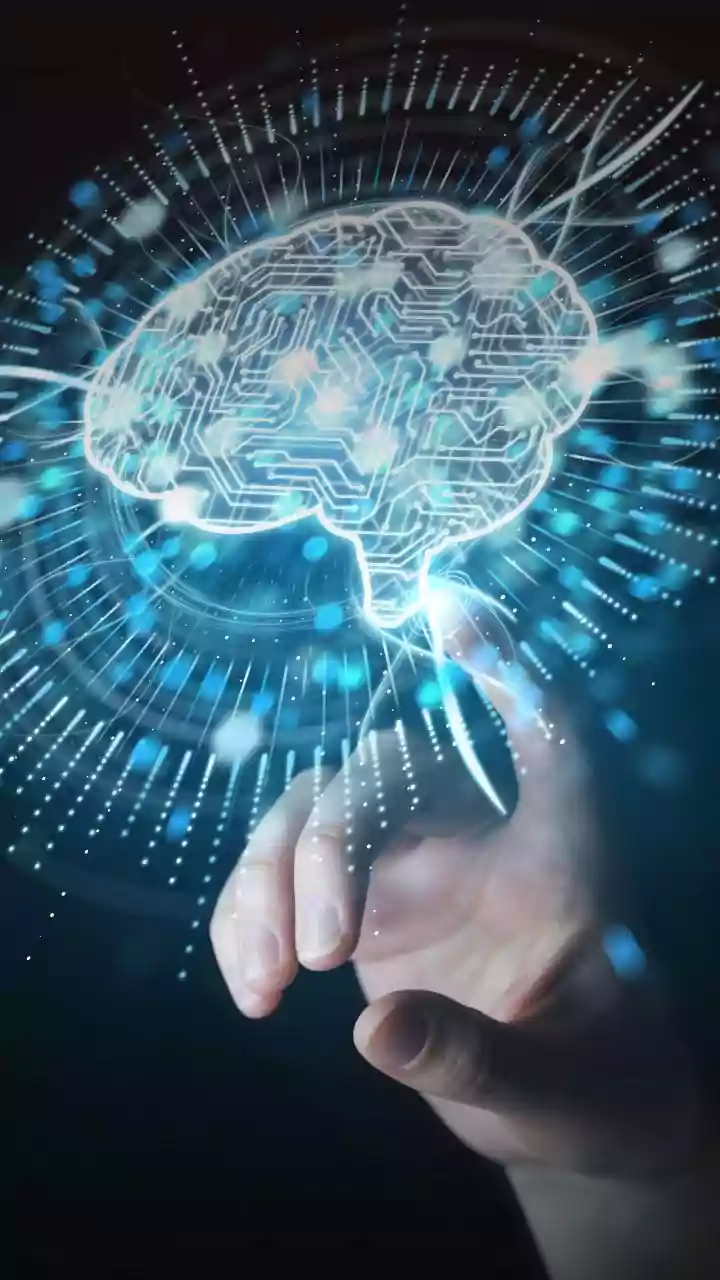
assistant, executing commands but not generating novel ideas. This dynamic is now undergoing a fundamental shift. Recent advances in AI, particularly large language models (LLMs) and specialized machine learning systems, are demonstrating an ability not just to compute, but to contribute to the discovery process itself. This evolution marks a transition from AI as a mere tool to a potential partner in the intellectual enterprise of mathematical research.
A New Wave of AI Discoveries
The theoretical potential of AI in math is rapidly becoming a story of concrete achievements. In late 2023, Google's DeepMind introduced FunSearch, an LLM-based system that uncovered a previously unknown solution to the 'cap set problem', a complex puzzle in combinatorics. FunSearch works by expressing ideas as computer programs, which are then automatically run and evaluated in a feedback loop, promoting the most successful approaches. More recently, AI models have broken records in the notoriously difficult field of Ramsey theory and made progress on the 60-year-old Andrews–Curtis conjecture. In a significant milestone, an OpenAI model autonomously disproved a long-standing conjecture related to the famous planar unit distance problem, first posed in 1946. This result, validated by leading mathematicians, was notable because the AI used sophisticated ideas from different mathematical fields in an unexpected way.
Two Brains, One Problem
AI's approach to math is not monolithic. There are two main currents working in tandem. On one side are LLMs, which are becoming adept at generating proof sketches and brainstorming potential lines of attack, acting as a sounding board for ideas. They can identify patterns across vast datasets of mathematical knowledge that might be difficult for a human to spot. On the other side are formal proof verifiers, such as Lean. These systems are designed for absolute logical rigor. Mathematicians can translate their proofs into a format these programs can understand, allowing the AI to meticulously check every logical step for soundness. The hope is that generative AI can bridge the gap, helping to write proofs in a way that these verifiers can automatically check, combining creative exploration with rigorous validation.
The Intuition Gap
Despite these impressive advances, experts believe we are far from an AI that can replace human mathematicians. The core of mathematical breakthrough often lies in intuition, abstraction, and the creation of entirely new concepts—a struggle that produces genuine understanding. While AI excels at finding patterns and verifying logic, this leap of creative abstraction remains a distinctly human endeavour. Fields Medalist Terence Tao has compared AI's current ability to that of Johannes Kepler, who brilliantly found patterns in astronomical data without the underlying theory of gravity that Newton later provided. The AI can find the 'what', but the human provides the 'why'. Many experts see the future not as a competition, but as a collaboration. This 'centaur' model, where human creativity guides the powerful analytical capabilities of AI, could accelerate discovery and allow mathematicians to tackle problems previously deemed too complex or time-intensive.