







The End of Fixed Timers
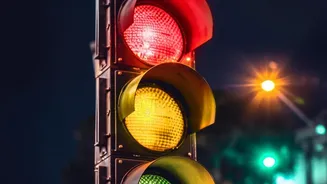
For decades, most traffic lights in Delhi have operated on fixed timers, meaning they turn red or green for a predetermined duration regardless of the actual traffic on the road. This often leads to frustrating scenarios: you might be stuck at a red light on an empty
street while a nearby junction is choked with vehicles. The new AI-powered system does away with this rigid approach. Instead of relying on pre-set cycles, these smart signals will use a network of cameras and sensors to 'see' the traffic in real time. This allows them to dynamically adjust their timings based on actual vehicle density, a concept known as Adaptive Traffic Control.
How the AI System Works
The core of the system is real-time data analysis. High-resolution cameras and sensors installed at intersections will continuously monitor the volume of vehicles on each approaching road. This data is fed into a central AI system that analyzes traffic patterns and predicts flow. If one road is heavily congested while another is relatively clear, the system can allocate a longer green signal to the busy route to help it clear faster. The goal is to optimize the flow across entire corridors, not just single junctions, by coordinating signals to reduce unnecessary stops and delays for commuters.
A Major Upgrade for the Capital
The Union Cabinet has approved the Intelligent Traffic Management System (ITMS) for Delhi at an estimated cost of ₹1,789.52 crore. The project, which will be implemented by the Delhi Police, is a significant step toward modernizing the city's infrastructure. It will be rolled out in three phases over a period of 24 months, covering 42 key traffic corridors across the national capital. The plan includes the installation of Adaptive Traffic Control Systems at 1,092 locations and automated enforcement systems at 1,029 points. This large-scale project aims to finally integrate the city's traffic management into a single, intelligent network.
More Than Just Smoother Traffic
The benefits extend beyond simply reducing travel time. One of the most critical features is the ability to create 'green corridors' for emergency vehicles. Ambulances and fire trucks will be fitted with sensors that communicate with the traffic signals ahead, turning them green as the vehicle approaches to ensure a clear path through congested areas. Furthermore, the system will enhance road safety through automated enforcement. Cameras will automatically detect a wide range of violations, including red-light jumping, speeding, not wearing a helmet or seatbelt, and using a mobile phone while driving. The AI will also help identify stolen or blacklisted vehicles.
What This Means for Delhi Commuters
For the average person on the road, this means a more predictable and efficient journey. By smoothing out traffic flow, the system is expected to reduce fuel consumption and lower vehicle emissions. Commuters will also have access to better information. Real-time updates on congestion, diversions, and even parking availability will be shared through variable message signs on roads and digital platforms, which could also be integrated with popular navigation apps. This will allow drivers to make more informed decisions about their routes, helping them avoid bottlenecks and reducing overall travel stress.