




The Ultimate Dress Rehearsal
On Tuesday, the four-person international crew completed their final major pre-launch milestone: a full dress rehearsal at Cape Canaveral Space Force Station in Florida. Known in the space industry as a Terminal Countdown Demonstration Test (TCDT), this
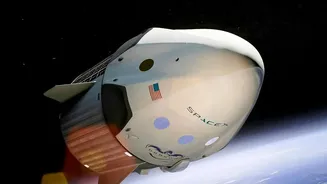
procedure simulates every critical step of launch day, allowing both the astronauts and the massive ground team to synchronize their actions perfectly. The crew suited up, took the ride to the launch pad, and strapped into their seats aboard the Dragon spacecraft, just as they will on launch day. The entire countdown sequence was then executed, stopping only moments before the simulated liftoff. This meticulous practice run is a long-standing tradition in human spaceflight, stretching back to the Apollo era, designed to iron out any issues and build muscle memory for the complex and risky business of leaving Earth.
Meet the International Crew-13
Leading the mission is NASA astronaut Jessica Watkins, serving as spacecraft commander. She is joined by NASA pilot Luke Delaney, Canadian Space Agency (CSA) astronaut Joshua Kutryk, and Roscosmos cosmonaut Sergey Teteryatnikov, who are both mission specialists. For Delaney, Kutryk, and Teteryatnikov, this will be their first journey into space. Watkins, a geologist, has one previous spaceflight under her belt. The crew represents a diverse range of expertise, with backgrounds including a former naval aviator, a fighter pilot, and a submariner. Their mission is part of NASA’s Commercial Crew Program, a partnership with private companies like SpaceX to provide safe and reliable transportation to the International Space Station (ISS).
From Suit-Up to Simulated Liftoff
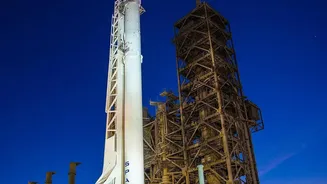
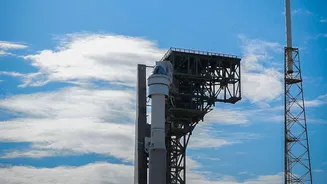
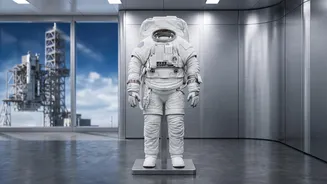
The rehearsal began in the morning at NASA's Kennedy Space Center, where the astronauts donned their custom-fitted SpaceX pressure suits. After leak checks and final preparations, they traveled to Space Launch Complex 40. Once at the pad, they boarded the Crew Dragon capsule, named 'Grace', which was already positioned atop the Falcon 9 rocket. Inside the capsule, the crew and launch controllers ran through communications checks, configured spacecraft systems, and proceeded through the hours-long countdown. This process ensures that every switch, button, and radio call becomes second nature. The simulation is designed to be as realistic as possible, a crucial step that validates the readiness of not just the astronauts, but also the hundreds of engineers and technicians in the launch control center.
Science in Orbit
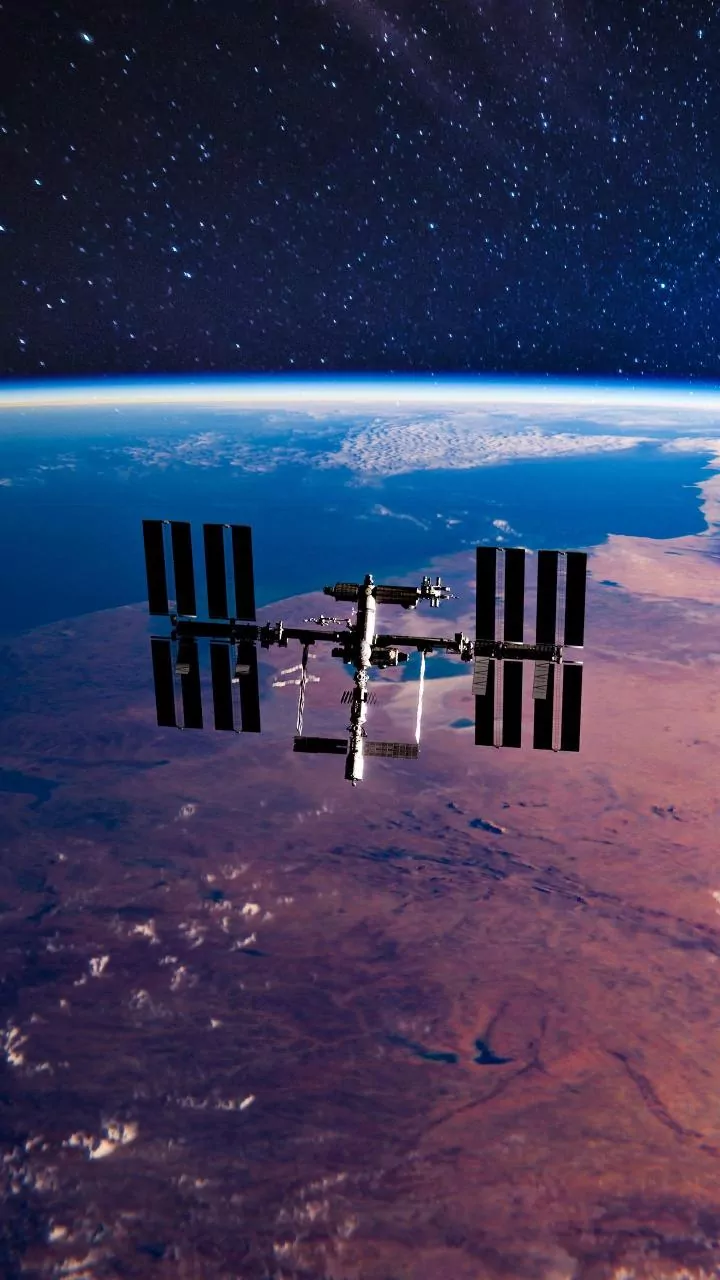
Crew-13 is scheduled to launch on Thursday, October 1, for a six-month stay aboard the International Space Station as part of Expedition 75. Their time in orbit will be packed with scientific research. The crew will conduct experiments aimed at treating diseases like Parkinson's and heart disease by studying human stem-cell tissues in microgravity. They will also explore ways to improve in-space food production, which is critical for future long-duration missions to the Moon and Mars. Other research includes studying blood flow abnormalities seen in astronauts and testing new diagnostic medical equipment to monitor crew health on deep space voyages. This work not only prepares humanity for further exploration but also yields medical innovations that benefit life on Earth.