



The Unsustainable Cost of Rice
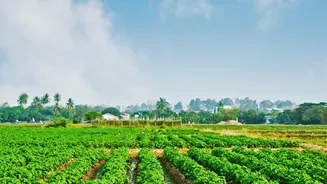
Punjab’s agricultural model, while pivotal for India's food security, is now threatening the state's very survival. The heart of the problem is the relentless cultivation of paddy (rice), a water-intensive crop ill-suited to the region's natural climate.
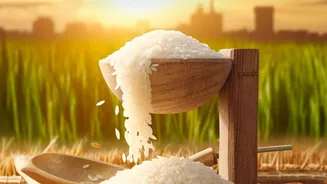
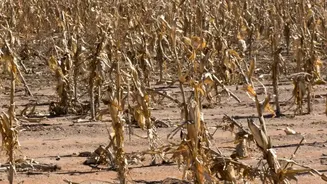
Producing a single kilogram of rice can require up to 5,000 litres of water, a demand that has led to a catastrophic decline in groundwater levels. Today, nearly 80% of Punjab's administrative blocks are categorized as 'over-exploited' in terms of groundwater. In many areas, the water table has plunged dramatically, forcing farmers to drill deeper and deeper wells. This not only increases costs but also brings up water with higher concentrations of heavy metals, posing health risks. Beyond the water crisis, the paddy-wheat cycle contributes to soil degradation and the seasonal menace of stubble burning, which causes severe air pollution across North India.
What is Crop Diversification?
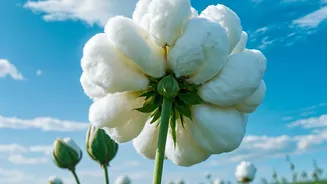
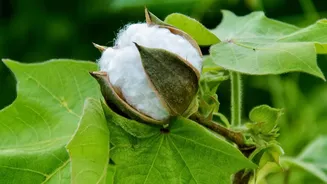
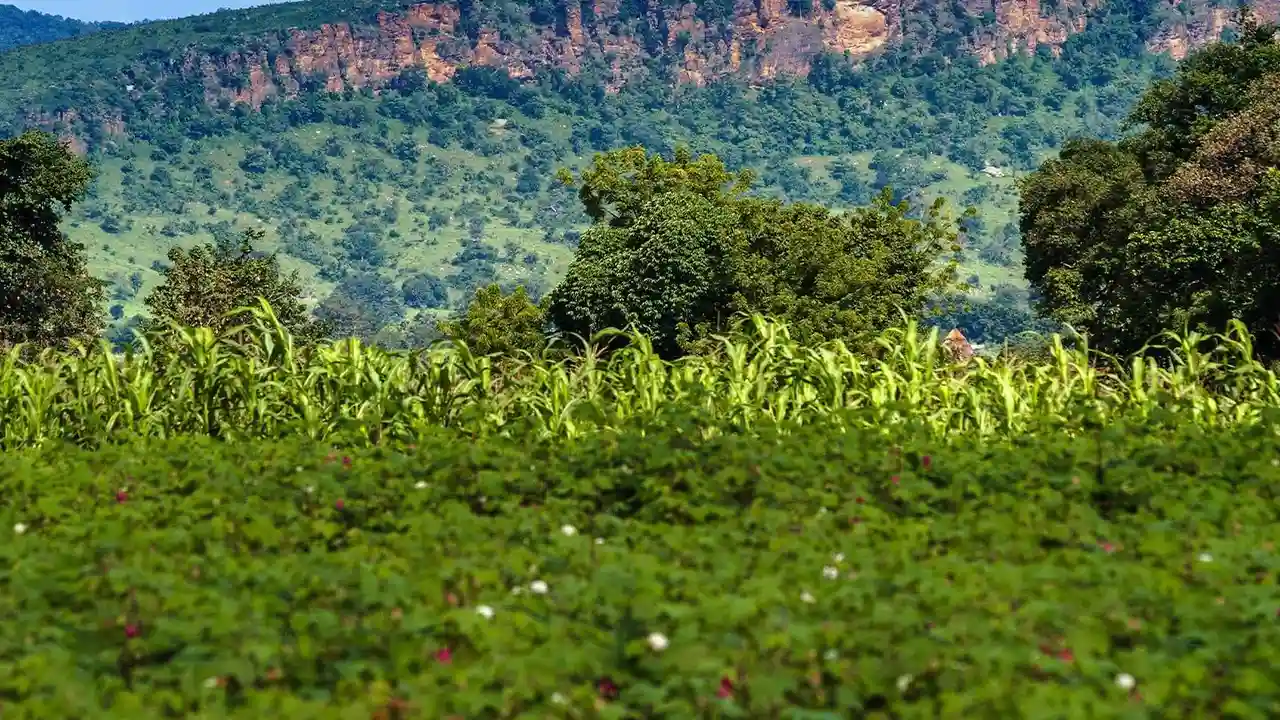
Crop diversification is the strategy of moving away from this dominant and damaging monoculture. For Punjab, it means actively encouraging farmers to replace paddy with less water-intensive alternatives. The government has been promoting crops like maize, cotton, pulses, and certain varieties of basmati rice that consume significantly less water. The goal is twofold: to conserve the state's rapidly depleting groundwater and to build a more resilient and profitable agricultural economy. This isn't a new idea—experts have been warning about the consequences of the paddy-wheat system since the 1980s. However, making the switch is difficult for farmers who have grown accustomed to the guaranteed procurement and Minimum Support Price (MSP) offered for paddy and wheat.
The 80,000-Hectare Milestone Explained
The figure of 80,000 hectares represents the approximate area under kharif maize cultivation in Punjab, a crop being pushed as a prime alternative to paddy. While this number has remained relatively stable, recent government initiatives aim to significantly boost this acreage. For instance, a pilot project was launched to convert 12,000 hectares from paddy to maize across six districts, offering financial incentives of ₹17,500 per hectare to farmers who make the switch. Although the initial response has been lukewarm, with targets not fully met, the sustained focus on maize is significant. It's important to note that while 80,000 hectares sounds substantial, it is a small fraction of the more than 3.2 million hectares dedicated to paddy cultivation in the state. Therefore, its significance lies not in its scale, but as a tangible effort in a long and arduous transition.
The Hurdles on the Road to Change
Despite the clear environmental need, convincing farmers to abandon paddy is a major challenge. The primary obstacle is economic. The income from alternative crops like maize or pulses, even with MSP, often falls short of the reliable earnings from paddy, which can be around ₹45,000 to ₹50,000 per acre. Farmers also face a lack of assured procurement and market infrastructure for these alternative crops. While the government procures almost all surplus paddy and wheat, the system for other crops is not as robust. Furthermore, free electricity for irrigation, a long-standing policy, inadvertently incentivises the cultivation of water-guzzling paddy, creating a structural barrier to diversification. Without a comprehensive support system that guarantees profitability and market access for new crops, farmers are understandably hesitant to take the financial risk.
Why This Small Step Still Matters
While Punjab's total area under paddy has actually continued to rise, hitting an all-time high recently, the focus on diversification remains critical. The 80,000 hectares under maize, and the schemes promoting it, represent a crucial testing ground for policies that could be scaled up. Success in these pilot projects can provide a blueprint for a wider transition. Experts agree that diversification is the only long-term solution to Punjab's agrarian and environmental crises. Achieving it will require more than just small incentives; it demands a systemic overhaul, including robust MSP for alternate crops, investment in storage and processing infrastructure, and a re-evaluation of subsidies like free power. The journey is long, but every hectare shifted away from paddy is a small victory in the fight to secure Punjab's future.