




The Gentle Power of Tai Chi
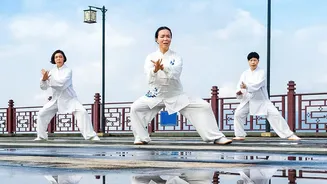
Often called 'meditation in motion', Tai Chi combines deep breathing and relaxation with slow, flowing movements. While it appears gentle, it's a full-body exercise that enhances strength, flexibility, and balance. The practice is built on principles
of continuous, circular motions that originate from the body's core, or 'dantian'. One of its core tenets is using the mind to guide energy ('chi') through the body, creating movements that are both relaxed and powerful. This focus on a stable, relaxed core and fluid, intentional movement helps improve proprioception—the body's awareness of its position in space—which is crucial for balance. Studies have shown regular practice significantly boosts both upper and lower-body strength and flexibility.
The Core Engine of Kayaking
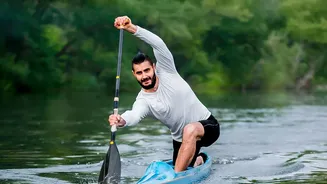
A common mistake for beginner kayakers is to 'arm paddle', relying solely on the muscles of the arms and shoulders. This leads to quick fatigue and potential strain. Efficient kayaking technique is not about pulling with your arms; it's about pushing with your legs and rotating your torso. The real power in a paddle stroke comes from the large, strong muscles of the core and back. A proper stroke involves winding up the torso, planting the paddle, and then unwinding the torso to propel the boat forward. Your arms and shoulders act more like struts, transferring the power generated by your core to the paddle. This technique of torso rotation makes paddling more powerful, efficient, and sustainable over long distances.
Shared Principles: Rotation and Connection
Herein lies the connection: both Tai Chi and kayaking are powered by the core. Tai Chi principles state that movement is 'controlled by the waist' and must be a continuous circuit of energy from the feet through the legs and waist to the hands. This is directly mirrored in an expert paddle stroke, where the force travels from the push of the feet on the footrests, through the rotation of the hips and torso, and is finally expressed through the paddle. Both disciplines teach the body to move as a single, integrated unit rather than a collection of isolated parts. They emphasize fluid, non-brittle strength, where power is generated efficiently and with minimal effort. This mind-body connection—the conscious intention to move from the center—is fundamental to mastering both practices.
Improving Paddling Through Tai Chi
For kayakers, practicing Tai Chi can be a game-changer. The slow, deliberate movements of Tai Chi build deep core stability and an innate understanding of rotational power. This directly translates to a more effective and less fatiguing paddle stroke. Tai Chi's emphasis on sinking weight and maintaining a stable base enhances balance, a critical skill in a kayak. Furthermore, the practice significantly improves upper-body mobility and flexibility. The gentle, circular movements of the arms and shoulders in Tai Chi can increase the range of motion in the joints, helping to prevent the shoulder injuries that can plague paddlers who rely too much on arm strength. The mindfulness and focus cultivated in Tai Chi can also help a kayaker stay calm and centered in challenging water conditions.
A Two-Way Benefit for Mobility
The relationship is mutually beneficial. While Tai Chi builds foundational mobility and stability, kayaking puts it into dynamic practice. The repetitive, controlled rotation of paddling strengthens the core and back muscles that are activated in Tai Chi. It also promotes flexibility through the shoulders, back, and torso. Someone who practices Tai Chi will find the movements of kayaking intuitive, while a seasoned kayaker might discover that Tai Chi helps refine their technique, improve their balance, and increase their body's resilience to strain. Both activities promote a healthy, mobile upper body, reducing stiffness and improving posture. They each offer a path to understanding how to generate power from the body's center, proving that strength is not always about force, but about flow.