





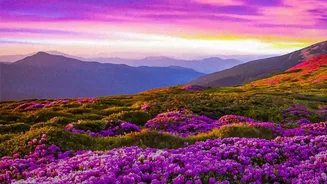
A Surprise Splash of Blue on the Hills
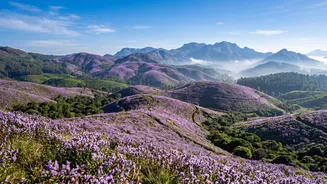
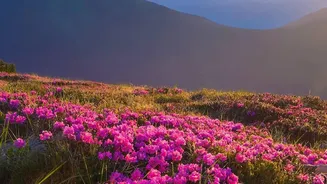
After a long wait, the hills around Munnar are once again transforming into a sea of violet-blue. As of September 2026, Neelakurinji flowers have begun to bloom in large numbers across specific areas like the Chokramudi and Mattupetty-Korandakkad hills.
Thousands of tourists are already flocking to the region to witness the breathtaking sight of mist-covered slopes blanketed in these rare blossoms. While social media is buzzing with images of this natural marvel, there's a lot of confusion. The last major, widely publicized bloom was in 2018, with the next one anticipated in 2030. This has left many wondering if the flowers have arrived four years early or if something else is at play.
Not Early, Just a Different Clock
The significance of the 2026 bloom lies in understanding that not all Neelakurinji plants operate on the same schedule. The idea that every single shrub blooms in unison across the Western Ghats every 12 years is a common misconception. In reality, different populations of the plant, even those just a few kilometres apart, can follow their own distinct 12-year cycles. The population currently flowering around Chokramudi and Mattupetty last had its moment in 2014, making 2026 its expected year of return. The more famous bloom site at Eravikulam National Park, which captivated the world in 2018, is a separate population that is still on track for its next grand showing in 2030. So, the current event isn't an anomaly but a beautiful reminder of nature's complex, staggered rhythms.
The Science of a Once-in-a-Lifetime Flower
Neelakurinji, or Strobilanthes kunthiana, has one of the most fascinating life cycles in the botanical world. It is a 'monocarpic' plant, which means it flowers only once in its lifetime. For over a decade, the shrub focuses all its energy on vegetative growth, patiently waiting. Then, in a synchronized event known as 'masting' or 'gregarious flowering', an entire population bursts into bloom together. This mass flowering is an evolutionary strategy to overwhelm predators and maximize the chances of pollination, attracting bees and other insects in huge numbers. After this spectacular, months-long floral display, the parent plants produce seeds and then die, making way for the next generation to begin the 12-year journey all over again.
More Than Just a Pretty Flower
The Neelakurinji is deeply woven into the cultural and ecological fabric of the Western Ghats. Its name is credited with giving the Nilgiri Hills, or 'Blue Mountains', their name. For the indigenous Paliyan tribe, the 12-year blooming cycle was historically used as a natural calendar to calculate their age. Economically, the bloom is a massive draw for tourism, bringing hundreds of thousands of visitors to Munnar and boosting the local economy. Ecologically, the plant is an indicator species for the health of the high-altitude shola-grassland ecosystem it inhabits. Its extensive root system also plays a vital role in preventing soil erosion on the steep mountain slopes.
A Vulnerable Treasure
While the 2026 bloom is a cause for celebration, it also highlights the fragility of this natural wonder. In 2024, the International Union for Conservation of Nature (IUCN) assessed the Neelakurinji as a 'Vulnerable' species for the first time. Its unique shola-grassland habitat is shrinking due to threats from invasive plant species, illegal land conversion, and pressure from unregulated tourism. Recognizing these dangers, conservation efforts are underway. The Kurinjimala Sanctuary in Idukki was established specifically to protect the plant's core habitat. Furthermore, authorities are now calling for structured annual conservation plans across Kerala, Tamil Nadu, and Karnataka to ensure coordinated protection of this species even in the years between its famous blooms.