




The Real Cost of Sitting Still
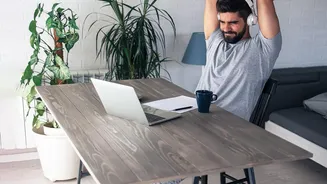
Many office workers spend eight or more hours a day sitting, a habit often described as 'the new smoking' for its health implications. This prolonged sedentary behaviour is linked to a host of issues, including a higher risk of cardiovascular disease,
type 2 diabetes, and obesity. Physically, it can lead to poor posture, muscle imbalances, a stiff neck, sore shoulders, and tight hip flexors as the body remains locked in one position. Repetitive movements like typing can also cause strain injuries. Even for those who exercise regularly, research shows that long periods of sitting can still have negative effects, highlighting the importance of integrating movement throughout the day, not just after work.
The Solution: Five-Minute Movement Breaks
The good news is that you don't need an hour-long yoga class to counteract these effects. Short, frequent movement breaks are incredibly effective. Taking even a few minutes every hour to stretch and move can prevent muscle tension, stimulate circulation, and boost your ability to concentrate. These 'movement snacks' improve focus and mood, making you more productive, not less. The goal is to interrupt long periods of inactivity with simple, intentional movements. Desk yoga is the perfect tool, as it requires no special equipment and can be done right in your chair.
1. Seated Cat-Cow for Spinal Health
This classic yoga movement is excellent for waking up a stiff spine. Sit on the edge of your chair with your feet flat on the floor and hands on your knees. As you inhale, gently arch your back, push your chest forward, and look slightly up toward the ceiling. As you exhale, round your spine, tuck your chin to your chest, and draw your navel inward. Repeat this fluid movement 8-10 times. This simple exercise improves spinal flexibility and relieves the tension that builds up from slouching.
2. Chair Pigeon Pose for Hip Opening
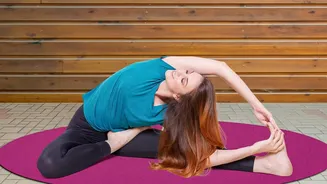
Our hips can become extremely tight from sitting all day. To release them, try a seated version of pigeon pose. While sitting, cross your right ankle over your left knee, keeping your right foot flexed to protect the knee joint. Sit up tall, maintaining an even pressure on both sit bones. You should feel a gentle to moderate stretch in your right hip and glute. For a deeper stretch, you can gently hinge forward from your hips. Hold for 5-10 deep breaths before switching to the other side.
3. Eagle Arms to Release Shoulder Tension
Typing and using a mouse can create significant tension in the shoulders and upper back. To combat this, extend your arms forward. Cross your right arm over your left, bend your elbows, and try to bring your palms to touch. Lift your elbows slightly while keeping your shoulders relaxed and down, away from your ears. You'll feel a stretch across your upper back. Hold for 15-20 seconds, breathe deeply, and then uncross and repeat with the left arm over the right.
4. Seated Spinal Twist for Rotational Movement
Our spines are designed to twist, but rarely do so when we are sitting at a desk. To reintroduce this vital movement, sit tall in your chair. As you exhale, gently twist your torso to the right, using your hands on the armrest or the back of the chair to deepen the stretch. Keep your hips facing forward. Hold for a few breaths, feeling the rotation through your spine. Inhale to return to the center, and then exhale to twist to the left. This pose aids digestion and improves spinal mobility.
5. Wrist and Finger Stretches for Tech Hands
Constant typing can lead to stiff hands and wrists. Take a moment to extend one arm in front of you with the palm facing up. With your other hand, gently pull the fingers of the extended hand down and back toward your body until you feel a stretch in your forearm. Hold for 15-30 seconds. Then, point your fingers down and gently pull your hand toward you. Repeat on the other side. Finish by making gentle circles with your ankles to boost circulation.