



An Unexpected Gain Amidst the Loss
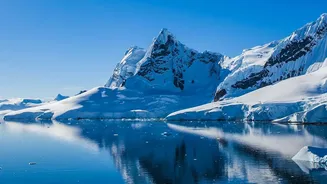
In a finding that seems to defy expectations, new research published in early September 2026 revealed that the Antarctic Ice Sheet experienced a record mass gain of approximately 695 billion tons between 2021 and 2023. This temporary gain was largely
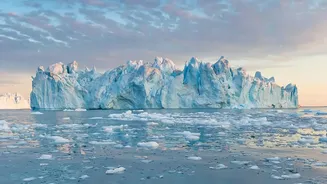
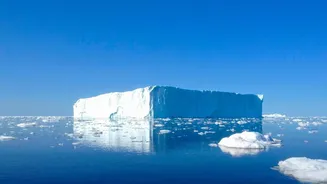
concentrated in East Antarctica and was driven by unusually heavy snowfall. Scientists have traced this phenomenon back to a sustained warming event in the tropical western Pacific and eastern Indian Ocean. This distant warming altered atmospheric circulation, creating atmospheric rivers that funnelled huge amounts of moisture towards the Antarctic continent. However, researchers are quick to emphasize that this two-year gain does not reverse the continent's long-term trend of decline. Over the past two decades, Antarctica has been losing ice at an average rate of about 140.5 billion tons per year.
The Bigger Picture: A Story of Two Halves
Antarctica is not a single, uniform block of ice. It's broadly divided into West Antarctica, East Antarctica, and the Antarctic Peninsula, each behaving differently. For years, the primary concern has been the West Antarctic Ice Sheet, home to vulnerable glaciers like Thwaites and Pine Island, which are rapidly losing ice due to warm ocean water melting them from below. The recent snowfall-driven gains were seen mostly in East Antarctica, a region long considered more stable. This highlights a crucial point: a gain in one area doesn't necessarily offset a loss in another. The processes driving the changes are different. While increased snowfall can add mass to the surface, the more dangerous, long-term threat comes from the steady erosion of ice shelves by the warming ocean, which continues unabated in critical western regions.
The Questions Raised by New Data
The latest findings introduce new layers of uncertainty into climate models. One of the biggest questions is how to account for these massive, multi-year swings in snowfall. Does this event signal a new pattern, or was it a rare anomaly? Scientists point out that this temporary surge in mass happened even as the discharge of icebergs from glaciers accelerated. Another major question involves feedback loops. A study from May 2026 showed that meltwater itself can change ocean circulation in a way that speeds up further melting—a self-reinforcing cycle not yet included in most climate projections. Researchers are now working to understand how these competing factors—increased snowfall in some areas and accelerated melting in others—will balance out over the coming decades, making reliable long-term predictions more challenging than ever.
Why Antarctica's Changes Matter for India
What happens in Antarctica does not stay in Antarctica. The continent holds enough frozen water to raise global sea levels by nearly 60 metres if it all melted. Even a small fraction of that has profound implications for coastal nations like India. With a long and densely populated coastline, millions of people in cities from Mumbai to Kolkata are vulnerable to rising seas. Scientific projections show that while ice melts at the poles, the actual rise in sea level can be higher in tropical regions due to complex ocean dynamics. Furthermore, large-scale freshwater input from melting Antarctic ice can alter global ocean currents and atmospheric patterns, potentially affecting the Indian monsoon, a lifeline for the country's agriculture and economy.