




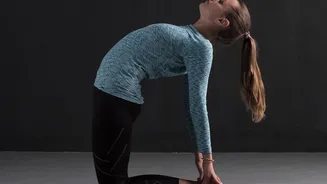


Why Sitting Causes So Much Stiffness
The human body is designed for movement. When you spend hours sitting, you’re holding a static posture that puts stress on your muscles and joints. Prolonged sitting causes hip flexor muscles to shorten and tighten, which can pull on the lower back. Meanwhile,
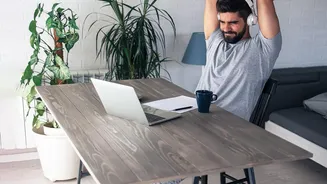
the large gluteal muscles can become weak from inactivity. This imbalance forces other muscles to compensate, leading to pain and stiffness not just in the back, but also in the neck and shoulders as you hunch forward. Furthermore, long periods of inactivity reduce blood flow and slow down the circulation of synovial fluid, the natural lubricant in your joints. This is why you might feel 'locked up' after a long meeting or an intense work session; your muscles and joints are literally starved of the movement and circulation they need to stay flexible.
Relief for Your Neck and Shoulders
The neck and shoulders are often the first to protest after hours spent staring at a screen. To release this tension, try simple shoulder rolls. Sit tall and inhale as you lift your shoulders up toward your ears, then exhale as you roll them back and down. Repeat this 5-10 times to release built-up stress. For your neck, a gentle side-to-side tilt can work wonders. Slowly tilt your right ear toward your right shoulder, holding for a 15-20 second stretch without forcing it. Return to the center and repeat on the left side. This simple move helps lengthen the tight muscles along the side of your neck, a common trouble spot for desk workers.
Unwind Your Spine at Your Desk
Your spine needs a break from being held in one position. The seated Cat-Cow stretch is a perfect antidote. Sit at the edge of your chair with both feet flat on the floor and your hands on your knees. On an inhale, arch your back, lift your chest, and look slightly up (Cow pose). On an exhale, round your spine, tuck your chin to your chest, and gently pull your navel inward (Cat pose). Alternating between these two positions for 30-60 seconds helps mobilize the spine. Another excellent option is a gentle seated twist. Sit tall and place your right hand on the outside of your left knee. Use your left hand to hold the back or arm of your chair. Gently twist your torso to the left, keeping your hips facing forward. Hold for a few breaths and then repeat on the other side.
Don't Forget Wrists and Fingers
Constant typing and mouse-clicking put a significant strain on the small muscles and tendons in your hands and wrists. To counteract this, perform wrist and finger stretches. Extend one arm in front of you, palm facing up. With your other hand, gently bend the extended hand down, stretching the top of the forearm. Hold for 20 seconds. Then, flip your hand so the palm faces down and gently pull your fingers toward you to stretch the underside of the forearm. Follow this with wrist rotations, making gentle circles in both directions to improve flexibility and circulation.
Embrace 'Movement Snacking'
The key to combating a sedentary workday isn’t one big workout, but rather small, consistent 'movement snacks' throughout the day. Think of these gentle exercises not as a chore, but as brief, refreshing breaks. The goal is to interrupt long periods of sitting every 30 to 60 minutes. You can set a simple timer or link these micro-movements to your work habits. For example, do a set of shoulder rolls after every long email you send, or perform a spinal twist every time you finish a phone call. This approach makes movement a natural part of your workflow, preventing stiffness from setting in and boosting your energy and focus.