





London's Oxford Street: A New Era
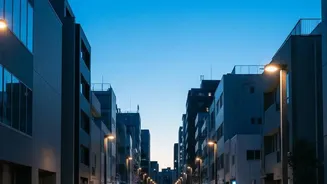
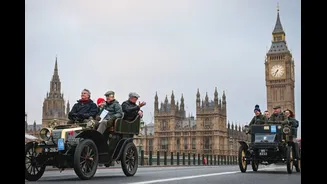
After years of debate, a nearly one-kilometre stretch of London’s iconic Oxford Street became traffic-free in late October 2026. This major move bans buses, taxis, cars, and bikes from the shopping hub between Orchard Street and Great Portland Street,
aiming to transform one of Europe's busiest retail destinations. The change, heralded by Mayor Sadiq Khan as a 'new era', is designed to create a more attractive environment for the half a million daily visitors, boost the local economy, and improve air quality. Early data from the first week showed a significant 16% rise in footfall and a notable increase in retail spending and evening visitors. While the full physical transformation with new seating, trees, and public squares is yet to come, the immediate exclusion of vehicles marks a pivotal moment. Delivery vehicles are still permitted during a limited overnight window, and emergency services retain full access.
Copenhagen's Strøget: The 1960s Pioneer
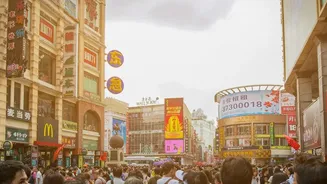
Long before it was a global trend, Copenhagen showed the world what was possible. In 1962, the city converted a collection of central streets, nicknamed Strøget, into a pedestrian-only zone. Initially a temporary trial, the idea was met with fierce opposition from shopkeepers who feared financial ruin, believing Danes wouldn't embrace the concept of strolling. They were wrong. The experiment was a resounding success, made permanent in 1964, and has since expanded to create a vast car-free network in the heart of the city. At 1.1 kilometres, Strøget became one of Europe's longest pedestrian shopping streets, proving that prioritising people could create a vibrant, commercially successful, and pleasant urban core. Today, it's a bustling hub of shops, cafes, and street performers, serving as a foundational case study for urban planners worldwide.
Barcelona's La Rambla: A Green Makeover
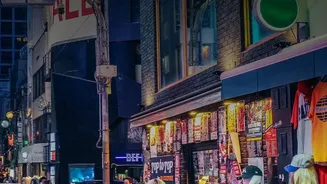
Barcelona's world-famous boulevard, La Rambla, is currently undergoing a major transformation scheduled for completion in 2027. The €55 million project aims to reclaim the iconic street for locals, shifting its focus away from being purely a tourist thoroughfare. While an initial plan for full pedestrianisation was revised, the new design significantly enhances the pedestrian experience by widening walkways, adding public squares, and planting more trees. Traffic will be reduced to a single lane in each direction, largely restricted to residents, public transport, and service vehicles. The goal is to create a greener, more comfortable, and culturally rich space that encourages Barcelona residents to embrace the boulevard once again.
Melbourne's Hosier Lane: Art as the Destination
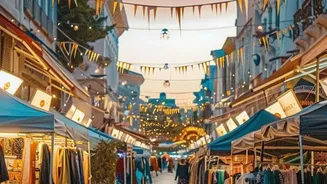
Not all pedestrian-friendly streets are about highnd retail. In Melbourne, Hosier Lane demonstrates how foot traffic can create a dynamic cultural space. This cobbled laneway, located opposite Federation Square, is a celebrated hub of street art. It is a 'free_to_paint' zone, where the art is in constant flux as new works are painted over old ones, sometimes daily. This makes the lane a living gallery, attracting a steady stream of visitors who come not to shop but to see the art. While it's a public thoroughfare open $24/7$, its identity is defined by the absence of dominant vehicle traffic and its function as a space for creative expression. Its success highlights how pedestrianisation can serve cultural and artistic purposes creating unique urban attractions.
The Challenges of Going Car Free
Despite the clear benefits—like reduced pollution, fewer accidents,'and potential economic boosts—turning a street pedestrian only is rarely simple. Key challenges often include opposition from businesses fearing a loss of customers,'the logistical puzzle of rerouting traffic,'and ensuring accessibility for deliveries and people with mobility issues. Successful projects require careful planning to mitigate these concerns.'This can involve creating peripheral parking,'improving public transport links,'and allowing limited access for service vehicles,'as seen with Oxford Street's overnight delivery window.'The fear that traffic will simply move to surrounding streets is common,'but studies often show that well designed schemes can lead to an overall reduction in car trips as people switch to other modes of transport.