





Defining ‘The Packing Method’
There isn’t one single, trademarked packing method, but rather a combination of proven techniques that together form a superior system for carry-on travel. The core of this method is twofold: compressing individual garments and organising them into modular
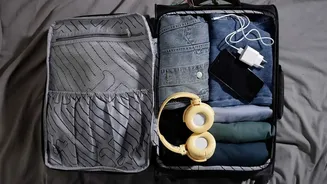
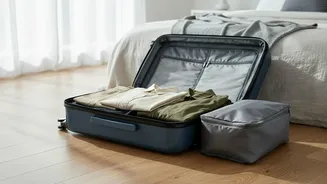
blocks. This is achieved by strategically rolling or folding clothes and then containing them within packing cubes. This system moves your luggage contents from a loose pile of items into a dense, organised, and surprisingly spacious collection that is easy to pack and unpack.
The Foundation: Rolling and Cubing
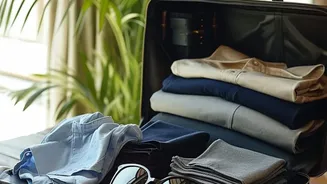
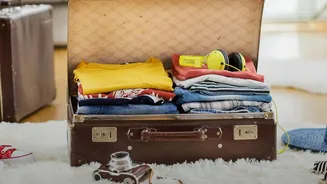
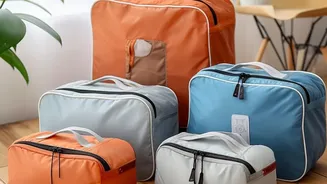
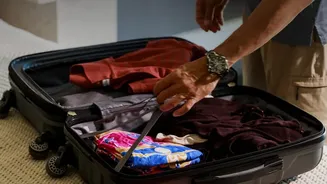
The first step is to abandon haphazard folding. For most clothing items like t-shirts, trousers, and casual dresses, rolling is superior. Tightly rolled garments take up less volume than folded ones. The ‘Ranger Roll,’ a method where the bottom of the shirt or pants is used to secure the roll, is particularly effective at creating tight, uniform cylinders that won’t unravel. Stiffer items like blazers or starched shirts can be folded flat. Once rolled or folded, these items go into packing cubes. These zip-up organisers are essential; they compress the rolled items even further and transform your clothes into rectangular blocks you can arrange like a game of Tetris inside your carry-on, eliminating wasted space. This combination of rolling and cubing is the engine of efficient packing.
The Real Challenge: Taming Bulky Items
Even with perfectly rolled clothes in packing cubes, a single puffer jacket, heavy knit sweater, or pair of hiking boots can derail the entire carry-on strategy. These items are space-eaters that don’t conform to the neat blocks created by packing cubes. Success with carry-on travel therefore depends almost entirely on how you manage these bulky outliers. The packing method works, but only when these difficult items are brought under control with specific tactics designed just for them.
Strategy 1: Wear Your Heaviest Items
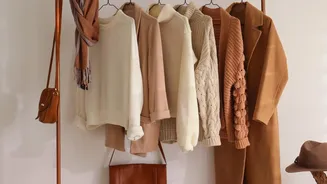
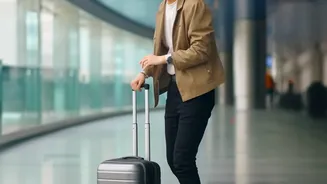
The simplest and most effective rule for bulky items is to get them out of your bag entirely. Your travel day outfit should be built around your largest pieces. Wear your heaviest coat, your bulkiest sweater, and your biggest pair of shoes or boots on the plane. While it might feel cumbersome for a short time in the airport, it frees up an enormous amount of luggage real estate. Think of your travel outfit as wearable luggage. You can always take a jacket or sweater off and use it as a pillow or blanket on the flight. This single habit is often the difference between fitting everything in a carry-on and needing to check a bag.
Strategy 2: Use Compression Bags
For items that you simply can’t wear on the plane, such as a second heavy sweater or a ski jacket, a compression bag is your next best tool. These are not the same as packing cubes. Compression bags, often of the vacuum-seal variety, are designed to suck all the air out of soft, puffy items, shrinking them down to a fraction of their original size. This is highly effective for things like down jackets and wool sweaters. The trade-off is that while they save a significant amount of space, they do not reduce weight. They can also cause deep wrinkles, but for outerwear that isn’t meant to be pristine, it’s a worthy compromise.
Strategy 3: Master Strategic Stuffing
Think of every hollow space as a packing opportunity. Your shoes are the most obvious example. Don't pack them empty; stuff them with socks, underwear, or small electronics like chargers and adapters. This not only saves space but also helps your shoes keep their shape. You can also roll smaller clothing items and stuff them into the corners and crevices of your bag after the main packing cubes are in place. A rain jacket, for instance, can be stuffed into the gaps around your cubes. This approach ensures that not a single inch of your valuable carry-on space goes to waste.