


A World Called K2-18 b
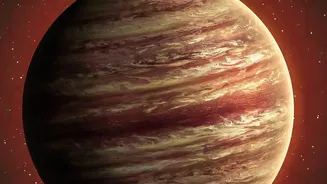
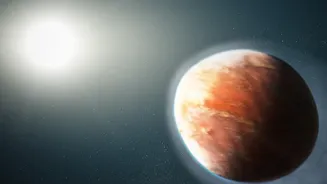
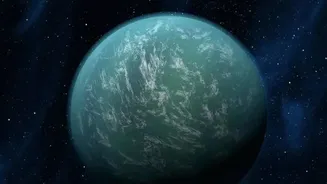
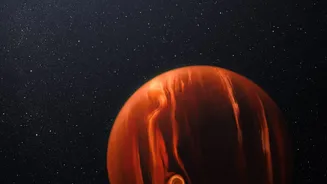
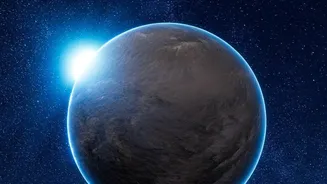
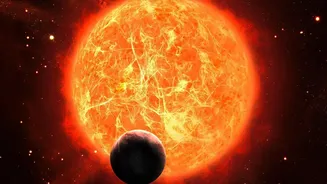
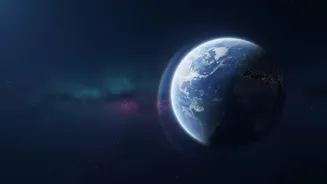
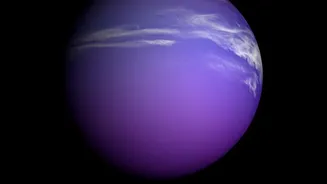
The planet at the center of this excitement is K2-18 b, an exoplanet 8.6 times more massive than Earth. It orbits a cool dwarf star in the constellation Leo, placing it squarely within the 'habitable zone'—the orbital distance where temperatures could
allow liquid water to exist. Initial observations confirmed the presence of carbon-bearing molecules like methane and carbon dioxide, suggesting it could be a 'Hycean' world: a hypothetical type of planet with a water ocean under a hydrogen-rich atmosphere. This combination makes it a prime target in the search for life, but the real surprise came when Webb looked closer at the chemical cocktail in its atmosphere.
The Telltale Chemical Clue
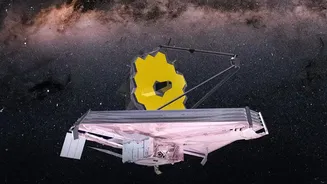
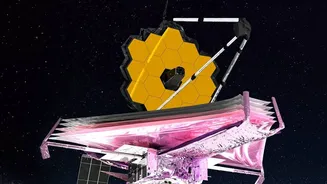
Webb's powerful instruments analyzed the starlight filtering through K2-18 b's atmosphere, a technique called transmission spectroscopy. This process leaves a chemical fingerprint, revealing the gases present. Alongside the expected methane and carbon dioxide, astronomers found a possible trace of a molecule that caused a stir: dimethyl sulfide, or DMS. The detection is still being verified and remains a topic of scientific debate, but its potential presence is hugely significant. On Earth, DMS is a substance that is overwhelmingly produced by life. It's the compound responsible for the characteristic smell of the sea, released by marine life like phytoplankton. Finding it on a distant world would be a profound discovery.
What is a Biosignature?
In astrobiology, a biosignature is any substance, object, or pattern that provides evidence of past or present life. This could be a fossil, a complex organic molecule, or a gas in an atmosphere that is unlikely to be produced by non-biological processes. For decades, scientists have theorized about which atmospheric gases would be the best biosignatures. Oxygen is one, but it can also be created through non-living chemical reactions. The potential of DMS is that, on our world at least, it is almost exclusively linked to biological activity. The challenge, therefore, is not just detecting the molecule but also ruling out any unknown, non-biological chemical pathways that could create it on a planet so different from our own.
A New Era of Planet Hunting
This discovery, even if tentative, marks a pivotal shift in exoplanet exploration. For years, the primary goal was simply finding planets—counting how many are out there and measuring their size and orbit. The James Webb Space Telescope has changed the business of planet hunting entirely. Its unprecedented sensitivity allows scientists to move from cataloging planets to characterizing them. By dissecting the chemical makeup of their atmospheres, we can begin to understand their weather, their composition, and their potential for hosting life. It's the difference between spotting a distant island and being able to analyze its soil and air to see if anything grows there. This ability to detect specific trace molecules is the true technological breakthrough.
Patience, Verification, and What's Next
It is crucial to note that astronomers have not discovered alien life. The DMS detection on K2-18 b is a candidate signal that requires more data to be confirmed. Scientists need more observation time with Webb to be sure the signal is real and not just a statistical anomaly or an overlap with another, more common molecule. Even if the presence of DMS is confirmed, the next step would be to investigate if any unknown geological or photochemical processes could produce it without life. But this single, tantalizing clue is precisely what the JWST was built for: to transform the search for habitable worlds from a game of chance into a systematic, chemical investigation. It provides a specific, compelling reason to dedicate more time to studying K2-18 b, pushing it to the top of the list of worlds that might answer the ultimate question.