




Why is Kolkata often called the 'London of India'? The answer isn't just in history books, but etched into the grand buildings of its old commercial districts and reflected in the waters of the Hooghly River, a lifeline with its own story to tell.
The Second City of the Empire
For
over a century, Kolkata, then Calcutta, was the capital of British India. From 1772 until the capital shifted to Delhi in 1911, it was the administrative, political, and financial heart of the British Raj. Its strategic location on the Hooghly River made it a bustling port and a crucial centre for global trade, connecting India to Europe and Southeast Asia. This prominence led to its description as the 'Second City of the British Empire,' surpassed only by London itself. This status resulted in the construction of grand civic buildings, wide roads, and a European-influenced urban plan, cementing its reputation as a city with a distinctly London-like feel in its core.
An Architectural Echo of London
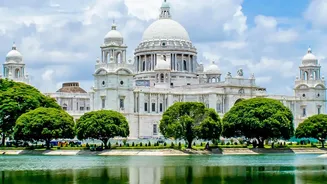
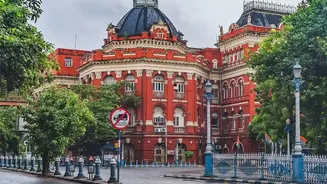
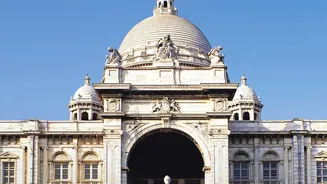
A walk through the area formerly known as Dalhousie Square, now B.B.D. Bagh, is like stepping into a different era. This district was the epicentre of British power, and its architecture was designed to project imperial majesty. Buildings like the Writers' Building, with its imposing Gothic Revival facade, the grand General Post Office (GPO) with its towering dome, and the Calcutta High Court showcase a stunning mix of Neoclassical, Gothic Revival, and Victorian styles. These architectural forms were imported directly from Europe, creating a cityscape that mirrored the administrative and financial districts of London. Structures like the Raj Bhavan were designed to rival the aristocratic homes of England, solidifying the visual link between the two imperial cities.
The Hooghly as Kolkata's Thames
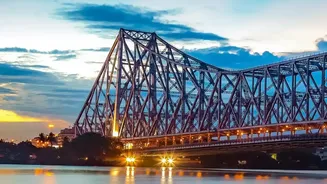
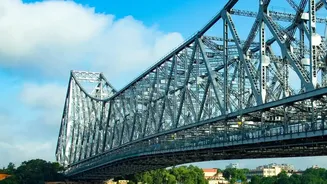
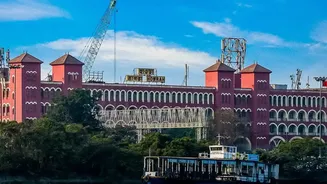
Just as London developed along the River Thames, Kolkata's identity is inextricably linked to the Hooghly River, a major distributary of the Ganges. The river was the city's primary artery for commerce and transport during the colonial era, lined with ghats (riverfront steps), warehouses, and jetties that facilitated a global trade network. Many of the city's most impressive colonial structures, including the Metcalfe Hall and the old Fort William, were built facing the river, underscoring its importance. The iconic Howrah Bridge, an engineering marvel, further solidifies the river's central role in the city's landscape, much like Tower Bridge does for London. In recent years, efforts have been made to redevelop the riverfront into a cultural and recreational space, breathing new life into this historic lifeline.
Living History in the Heart of the City
Today, these old districts offer a fascinating blend of past and present. The colonial grandeur of the buildings now forms a backdrop to the vibrant, chaotic energy of modern Kolkata. Trams rattle down streets lined with architectural relics, while street vendors conduct business in the shadows of former colonial headquarters. The area around B.B.D. Bagh remains a bustling commercial hub, housing the Reserve Bank of India and other major offices within its historic walls. It's a place where history is not confined to museums; it is lived in and adapted, creating a unique urban texture where different centuries coexist on the same street corner.
A Legacy of Grandeur and Decay
The preservation of this architectural heritage is an ongoing challenge. For decades after independence, many saw these buildings as uncomfortable reminders of a colonial past, and they were left to decay. Population pressure, economic issues, and the high cost of maintenance have put many structures at risk. However, a shift in perspective has led to significant restoration efforts. Public outcry has saved buildings like the Currency Building from demolition, and a growing appreciation for this 'shared heritage' has emerged. Organisations like INTACH and government bodies are now actively working to conserve these landmarks, ensuring that the story of the 'London of India' can still be read in its magnificent, and sometimes crumbling, architecture.