








The AI Boom's Insatiable Thirst for Power
The rapid expansion of artificial intelligence is creating an unprecedented demand for electricity. Data centers, the physical backbone of the digital world, are incredibly energy-hungry facilities that must run 24/7 without interruption. Even a momentary
outage can lead to data loss and significant financial costs. As companies like Meta build bigger and more powerful data centers to train and run AI models, their electricity use is skyrocketing. This has put immense pressure on local power grids, which are often not equipped to handle such a massive and sudden increase in demand. In many cases, building out new utility-scale renewable infrastructure like solar or wind farms can take years, a timeline that doesn't align with the tech industry's rapid deployment schedules.
Natural Gas: The Reliability Backstop
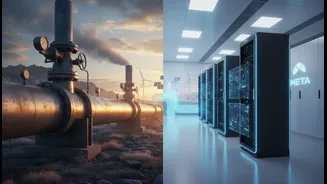
To ensure 100% uptime, data center operators are turning to natural gas. Unlike renewable sources like solar and wind, which are intermittent, natural gas provides a constant and reliable stream of power. It's delivered through resilient underground pipelines, making it less vulnerable to weather-related disruptions than overhead electric lines. For tech giants, natural gas is seen as the fastest and most dependable way to get a new large-scale data center online, especially when the local grid can't meet the immediate demand. It serves as a bridge fuel, cleaner than the traditional diesel generators often used for backup power, but a fossil fuel nonetheless. Meta is supporting the development of new gas-fired plants for major data center campuses in states like Louisiana and Texas, citing it as a necessary step to meet time-sensitive power needs for its AI expansion.
The Promise of Offsets and Clean Energy
So how does a company using natural gas claim to be a climate leader? The answer lies in clean-energy offsets and renewable energy certificates (RECs). Since 2020, Meta has stated that it matches 100% of its electricity consumption with purchases of renewable energy. In essence, for the electricity it draws from a grid powered by mixed sources (including fossil fuels), it purchases an equivalent amount of energy from a renewable project elsewhere. The company also invests heavily in carbon removal projects and has joined coalitions to spur the market for these technologies, which aim to pull carbon dioxide out of the atmosphere. The public commitment is to achieve net-zero emissions across its entire value chain by 2030.
A Bridge Fuel or Greenwashing?
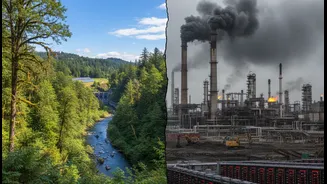
The strategy is not without its critics. Environmental groups and some investors argue that relying on offsets allows companies to continue polluting while claiming to be green—a practice often labeled "greenwashing." Critics point out that many carbon offset projects have been found to overestimate their climate benefits, and they don't stop the immediate emissions from a gas-powered plant. While Meta is a massive investor in new renewable projects, its energy consumption is growing so fast that utilities are still building new fossil fuel capacity specifically to serve its data centers. This has led to concerns in communities like El Paso, Texas, where a new gas plant is being built to power a Meta data center in a city that calls itself the "Sun City." The fundamental conflict remains: while offsets and RECs are a tool, they don't change the fact that in some locations, new fossil fuel infrastructure is being built to power the immediate needs of the AI boom.