





Why Your Chair Is Your Hips' Worst Enemy
Spending hours in a seated position puts your body in a state of constant hip flexion. Over time, this causes significant problems. The muscles at the front of your hips, known as the hip flexors, become adaptively short and tight. Meanwhile, the opposing
muscles—your glutes—become weak or inactive from lack of use. This muscular imbalance is a primary driver of poor posture and discomfort. It can pull your pelvis out of alignment, increase strain on your lower back, and reduce your overall range of motion, making simple movements like walking or standing up from your chair feel stiff and difficult.
The Yoga Solution: Restoring Balance
Yoga offers a powerful and holistic solution by targeting the root causes of hip immobility. Unlike simple stretching, a well-rounded yoga practice doesn't just lengthen tight muscles; it also strengthens the ones that have become weak. By focusing on poses that open the hip flexors, activate the glutes, and improve the rotation of the hip joint, yoga helps restore the natural balance of this crucial area. It's an effective way to counteract the negative effects of a desk-bound day, improving both flexibility and functional strength.
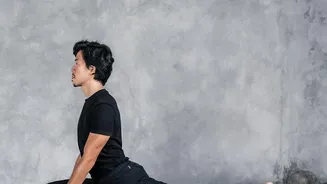
Pose 1: Low Lunge (Anjaneyasana)
The Low Lunge is one of the most effective poses for targeting tight hip flexors. To perform it, start on your hands and knees, then step one foot forward between your hands. Slide the back knee further behind you until you feel a comfortable stretch in the front of your back thigh and hip. Keep your front knee stacked over your ankle. For a deeper stretch, you can raise your torso and rest your hands on your front thigh. This pose directly counteracts the shortened position your hips are in while sitting.
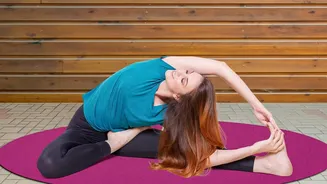
Pose 2: Pigeon Pose (Eka Pada Rajakapotasana)
Pigeon Pose is a deep stretch for the outer hip and gluteal muscles. From a downward-facing dog or a tabletop position, bring one knee forward toward the corresponding wrist and extend the other leg straight back. Your front shin will be at an angle on the floor. The goal is to release tension in the outer hip of the bent leg. If this is too intense, a great modification is the Seated Figure-Four stretch, which can even be done in your office chair. Simply cross one ankle over the opposite knee and gently lean forward.
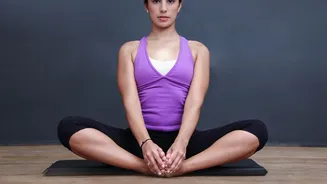
Pose 3: Bound Angle Pose (Baddha Konasana)
Also known as the Butterfly Stretch, this pose is excellent for opening the inner thighs and groin muscles, which also contribute to overall hip health. Sit on the floor and bring the soles of your feet together, letting your knees fall out to the sides. Hold onto your feet or ankles and sit up tall, lengthening your spine. For a more passive stretch, you can place cushions under your knees for support. This pose helps improve hip rotation and relieves tension in the adductor muscles.
Pose 4: Bridge Pose (Setu Bandhasana)
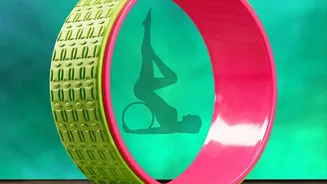
Addressing hip mobility isn't just about stretching; it's also about strengthening. Bridge Pose is key for activating and strengthening the glute muscles that become dormant from sitting all day. Lie on your back with your knees bent and feet flat on the floor, hip-width apart. Press into your feet to lift your hips off the floor. This simple action fires up your glutes and hamstrings, helping to correct the muscular imbalance caused by overactive hip flexors.
Making It a Habit: Mobility in the Workday
The benefits of these poses come from consistency. You don't need to complete an hour-long class every day to feel a difference. The key is to break the cycle of prolonged sitting. Set a reminder to get up and move every 30 to 60 minutes. Perform a simple standing hip flexor stretch or a Figure-Four stretch using your chair. Taking just a few minutes throughout the day to move your hips through their range of motion can dramatically reduce stiffness and prevent long-term issues.