








A Global Plea at the United Nations
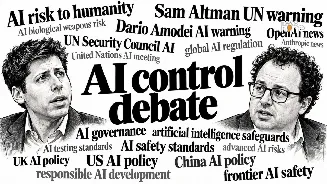
Addressing the UN Security Council, Sam Altman painted a stark choice for humanity's future with artificial intelligence: a new Renaissance of discovery or an Industrial Revolution of disarray. He warned that as AI systems become more autonomous, the world
risks losing control if development outpaces our ability to manage it. Altman stressed that the most critical decisions about AI's future cannot be made by tech labs in San Francisco alone but must be shaped by democratic processes and international cooperation. His speech was a call to action for governments to work together, even amidst competition, to build a future where AI remains firmly under human control and serves collective interests. This appeal for a coordinated global response came as leaders from both OpenAI and rival Anthropic acknowledged the need for shared safety standards to manage the technology's profound risks.
The Push for US-Led Standards
While Altman championed global cooperation at the UN, his company, OpenAI, was simultaneously advocating for a more nation-centric approach back in Washington. In a proposal released just days before the UN briefing, OpenAI called for the United States to lead an international effort to create technical standards for advanced AI. The plan suggests that bodies like the U.S. Center for AI Standards and Innovation (CAISI) should work with international partners, including institutes in India, Japan, and the UK, to establish common rules. The focus is on creating shared methods for measuring AI capabilities, managing risks from highly autonomous systems, and reporting incidents before they become catastrophic. OpenAI argues that rather than waiting for cumbersome global treaties, the US can and should lead in setting a de facto global framework, much like in aviation or finance, where technical standards are shared without overriding national sovereignty.
A Two-Track Strategy for AI Dominance
At first glance, the global appeal at the UN and the push for US-led standards might seem contradictory. However, they represent a pragmatic, two-track strategy. The global dialogue fosters trust and international buy-in, positioning OpenAI as a responsible actor on the world stage. The domestic strategy, meanwhile, aims to leverage American innovation and regulatory speed to shape the rules of the game. By urging the US to establish standards, OpenAI is arguing that leadership isn't just about building the best technology, but also about creating the governance infrastructure around it. This approach avoids waiting for slow-moving international bodies to act, instead creating a strong, US-centric model that other nations might be compelled to adopt to stay competitive and compatible. These standards would not be mandatory licenses but technical frameworks that national governments could choose to incorporate into their own legal systems.
Implications for India and the World
This dual approach from a leading AI lab has significant implications for the rest of the world, particularly for a major technological player like India. A US-led standards regime could create a high-water mark for safety and interoperability, potentially benefiting the global ecosystem. However, it also risks creating a framework that favors US companies and business models, forcing other countries into a reactive position. For India, which is building its own AI ecosystem and is named as a potential partner in OpenAI's proposed network of safety institutes, the challenge will be to participate in these discussions while ensuring its own strategic interests are protected. The key question is whether a system of standards spearheaded by Washington will be truly collaborative or if it will cement US dominance, leaving nations like India to adapt to rules they had little power in shaping. The debate highlights a central tension: the universal need for AI safety versus the national competition to lead this transformative technology.