




The Rise of the Robotic Pilot
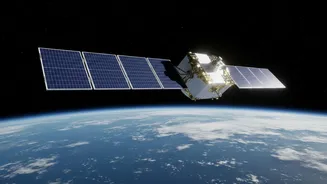
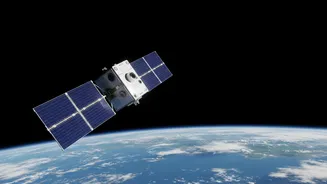
With tens of thousands of satellites expected to launch in the coming decade, managing orbital traffic is becoming too complex for human operators alone. The International Conference on Spacecraft Mission Operations (SMOPS-2026) has highlighted that AI
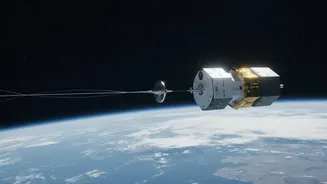
and machine learning are no longer theoretical but a present-day necessity for managing these crowded skies. Systems are now being designed to handle what are considered 'routine' orbital decisions: optimizing a satellite's power consumption, routing communication traffic, and, most critically, performing collision avoidance maneuvers to dodge other satellites or space debris. These AI-driven systems can process vast amounts of data and react in seconds, a speed essential for preventing disasters in an environment where objects travel at over 17,000 miles per hour.
What 'Routine' Really Means in Orbit
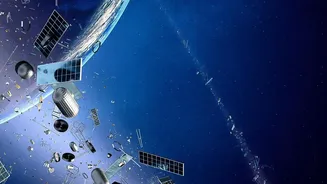
The challenge, a key theme at SMOPS, is that no decision in space is truly routine. A minor miscalculation in a collision avoidance maneuver doesn't just endanger one satellite; it risks creating a cloud of debris that can trigger a chain reaction of further collisions, a scenario known as the Kessler syndrome. The growing number of satellites makes manual monitoring unsustainable, pushing operators towards automation. However, this automation comes with its own risks. Current AI systems are being developed to make autonomous 'go/no-go' decisions on maneuvers, but they are trained on historical data and must perform reliably in borderline cases where human judgment was previously essential. The very definition of a routine task is being tested as the stakes get higher with every launch.
The Human-in-the-Loop Dilemma
Most experts agree that the solution isn't to hand over the keys entirely. Instead, the focus is on creating a 'human-in-the-loop' or 'human-on-the-loop' system. In this model, the AI performs the high-speed calculations and offers recommendations, but a human operator retains ultimate authority, especially for critical decisions. This synergistic approach combines the computational power of AI with human intuition and accountability. However, this raises new governance questions. Who is liable when an AI-led decision, even one overseen by a human, goes wrong? As one recent report notes, these governance frameworks for assignment of responsibility and attribution of fault are struggling to keep pace with the technology's rapid deployment.
The Problem with Trust and Transparency
A significant barrier to wider AI adoption in space is trust. Satellite operators are understandably cautious about letting algorithms make autonomous decisions that could affect multi-million dollar assets. The failure modes of AI, such as 'hallucinating' incorrect information, are especially dangerous in space operations. Furthermore, many AI models can behave like a 'black box,' making it difficult for operators to understand why a particular decision was made. Recent efforts, like a project by ResilienX for the US Air Force, are focused on developing 'explainable AI' that can monitor the health of AI models in real-time and provide clear reasoning for their outputs, helping to build operator confidence before a silent failure can impact a mission.
The Path Forward from SMOPS-2026
The discussions at SMOPS-2026 make it clear that the future of space operations is a partnership between humans and machines. Fully autonomous systems that operate without any human intervention remain a distant goal for most applications. The immediate future will see AI primarily used as a powerful decision-support tool, handling the immense data processing to identify potential issues, while humans provide the final strategic oversight. The path to smarter and more sustainable space mission management, as the conference theme suggests, relies on perfecting this collaboration. It's less about removing humans from the loop and more about equipping them with better tools to manage an increasingly complex orbital environment.