



What the New Study Found
A study recently published in the journal Nature revealed a surprising turn of events at the South Pole. Between 2021 and 2023, the Antarctic Ice Sheet gained approximately 695 billion tonnes of mass. This was the largest short-term ice gain observed
since satellite monitoring began nearly two decades ago. The gain came from exceptionally heavy snowfall over parts of East Antarctica, which temporarily offset the ice being lost elsewhere on the continent. However, scientists are clear that this does not signal a long-term recovery for the ice sheet. They describe the event as a temporary blip, a reflection of natural climate variability rather than a reversal of the overarching melting trend.
A Tale of Two Ices
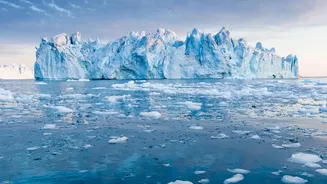
To understand this story, it's crucial to know the difference between land ice and sea ice. Land ice, found in ice sheets and glaciers, is freshwater that has accumulated from snowfall over thousands of years. When it melts and flows into the ocean, it adds new volume to the seas, directly causing global sea levels to rise. Sea ice, on the other hand, is frozen ocean water. It forms in winter and mostly melts in summer. Like ice cubes in a glass of water, its melting does not directly raise the ocean's level because it's already displacing its own volume. The recent study focused on a gain in land ice mass from snowfall, which is different from the expansion or contraction of the sea ice that floats around the continent.
Why Did The Ice Gain Happen?
The cause of this heavy snowfall was traced thousands of kilometres away to an unusually warm patch of ocean in the tropical western Pacific and eastern Indian Oceans. This patch of warm water altered large-scale atmospheric patterns, creating what is known as a Rossby wave train. This phenomenon transported huge amounts of moisture from the mid-latitudes toward East Antarctica, where it fell as heavy snow. Scientists note that such events tend to occur roughly once a decade, making this a significant but temporary anomaly. It’s a powerful example of how interconnected our planet's climate systems are, where warming in one region can lead to cooling and snow accumulation in another.
The Bigger Picture: Uninterrupted Loss
Despite this temporary gain, the long-term trend for Antarctica remains one of significant ice loss. Over the last two decades, the continent has been losing ice at an average rate of about 140 billion tonnes per year. This net loss is primarily driven by the melting of the massive West Antarctic Ice Sheet, which continues to shed ice at an alarming rate. The recent snowfall in East Antarctica was not enough to reverse this decades-long decline. After the period of anomalous gain, satellite data showed the ice sheet's mass balance turned negative again in 2024. Scientists stress that the fundamental threat remains: warming oceans are melting glaciers from below, accelerating their flow into the sea and contributing to sea-level rise.
Why It Matters for India
What happens in Antarctica doesn't stay in Antarctica. The continent holds about 90% of the world's freshwater ice, and its fate is directly linked to India's extensive coastline. If the entire Antarctic Ice Sheet were to melt, it could raise global sea levels by nearly 60 metres, submerging coastal cities worldwide, including many in India. Even a small fraction of that melt has serious consequences. The ongoing melting of polar ice is a primary contributor to the sea-level rise that threatens low-lying areas in states from Gujarat to West Bengal. Furthermore, complex climate links mean that freshwater influx from melting polar ice can even influence the strength and variability of the Indian monsoon.