



A Collision of Four Worlds
Japan’s turbulent geology stems from its unfortunate, yet fascinating, position on the globe. The island nation is situated at the meeting point of four massive tectonic plates: the Pacific, North American, Eurasian, and Philippine Sea plates. This location
places it squarely on the Pacific Ring of Fire, a nearly 40,000-kilometre horseshoe-shaped belt known for hosting most of the world's earthquakes and active volcanoes. These colossal slabs of Earth's crust are in constant motion. The oceanic Pacific plate, for instance, grinds and slides beneath the continental plates on which Japan sits, a process known as subduction. This relentless movement, happening at a rate of several centimetres per year, is the primary source of the immense geological stress that defines the region.
The Science of a Megaquake
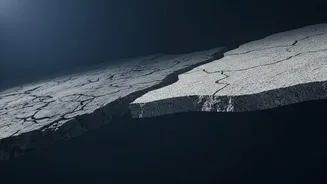
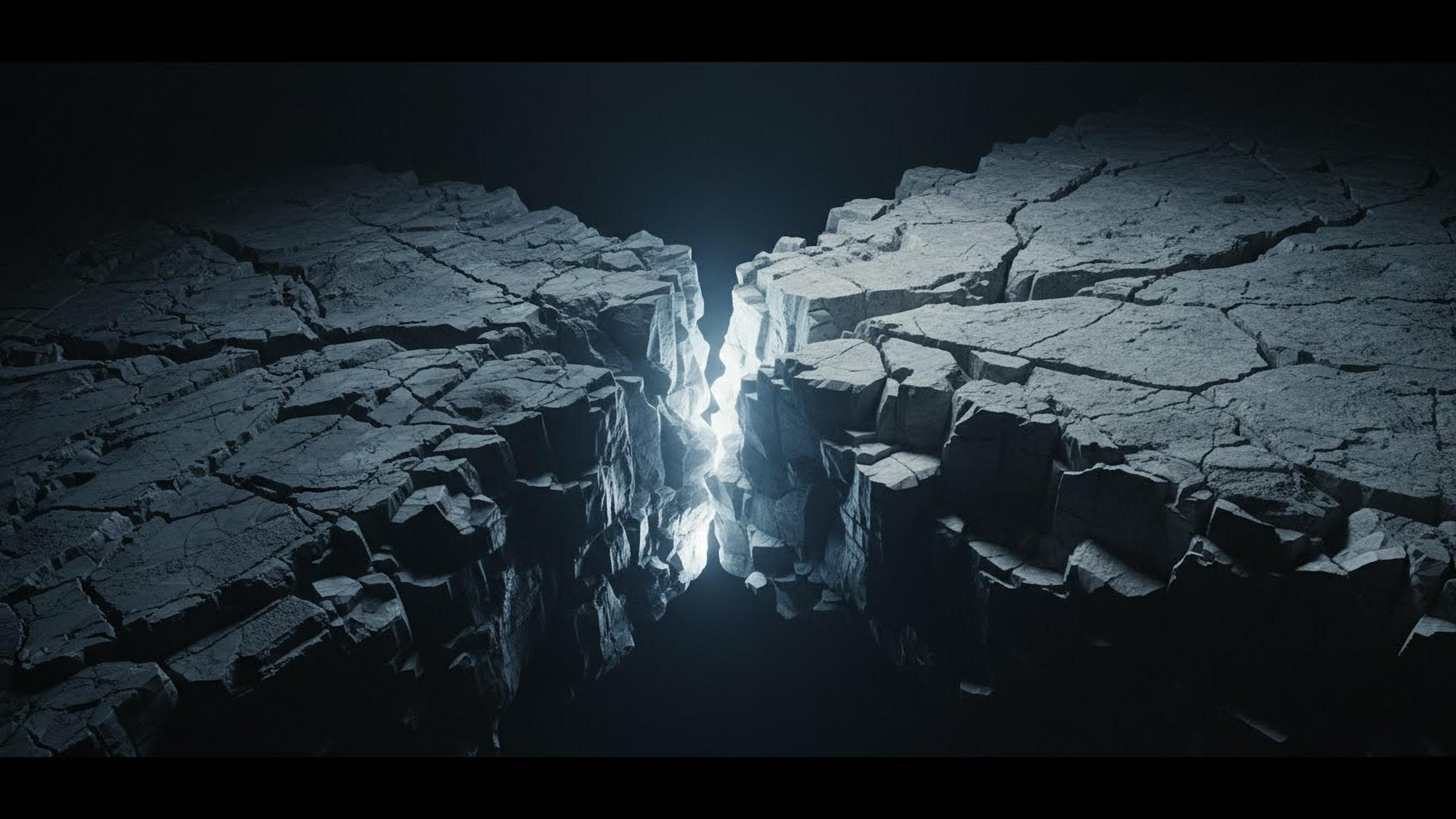
Imagine trying to bend a thick, rigid stick. It flexes and stores energy until it reaches its breaking point, at which time it snaps, releasing that energy in a sudden burst. This is analogous to what happens at a subduction zone. As one plate forces its way under another, the edges get stuck due to friction, but the plates keep pushing. Over decades or centuries, immense strain accumulates in the rock. When the stress finally overcomes the friction, the locked sections of the fault rupture violently. This sudden release of energy sends out seismic waves in all directions, causing the ground to shake. When this rupture happens offshore, as it often does in the Japan Trench, it can vertically displace a massive column of the seafloor, shoving the ocean water above it upwards and outwards, giving birth to a tsunami.
Racing the Seismic Waves
Living with this constant threat has pushed Japan to become a world leader in disaster mitigation. A cornerstone of its defence is the Earthquake Early Warning (EEW) system, a sophisticated network of more than a thousand seismographs across the country. This system relies on a simple but crucial fact of physics: earthquakes produce different types of waves that travel at different speeds. The first to arrive are the faster, less destructive P-waves (primary waves). They are followed by the slower, but far more damaging, S-waves (secondary waves) that cause the violent shaking. Japan's EEW system detects the initial P-waves, and its computers instantly calculate the earthquake's epicentre and magnitude to predict the intensity of the coming S-waves. This process is fast enough to broadcast a nationwide alert seconds, or even a minute, before the main shaking arrives.
Seconds That Save Lives
While a few seconds of warning might not sound like much, it can be the difference between life and death. The EEW alerts, sent via television, radio, and mobile phones, give people just enough time to drop, cover, and hold on. Beyond personal safety, the system is integrated into the country's infrastructure. It automatically triggers emergency brakes on high-speed bullet trains, brings elevators to the nearest floor, and can halt production at sensitive industrial plants, preventing catastrophic secondary disasters. It’s a system born from the tragic lessons of past events, like the 1995 Kobe earthquake, which prompted massive investment in these life-saving technologies.
Detecting a Tsunami in the Deep Ocean
When an offshore earthquake is strong enough to potentially generate a tsunami, a different set of warnings kicks in. The Japan Meteorological Agency (JMA) can issue an initial tsunami warning within about three minutes of a quake, based purely on seismic data. But to confirm the threat and predict its size, Japan relies on a network of offshore sentinels. These include the Deep-ocean Assessment and Reporting of Tsunamis (DART) buoys. A DART station consists of a pressure recorder on the ocean floor that can detect the tiny changes in water pressure caused by a passing tsunami wave. This information is sent via an acoustic link to a surface buoy, which then relays the data via satellite to warning centres in real-time. This direct measurement allows authorities to confirm a tsunami's existence long before it reaches the coast, providing crucial data to refine warnings or cancel false alarms.