




The Mahabaleshwar Legacy
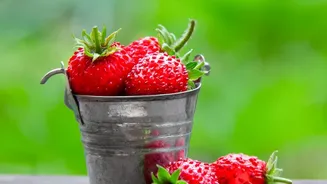
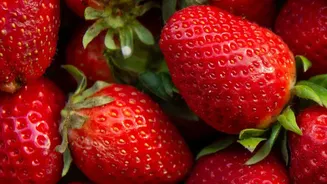
For decades, the cool climate and iron-rich red soil of the Mahabaleshwar-Panchgani belt in Maharashtra have made it the undisputed heartland of Indian strawberry production, accounting for about 85% of the country's total output. This success story,
which began as an experiment with Californian seedlings in 1992, has transformed the region, providing livelihoods for thousands of farming families and earning the Mahabaleshwar strawberry a coveted Geographical Indication (GI) tag in 2010. However, this traditional dominance is now facing significant hurdles. Farmers are grappling with unpredictable weather, including heavy rains that can wipe out a crop, making it a high-risk, high-reward venture. The entire industry has been built on a handful of imported plant varieties, which are not always suited to India's diverse and often warmer conditions.
The Quest for a Better Berry
The core challenge for the Indian strawberry industry is its dependence on foreign cultivars from places like California and Italy. Farmers must purchase young plants from propagators who import certified mother plants, an expensive and logistically complex process. These varieties, such as Camarosa and Sweet Charlie, were bred for different climates and can struggle with India's heatwaves and specific pests. To break this cycle, a push for self-reliance is gaining momentum. Researchers are now working to develop India's first indigenous, climate-resilient strawberry varieties. At institutions like Mahatma Phule Krishi Vidyapeeth, scientists are using techniques like low-dose gamma irradiation to fast-track genetic mutations, aiming to create a berry that combines the large size and firm texture of foreign types with a natural tolerance for Indian conditions. The goal is to give farmers access to more robust, reliable, and ultimately more profitable plants.
Farming Gets Smarter
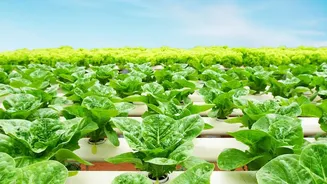
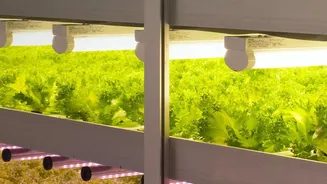
Alongside better plants, the industry is embracing smarter production methods to mitigate risks and boost efficiency. Controlled-environment agriculture is leading this change. Instead of relying solely on open fields, farmers are increasingly adopting polyhouses and soilless cultivation methods like hydroponics. These techniques offer greater control over crucial factors like temperature, humidity, and irrigation, protecting the delicate crop from adverse weather and soil-borne diseases. Precision farming powered by AI and IoT is also making inroads. Weather-monitoring towers connected to AI systems can now help farmers predict rainfall with greater accuracy, allowing for more precise irrigation and crop management. Drip irrigation has become essential, delivering water and nutrients directly to the plant roots, which prevents waterlogging and reduces disease risk in the shallow-rooted strawberry plants. These innovations are not just for large-scale farms; they are enabling cultivation to expand beyond traditional hilly regions into the plains.
Winning the Post-Harvest Battle
Growing the perfect strawberry is only half the battle; getting it to the consumer intact is the other. The fruit's highly perishable nature means that post-harvest losses can be as high as 40-50%. A major focus of innovation is therefore on improving the supply chain. The first hour after picking is critical, and best practices now involve cooling the fruit rapidly to remove field heat. Advanced packaging technologies, such as modified atmosphere packaging and edible coatings, are being explored to slow down ripening and decay. At a more fundamental level, strengthening India's cold chain infrastructure—from on-farm coolers to refrigerated transport—is paramount to reducing waste and ensuring that farmers can get a better price for their produce. These improvements also open up possibilities for value-added products beyond jams, like frozen and dried strawberries, which have a longer shelf life and growing market demand.